Joel Speerstra – författare
Visar alla böcker från författaren Joel Speerstra. Handla med fri frakt och snabb leverans.
2 produkter
2 produkter
E-bok
Engelska, 2011205 kr
Läs direkt efter köp
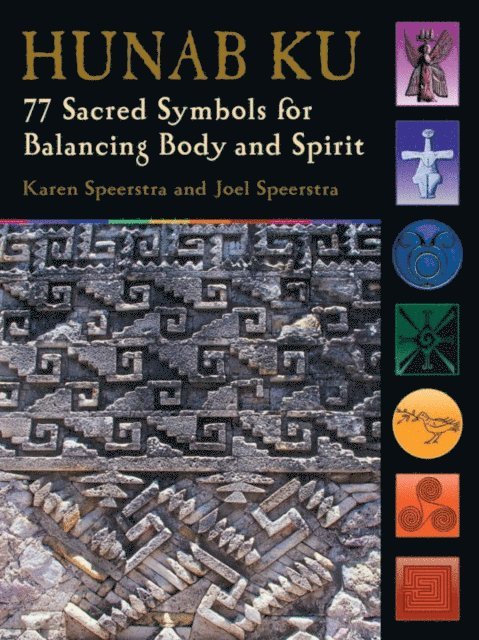
The Mayan symbol Hunab Ku represents movement and energy—the principle of life itself—in a spiraling design reminiscent of the Eastern yin-yang symbol. As an embodiment of harmony and balance, Hunab Ku invites us into the age of consciousness, which is predicted to begin on December 21, 2012.HUNAB KU prepares us for this cosmic awakening by presenting 77 sacred symbols that create an interactive system for learning, healing, and meditation. Beautifully illustrated and exhaustively researched, this virtual pilgrimage invites us to explore artifacts, earthworks, numerological patterns, and archetypes from diverse traditions the world over: ancient Greece, the Americas, Africa, the British Isles, Babylon, India, and beyond. Hunab Ku waits for you at the book’s center, the threshold between our present age and the coming age of enlightenment. Like runes, tarot, and other pathworking systems, the archetypes herein open doors, create bridges, and shed light on our past and our future. These spiritual signposts are all around us and within, waiting to be interpreted. Let HUNAB KU be your guide.A richly illustrated book that draws on cross-cultural ancient symbols, numerology, archetypes, and earthworks, and the chakras.Includes 77 vivid full-color illustrations placed within the framework and palette of the seven chakras.Builds on the growing popularity of José Arguelles’s The Mayan Factor and Carl Johan Calleman’s The Mayan Calendar and the Transformation of Consciousness.From the Trade Paperback edition.
Del 26 - Eastman Studies in Music
Bach and the Pedal Clavichord
An Organist's Guide
Inbunden, Engelska, 2004
1 111 kr
Skickas inom 10-15 vardagar
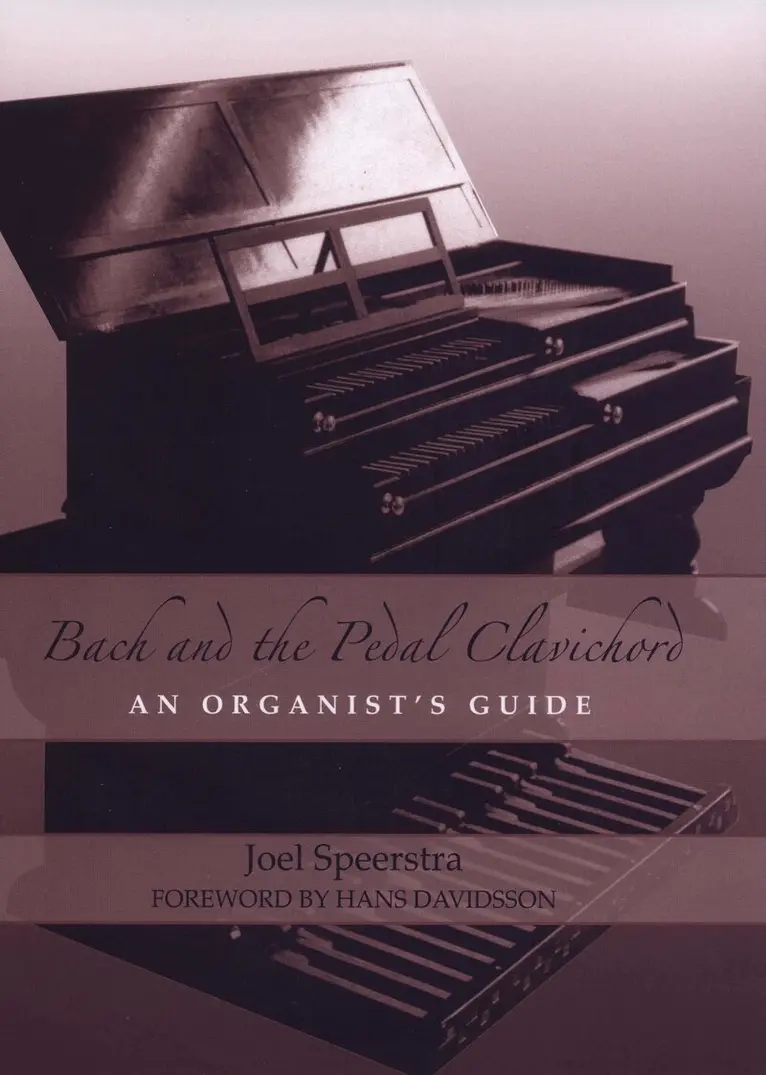
An examination of the role of the pedal clavichord in understanding the work of J. S. Bach, as well as its relevance to contemporary organ performances.Friederich Griepenkerl, in his 1844 introduction to Volume 1 of the first complete edition of J. S. Bach's organ works, wrote: "Actually the six Sonatas and the Passacaglia were written for a clavichord with two manuals and pedal,an instrument that, in those days, every beginning organist possessed, which they used beforehand, to practice playing with hands and feet in order to make effective use of them at the organ. It would be a good thing to let suchinstruments be made again, because actually no one who wants to study to be an organist can really do without one."What was the role of the pedal clavichord in music history? Was it a cheap practice instrument for organistsor was Griepenkerl right? Was it a teaching tool that helped contribute to the quality of organ playing in its golden age? Most twentieth-century commentary on the pedal clavichord as an historical phenomenon was written in a kindof vacuum, since there were no playable historical models with which to experiment and from which to make an informed judgment.At the heart of Bach and the Pedal Clavichord: An Organist's Guide are some extraordinary recentexperiments from the Göteborg Organ Art Center [GOArt] at Göteborg University. The Johan David Gerstenberg pedal clavichord from 1766, now in the Leipzig University museum, was documented and reconstructed; the new copy was thenused for several years as a living instrument for organ students and teachers to experience. On the basis of these experiments and experiences, the book explores, in new and artful ways, Bach's keyboard technique, a technique preserved by his first biographer, J. N. Forkel [1802], and by Forkel's own student, Griepenkerl.