Joel Wolfe - Böcker
Visar alla böcker från författaren Joel Wolfe. Handla med fri frakt och snabb leverans.
9 produkter
9 produkter
350 kr
Skickas inom 5-8 vardagar
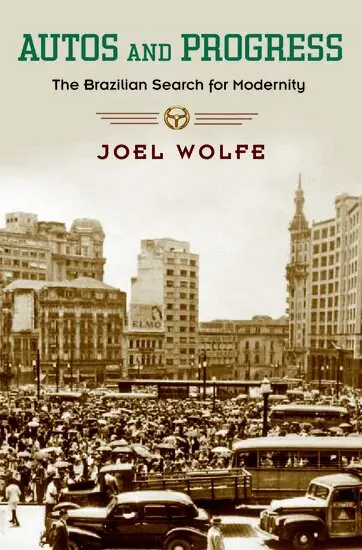
Autos and Progress studies the automobile as both a tool and a cultural symbol of Brazil's status as a modern "developed" nation. As such it addresses debates on state-making, the role of multi-national corporations in the region, middle-class consumerism, working-class politics, and sports and leisure in the crafting of national identity, among others. Such a study is key for understanding the twentieth century because auto-based transportation became the central facet of Brazilian attempts to gain control over its massive national space. The most obvious expressions of this include the building of Brasília to be the new, interior national capital, the extensive road building throughout the Amazon in the 1970s, the nation's development of one of the world's leading alternative fuel industries, Brazilian dominance in world Formula One racing, and the fact that the current president, Luiz Inácio Lula da Silva, is a former auto worker and trade union leader. This focus on Brazilians' fascination with automobiles and their reliance on auto production and consumption as keys to their economic and social transformation, explains how Brazil -- which enshrined its belief in science and technology in its national slogan of Order and Progress -- has differentiated itself from other Latin American nations. This embrace of automobility allowed the Brazilian elite to use industrialism and the increased mobility of an auto-based society to attempt to remake the nation's poor into a more homogeneous population. Autos and Progress engages key issues in the Brazil around the meaning and role of race in society and also addresses several classic debates in Brazilian studies about the nature of Brazil's great size and diversity and how they shaped state-making. Autos and Progress unifies Brazilian economics, politics, and culture in the twentieth century. It provides a unique historical context for understanding Brazilian modernism in politics and culture. Moreover, by analyzing the origins of auto-oriented industrialism and consumerism, the book is an economic, cultural and social history of Brazilian attempts to remake the nation into a middle-class democracy. This aspect of the study presents a new interpretation for the rise of Brazil's New Unionism, which was born in Brazil's auto, truck, and bus factories. It also provides important context for understanding the place of the Partido dos Trabalhadores (Workers' Party) in national politics and culture, and the rise of President Luiz Inácio Lula da Silva, a former auto worker.
1 585 kr
Skickas inom 3-6 vardagar
Autos and Progress studies the automobile as both a tool and a cultural symbol of Brazil's status as a modern "developed" nation. As such it addresses debates on state-making, the role of multi-national corporations in the region, middle-class consumerism, working-class politics, and sports and leisure in the crafting of national identity, among others. Such a study is key for understanding the twentieth century because auto-based transportation became the central facet of Brazilian attempts to gain control over its massive national space. The most obvious expressions of this include the building of Brasília to be the new, interior national capital, the extensive road building throughout the Amazon in the 1970s, the nation's development of one of the world's leading alternative fuel industries, Brazilian dominance in world Formula One racing, and the fact that the current president, Luiz Inácio Lula da Silva, is a former auto worker and trade union leader. This focus on Brazilians' fascination with automobiles and their reliance on auto production and consumption as keys to their economic and social transformation, explains how Brazil -- which enshrined its belief in science and technology in its national slogan of Order and Progress -- has differentiated itself from other Latin American nations. This embrace of automobility allowed the Brazilian elite to use industrialism and the increased mobility of an auto-based society to attempt to remake the nation's poor into a more homogeneous population. Autos and Progress engages key issues in the Brazil around the meaning and role of race in society and also addresses several classic debates in Brazilian studies about the nature of Brazil's great size and diversity and how they shaped state-making. Autos and Progress unifies Brazilian economics, politics, and culture in the twentieth century. It provides a unique historical context for understanding Brazilian modernism in politics and culture. Moreover, by analyzing the origins of auto-oriented industrialism and consumerism, the book is an economic, cultural and social history of Brazilian attempts to remake the nation into a middle-class democracy. This aspect of the study presents a new interpretation for the rise of Brazil's New Unionism, which was born in Brazil's auto, truck, and bus factories. It also provides important context for understanding the place of the Partido dos Trabalhadores (Workers' Party) in national politics and culture, and the rise of President Luiz Inácio Lula da Silva, a former auto worker.
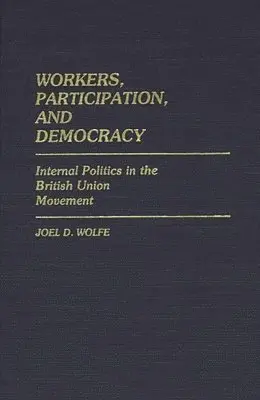
Workers, Participation, and Democracy
Internal Politics in the British Union Movement
Inbunden, Engelska, 1985
571 kr
Skickas inom 10-15 vardagar
In this study of the British labor movement, Joel Wolfe asks whether participatory democracy is possible in modern large-scale union and party organizations and how rank and file members can exercise control of delegates in the face of constraints imposed by formal bureaucratic structures at all levels. In addressing these questions he formulates a theory of participatory democracy that has broad practical application to contemporary democratic practice in industiral and political organizations. He tests his model through an analysis of the policy-making process in the British labor movement during World War I, examining thoroughly and critically direct democracy in wartime work groups, the impact of these groups on policy-making in critical areas, and their influence on decision-makers in the Trades Union Congress and the British Labor Party.
809 kr
Skickas inom 10-15 vardagar
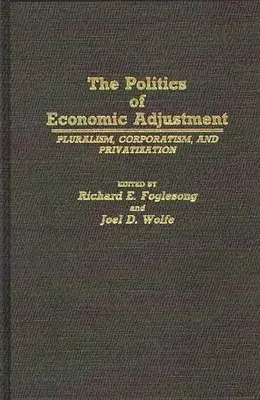
Privatization and corporatism along with pluralist forms of adaptation have received much attention as strategies for coping with the transformation of mature industrial economics. Yet, the burgeoning literature on this topic has, until now, lacked an adequate account of the determinants of a government's choice between such strategies or of the relationships between these strategies and the Keynesian economic framework that predominated in the postwar era. This groundbreaking study bridges these gaps by considering both the determinants of the choice of an adjustment strategy and how that choice affects the nature of liberal democracy. Written by a distinguished group of political scientists, the essays collected here examine the divergent responses of liberal capitalist nations to the problem of economic adjustment, giving special attention to the political factors affecting strategic choices aimed at bolstering employment, enhancing international competitiveness, and restoring healthy productivity rates.The contributors examine in depth the experiences of the United States, Britain, France, West Germany, and Italy. They explain how these advanced industrial nations have faced economic crisis differently and why they have responded as they have. In each case, the author focuses on whether and at what level the state has pursued a corporatist approach involving a more direct government role in managing the economy with the assistance of private interest groups, a privatization strategy involving less state intervention and an increased reliance on market processes, or a form of pluralist adaptation. Throughout, the contributors demonstrate that the strategy pursued can have a fundamental impact on the character of democracy and the patterns of policy making. Students of political science as well as policy makers will find this book an incisive discussion of the myriad factors influencing the choice among competing strategies of economic adjustment.
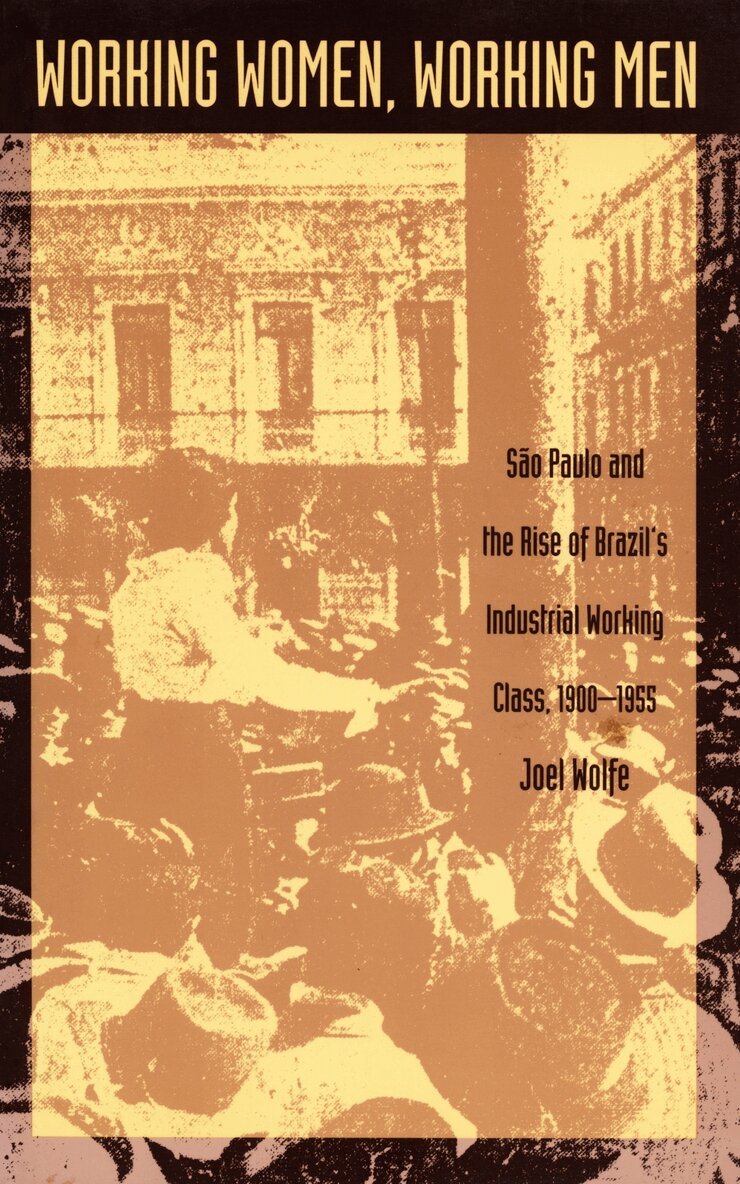
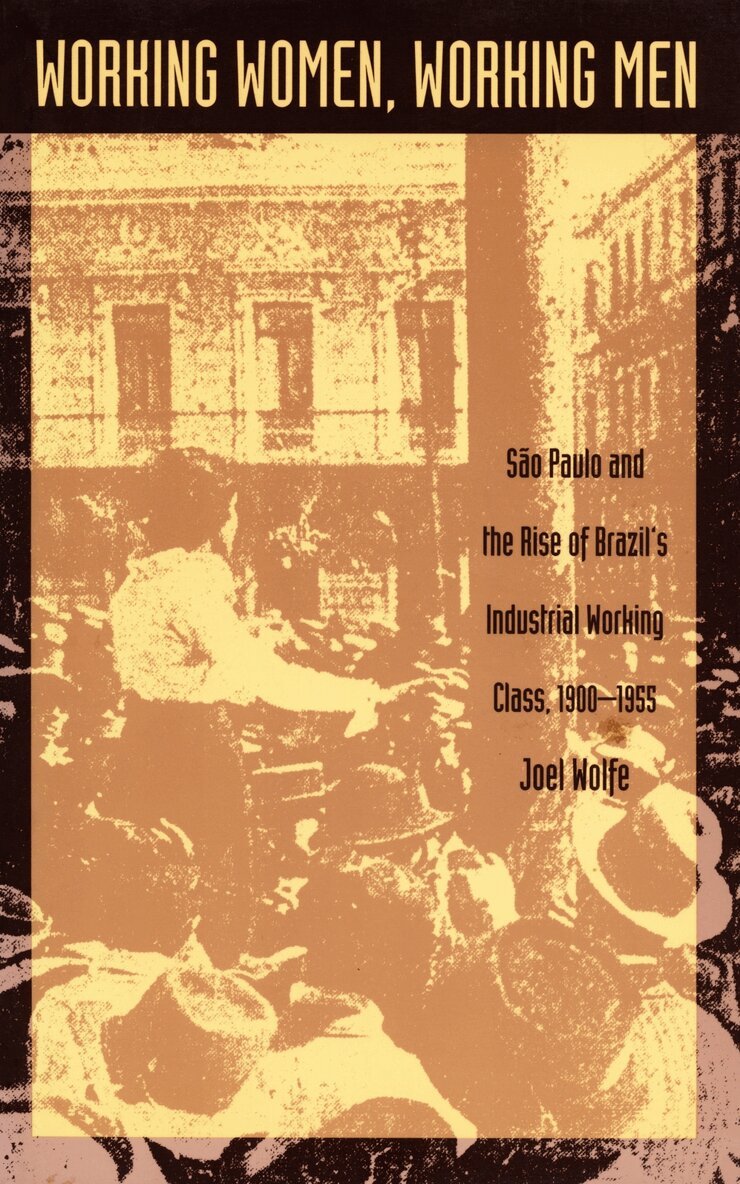
Working Women, Working Men
Sao Paulo & the Rise of Brazil's Industrial Working Class, 1900–1955
Häftad, Engelska, 1993
363 kr
Skickas inom 7-10 vardagar
In Working Women, Working Men, Joel Wolfe traces the complex historical development of the working class in SÀo Paulo, Brazil, Latin America's largest industrial center. He studies the way in which SÀo Paulo's working men and women experienced Brazil's industrialization, their struggles to gain control over their lives within a highly authoritarian political system, and their rise to political prominence in the first half of the twentieth century.Drawing on a diverse range of sources-oral histories along with union, industry, and government archival materials-Wolfe's account focuses not only on labor leaders and formal Left groups, but considers the impact of grassroots workers' movements as well. He pays particular attention to the role of gender in the often-contested relations between leadership groups and thee rank and file. Wolfe's analysis illuminates how various class and gender ideologies influenced the development of unions, industrialists' strategies, and rank-and-file organizing and protest activities.This study reveals how workers in SÀo Paulo maintained a local grassroots social movement that, by the mid–1950s, succeeded in seizing control of Brazil's state-run official unions. By examining the actions of these workers in their rise to political prominence in the 1940s and 1950s, this book provides a new understanding of the sources and development of populist politics in Brazil.
596 kr
Skickas inom 7-10 vardagar
Brazil has long been an enigma to outsiders. Over the last two decades alone, Latin America’s largest and most populous country has been celebrated as a vibrant new democracy with a powerful economy, and derided as a nation in complete disarray heading toward the status of a failed state. In this vibrant and smart book, Joel Wolfe tells the story of this “incomplete nation” and its two-hundred-year-old struggle to control its vast national territory and to fashion and maintain a functioning democracy against a backdrop of intense inequality, racial discrimination, and regional rivalries. From independence to the abolition of slavery, from scarring military dictatorship to the election of President Bolsonaro – the “Tropical Trump” – and his defeat by former President Lula da Silva, the author weaves a rich portrait of a country fighting against the odds to overcome the long-standing and seemingly intractable problems that have, for most of its history, hindered national unity and development.
154 kr
Skickas inom 7-10 vardagar
Brazil has long been an enigma to outsiders. Over the last two decades alone, Latin America’s largest and most populous country has been celebrated as a vibrant new democracy with a powerful economy, and derided as a nation in complete disarray heading toward the status of a failed state. In this vibrant and smart book, Joel Wolfe tells the story of this “incomplete nation” and its two-hundred-year-old struggle to control its vast national territory and to fashion and maintain a functioning democracy against a backdrop of intense inequality, racial discrimination, and regional rivalries. From independence to the abolition of slavery, from scarring military dictatorship to the election of President Bolsonaro – the “Tropical Trump” – and his defeat by former President Lula da Silva, the author weaves a rich portrait of a country fighting against the odds to overcome the long-standing and seemingly intractable problems that have, for most of its history, hindered national unity and development.
2 990 kr
Skickas inom 5-8 vardagar
Del 1 - Family Life
Courage in Chaos
Strength and Hope for Your Adventures in Parenting
Häftad, Engelska, 2018
203 kr
Skickas inom 5-8 vardagar