Jörg Feldhusen – författare
Visar alla böcker från författaren Jörg Feldhusen. Handla med fri frakt och snabb leverans.
3 produkter
3 produkter
Häftad, Engelska, 2014
814 kr
Skickas inom 10-15 vardagar
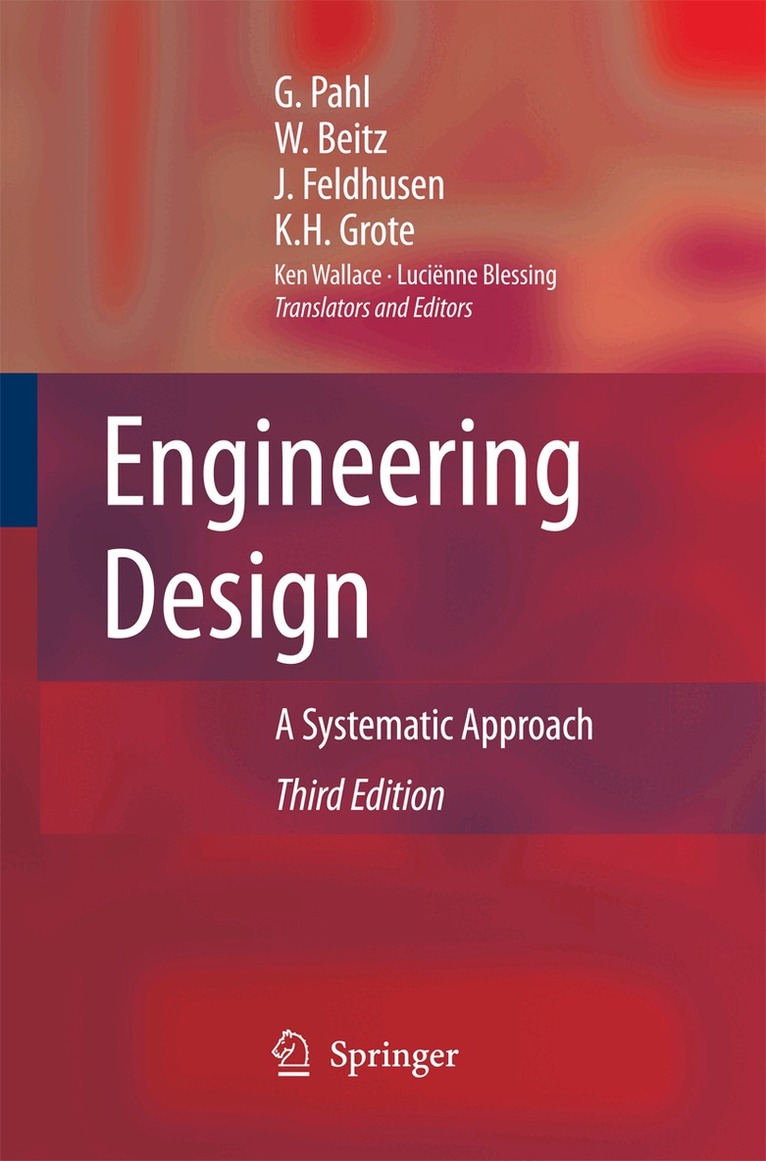
Engineering design must be carefully planned and systematically executed. In particular, engineering design methods must integrate the many different aspects of designing and the priorities of the end-user.Engineering Design (3rd edition) describes a systematic approach to engineering design. The authors argue that such an approach, applied flexibly and adapted to a particular task, is essential for successful product development. The design process is first broken down into phases and then into distinct steps, each with its own working methods. The third edition of this internationally-recognised text is enhanced with new perspectives and the latest thinking. These include extended treatment of product planning; new sections on organisation structures, simultaneous engineering, leadership and team behaviour; and updated chapters on quality methods and estimating costs. New examples have been added and existing ones extended, with additions on design to minimise wear, design for recycling, mechanical connections, mechatronics, and adaptronics.Engineering Design (3rd edition) is translated and edited from the sixth German edition by Ken Wallace, Professor of Engineering Design at the University of Cambridge, and Luciënne Blessing, Professor of Engineering Design and Methodology at the Technical University of Berlin.Topics covered include:fundamentals;product planning and product development;task clarification and conceptual design;embodiment design rules, principles and guidelines;mechanical connections, mechatronics and adaptronics;size ranges and modular products;quality methods; andcost estimation methods.The book provides a comprehensive guide to successful product development for practising designers, students, and design educators. Fundamentals are emphasised throughout and short-term trends avoided; so the approach described provides a sound basis for design courses that help students move quickly and effectively into design practice.
Inbunden, Engelska, 2006
982 kr
Skickas inom 10-15 vardagar
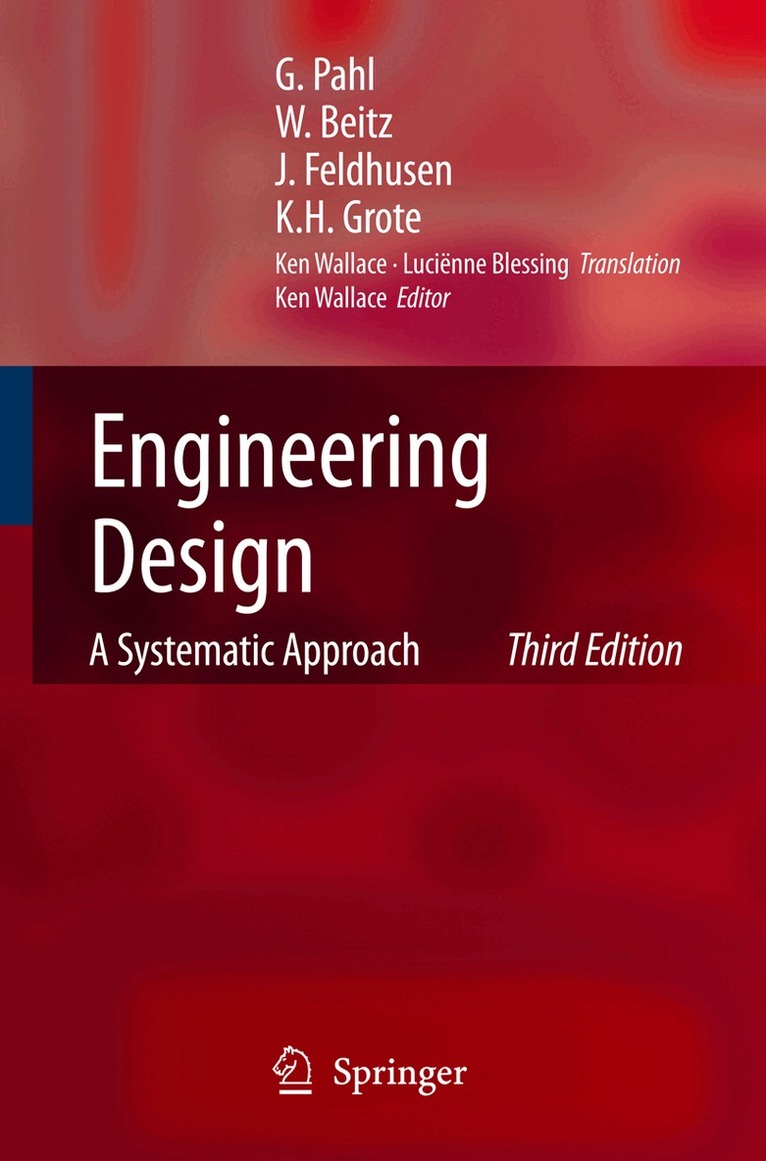
Engineering design must be carefully planned and systematically executed. In particular, engineering design methods must integrate the many different aspects of designing and the priorities of the end-user.Engineering Design (3rd edition) describes a systematic approach to engineering design. The authors argue that such an approach, applied flexibly and adapted to a particular task, is essential for successful product development. The design process is first broken down into phases and then into distinct steps, each with its own working methods. The third edition of this internationally-recognised text is enhanced with new perspectives and the latest thinking. These include extended treatment of product planning; new sections on organisation structures, simultaneous engineering, leadership and team behaviour; and updated chapters on quality methods and estimating costs. New examples have been added and existing ones extended, with additions on design to minimise wear, design for recycling, mechanical connections, mechatronics, and adaptronics.Engineering Design (3rd edition) is translated and edited from the sixth German edition by Ken Wallace, Professor of Engineering Design at the University of Cambridge, and Luciënne Blessing, Professor of Engineering Design and Methodology at the Technical University of Berlin.Topics covered include:fundamentals;product planning and product development;task clarification and conceptual design;embodiment design rules, principles and guidelines;mechanical connections, mechatronics and adaptronics;size ranges and modular products;quality methods; andcost estimation methods.The book provides a comprehensive guide to successful product development for practising designers, students, and design educators. Fundamentals are emphasised throughout and short-term trends avoided; so the approach described provides a sound basis for design courses that help students move quickly and effectively into design practice.
Inbunden, Tyska, 2008
1 326 kr
Skickas inom 10-15 vardagar
Auf die Marktanforderungen nach individuellen Lösungen reagieren Unternehmen häufig mit neuen Produktvarianten. Dies führt auch bei kleinen und mittelständischen Unternehmen zu einer nicht mehr beherrschbaren Prozess- und Produktkomplexität. Die Folgen sind ein hoher Kosten- und Zeitaufwand, die sich existenzbedrohend auswirken können.Ein möglicher Weg aus dieser „Komplexitätsfalle" ist die Strategie des Product Lifecycle Management (PLM). Die Autoren stellen auf der Grundlage vorhandener Optimierungspotenziale praxiserprobte Vorgehensweisen und Maßnahmen zur Planung von PLM sowie zur Einführung eines Produktdatenmanagement-Systems (PDMS) vor. Sie behandeln insbesondere die Frage, ob und wie „PLM-fit" das eigene Unternehmen ist und wie wirtschaftlich die möglichen Ansätze sind. Ein ausführliches Fallbeispiel beschreibt die Unternehmensbewertung, die PDMS-Einführung und den erwarteten Nutzen von PLM in einem mittelständischen Unternehmen.Jedes Kapitel wird durch konkrete Vorgehensweisen, anwendbare Hilfsmittel und vertiefende Literatur ergänzt. Angesprochen werden Ingenieure, Projektleiter und Manager in mittelständischen Unternehmen, die sich mit dem Thema PLM in der Praxis beschäftigen. Auch für Studierende technischer Fachrichtungen ist das Buch hervorragend geeignet.