Johan Nordensvärd - Böcker
Visar alla böcker från författaren Johan Nordensvärd. Handla med fri frakt och snabb leverans.
3 produkter
3 produkter
730 kr
Skickas inom 10-15 vardagar
This book explores the social implications and challenges of low-carbon development. The argument of the book is that a broad understanding of low-carbon development is essential for mitigating climate change and enabling development in a carbon-constrained world, but there are risks that low-carbon development might come at a price that is both social and economic. These risks need to be carefully assessed and reduced. The main aim of the book is to explore, critically analyse and propose different ways of understanding low-carbon development from a social perspective in both developed and developing countries. The author uses concepts such as low-carbon development, social policy, sustainable development and environmental justice to understand the social implications of low-carbon development projects.The book first elaborates the need to understand the social issues and challenges of low-carbon development in both developed and developing countries. It then discusses five contemporary challenges of low-carbon development: the social consequences of Chinese hydropower dams in the Mekong region; the cost of the transition to renewable energies such as wind energy in Germany; the challenges of carbon offsetting in Brazil; the nexus of fuel-inefficient housing and fuel poverty in England; solar power for refugees in Africa.The book fills a crucial gap for researchers, postgraduates, practitioners and policy-makers in the fields of climate change, development and social policy.Johan Nordensvärd is a Lecturer in Social Policy at the University of Southampton, UK.
2 170 kr
Skickas inom 10-15 vardagar
This book explores the social implications and challenges of low-carbon development. The argument of the book is that a broad understanding of low-carbon development is essential for mitigating climate change and enabling development in a carbon-constrained world, but there are risks that low-carbon development might come at a price that is both social and economic. These risks need to be carefully assessed and reduced. The main aim of the book is to explore, critically analyse and propose different ways of understanding low-carbon development from a social perspective in both developed and developing countries. The author uses concepts such as low-carbon development, social policy, sustainable development and environmental justice to understand the social implications of low-carbon development projects.The book first elaborates the need to understand the social issues and challenges of low-carbon development in both developed and developing countries. It then discusses five contemporary challenges of low-carbon development: the social consequences of Chinese hydropower dams in the Mekong region; the cost of the transition to renewable energies such as wind energy in Germany; the challenges of carbon offsetting in Brazil; the nexus of fuel-inefficient housing and fuel poverty in England; solar power for refugees in Africa.The book fills a crucial gap for researchers, postgraduates, practitioners and policy-makers in the fields of climate change, development and social policy.Johan Nordensvärd is a Lecturer in Social Policy at the University of Southampton, UK.
4 009 kr
Skickas inom 7-10 vardagar
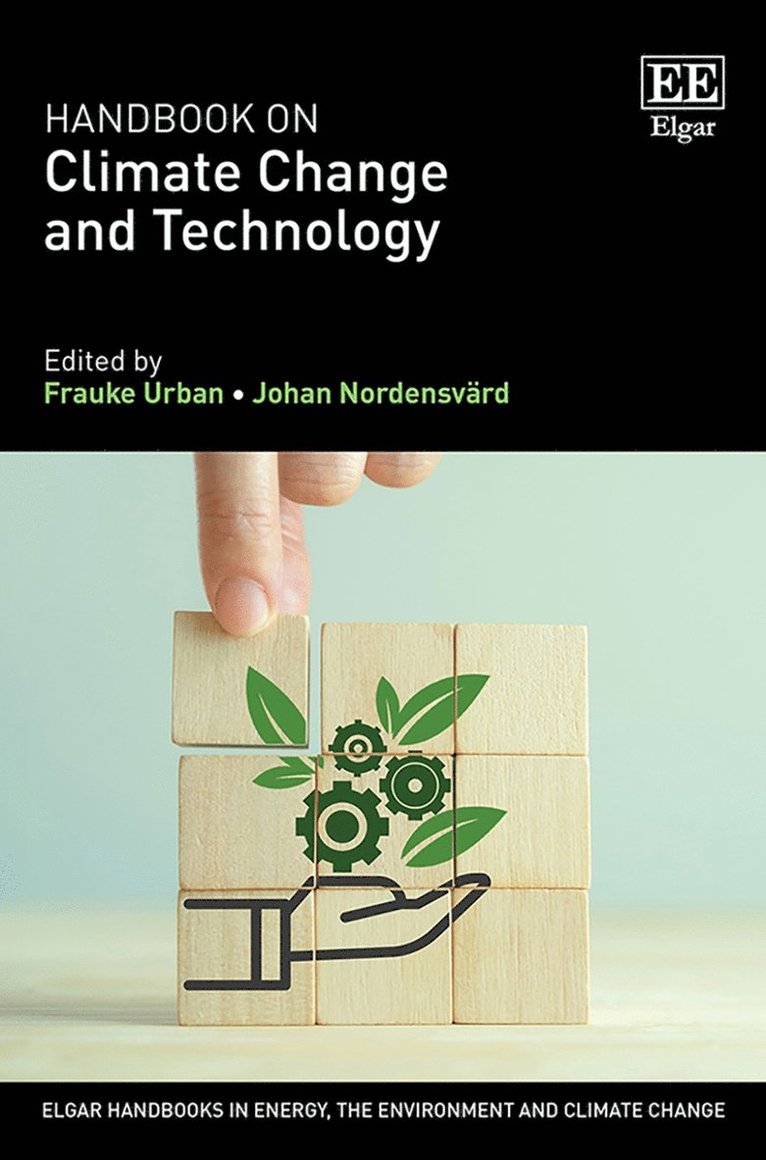
This timely Handbook presents the latest knowledge on technological innovation for climate change mitigation and adaptation. Looking beyond technical fixes, it further draws on economics, politics and sociology to explore how modern technology can contribute to effective and socially just sustainability transitions.Examining cutting-edge research on energy, transport and industry, this Handbook argues that we have the technologies and policy instruments needed to mitigate and adapt to climate change. However, for larger-scale implementation the support at the socio-economic and political levels has to be increased. Chapters further analyse the role that technology plays in key sectors, such as agriculture and forestry, in order to become more sustainable. Contributors also reflect on the position of technology in society, illustrating the wider socio-technical systems that determine the impact that new technologies can have. They call for the political will to implement and scale up technological measures to address climate change across the world.The Handbook on Climate Change and Technology will be essential reading for academics and students of climate change, energy, sustainability and environmental governance and regulation. It will also be an invaluable resource for practitioners and policymakers seeking a deeper understanding of the role of technology in sustainability transitions.