Johanna Hanink - Böcker
Visar alla böcker från författaren Johanna Hanink. Handla med fri frakt och snabb leverans.
6 produkter
6 produkter
406 kr
Skickas inom 10-15 vardagar
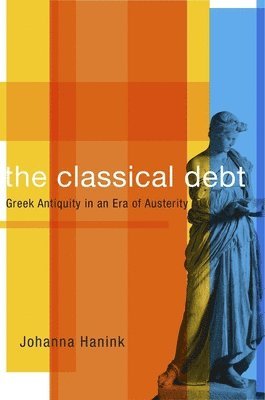
Ever since the International Monetary Fund’s first bailout of Greece’s sinking economy in 2010, the phrase “Greek debt” has meant one thing to the country’s creditors. But for millions who claim to prize culture over capital, it means something quite different: the symbolic debt that Western civilization owes to Greece for furnishing its principles of democracy, philosophy, mathematics, and fine art. Where did this other idea of Greek debt come from, Johanna Hanink asks, and why does it remain so compelling today?The Classical Debt investigates our abiding desire to view Greece through the lens of the ancient past. Though classical Athens was in reality a slave-owning imperial power, the city-state of Socrates and Pericles is still widely seen as a utopia of wisdom, justice, and beauty—an idealization that the ancient Athenians themselves assiduously cultivated. Greece’s allure as a travel destination dates back centuries, and Hanink examines many historical accounts that express disappointment with a Greek people who fail to live up to modern fantasies of the ancient past. More than any other movement, the spread of European philhellenism in the eighteenth and nineteenth centuries carved idealized conceptions of Greece in marble, reinforcing the Western habit of comparing the Greece that is with the Greece that once was.Today, as the European Union teeters and neighboring nations are convulsed by political unrest and civil war, Greece finds itself burdened by economic hardship and an unprecedented refugee crisis. Our idealized image of ancient Greece dangerously shapes how we view these contemporary European problems.
140 kr
Skickas inom 7-10 vardagar
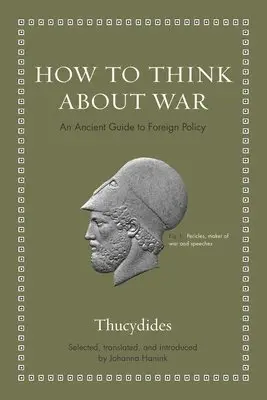
An accessible modern translation of essential speeches from Thucydides’s History that takes readers to the heart of his profound insights on diplomacy, foreign policy, and warWhy do nations go to war? What are citizens willing to die for? What justifies foreign invasion? And does might always make right? For nearly 2,500 years, students, politicians, political thinkers, and military leaders have read the eloquent and shrewd speeches in Thucydides’s History of the Peloponnesian War for profound insights into military conflict, diplomacy, and the behavior of people and countries in times of crisis. How to Think about War presents the most influential and compelling of these speeches in an elegant new translation by classicist Johanna Hanink, accompanied by an enlightening introduction, informative headnotes, and the original Greek on facing pages. The result is an ideally accessible introduction to Thucydides’s long and challenging History.Thucydides intended his account of the clash between classical Greece’s mightiest powers—Athens and Sparta—to be a “possession for all time.” Today, it remains a foundational work for the study not only of ancient history but also contemporary politics and international relations. How to Think about War features speeches that have earned the History its celebrated status—all of those delivered before the Athenian Assembly, as well as Pericles’s funeral oration and the notoriously ruthless “Melian Dialogue.” Organized by key debates, these complex speeches reveal the recklessness, cruelty, and realpolitik of Athenian warfighting and imperialism.The first English-language collection of speeches from Thucydides in nearly half a century, How to Think about War takes readers straight to the heart of this timeless thinker.
1 228 kr
Skickas inom 7-10 vardagar
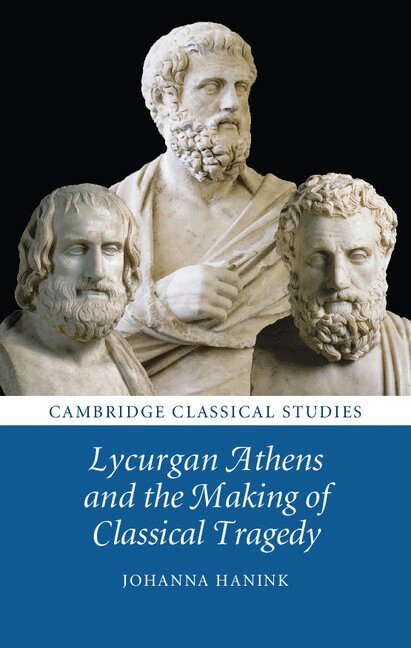
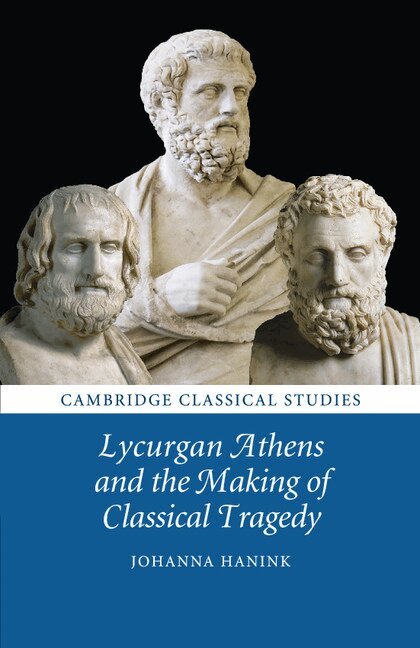
Through a series of interdisciplinary studies this book argues that the Athenians themselves invented the notion of 'classical' tragedy just a few generations after the city's defeat in the Peloponnesian War. In the third quarter of the fourth century BC, and specifically during the 'Lycurgan Era' (338-322 BC), a number of measures were taken in Athens to affirm to the Greek world that the achievement of tragedy was owed to the unique character of the city. By means of rhetoric, architecture, inscriptions, statues, archives and even legislation, the 'classical' tragedians (Aeschylus, Sophocles and Euripides) and their plays came to be presented as both the products and vital embodiments of an idealised Athenian past. This study marks the first account of Athens' invention of its own theatrical heritage and sheds new light upon the interaction between the city's literary and political history.
1 431 kr
Skickas inom 7-10 vardagar
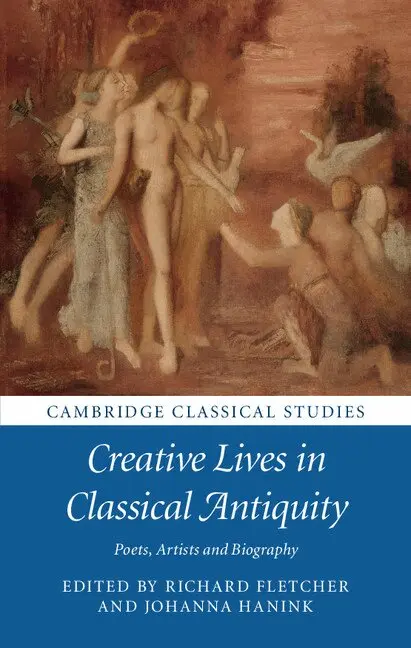
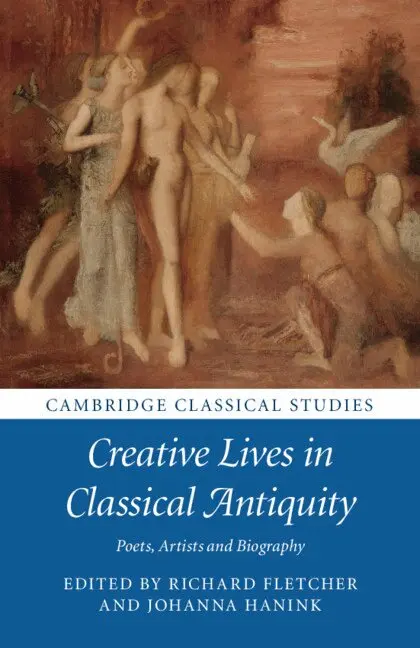
What happened when creative biographers took on especially creative subjects (poets, artists and others) in Greek and Roman antiquity? Creative Lives in Classical Antiquity examines how the biographical traditions of ancient poets and artists parallel the creative processes of biographers themselves, both within antiquity and beyond. Each chapter explores a range of biographical material that highlights the complexity of how readers and viewers imagine the lives of ancient creator-figures. Work in the last decades has emphasized the likely fictionality of nearly all of the ancient evidence about the lives of poets, as well as of other artists and intellectuals; this book now sets out to show what we might nevertheless still do with the rich surviving testimony for 'creative lives' - and the evidence that those traditions still shape how we narrate modern lives too.
441 kr
Skickas inom 7-10 vardagar
Through a series of interdisciplinary studies this book argues that the Athenians themselves invented the notion of 'classical' tragedy just a few generations after the city's defeat in the Peloponnesian War. In the third quarter of the fourth century BC, and specifically during the 'Lycurgan Era' (338-322 BC), a number of measures were taken in Athens to affirm to the Greek world that the achievement of tragedy was owed to the unique character of the city. By means of rhetoric, architecture, inscriptions, statues, archives and even legislation, the 'classical' tragedians (Aeschylus, Sophocles and Euripides) and their plays came to be presented as both the products and vital embodiments of an idealised Athenian past. This study marks the first account of Athens' invention of its own theatrical heritage and sheds new light upon the interaction between the city's literary and political history.
523 kr
Skickas inom 7-10 vardagar
What happened when creative biographers took on especially creative subjects (poets, artists and others) in Greek and Roman antiquity? Creative Lives in Classical Antiquity examines how the biographical traditions of ancient poets and artists parallel the creative processes of biographers themselves, both within antiquity and beyond. Each chapter explores a range of biographical material that highlights the complexity of how readers and viewers imagine the lives of ancient creator-figures. Work in the last decades has emphasized the likely fictionality of nearly all of the ancient evidence about the lives of poets, as well as of other artists and intellectuals; this book now sets out to show what we might nevertheless still do with the rich surviving testimony for 'creative lives' - and the evidence that those traditions still shape how we narrate modern lives too.