Johanne Devlin Trew – författare
Visar alla böcker från författaren Johanne Devlin Trew. Handla med fri frakt och snabb leverans.
5 produkter
5 produkter
Häftad, Engelska, 2016
414 kr
Skickas inom 5-8 vardagar
Leaving the North is the first book that provides a comprehensive survey of Northern Ireland migration since 1921. Based largely on the personal memories of emigrants who left Northern Ireland from the 1920s to the 2000s, approximately half of whom eventually returned, the book traces their multigenerational experiences of leaving Northern Ireland and adapting to life abroad, with some later returning to a society still mired in conflict. Contextualised by a review of the statistical and policy record, the emigrants’ stories reveal that contrary to its well-worn image as an inward-looking place – 'such narrow ground' – Northern Ireland has a rather dynamic migration history, demonstrating that its people have long been looking outward as well as inward, well connected with the wider world. But how many departed and where did they go? And what of the Northern Ireland Diaspora? How has the view of the ‘troubled’ homeland from abroad, especially among expatriates, contributed to progress along the road to peace? In addressing these questions, the book treats the relationship between migration, sectarianism and conflict, immigration and racism, repatriation and the Peace Process, with particular attention to the experience of Northern Ireland migrants in the two principal receiving societies – Britain and Canada. With the emigration of young people once again on the increase due to the economic downturn, it is perhaps timely to learn from the experiences of the people who have been ‘leaving the North’ over many decades; not only to acknowledge their departure but in the hope that we might better understand the challenges and opportunities that migration and Diaspora can present.
Inbunden, Engelska, 2013
1 980 kr
Skickas inom 5-8 vardagar
Leaving the North is the first book that provides a comprehensive survey of Northern Ireland migration since 1921. Based largely on the personal memories of emigrants who left Northern Ireland from the 1920s to the 2000s, approximately half of whom eventually returned, the book traces their multigenerational experiences of leaving Northern Ireland and adapting to life abroad, with some later returning to a society still mired in conflict. Contextualised by a review of the statistical and policy record, the emigrants’ stories reveal that contrary to its well-worn image as an inward-looking place – 'such narrow ground' – Northern Ireland has a rather dynamic migration history, demonstrating that its people have long been looking outward as well as inward, well connected with the wider world. But how many departed and where did they go? And what of the Northern Ireland Diaspora? How has the view of the ‘troubled’ homeland from abroad, especially among expatriates, contributed to progress along the road to peace? In addressing these questions, the book treats the relationship between migration, sectarianism and conflict, immigration and racism, repatriation and the Peace Process, with particular attention to the experience of Northern Ireland migrants in the two principal receiving societies – Britain and Canada. With the emigration of young people once again on the increase due to the economic downturn, it is perhaps timely to learn from the experiences of the people who have been ‘leaving the North’ over many decades; not only to acknowledge their departure but in the hope that we might better understand the challenges and opportunities that migration and Diaspora can present.
Häftad, Engelska, 2020
1 457 kr
Skickas inom 10-15 vardagar
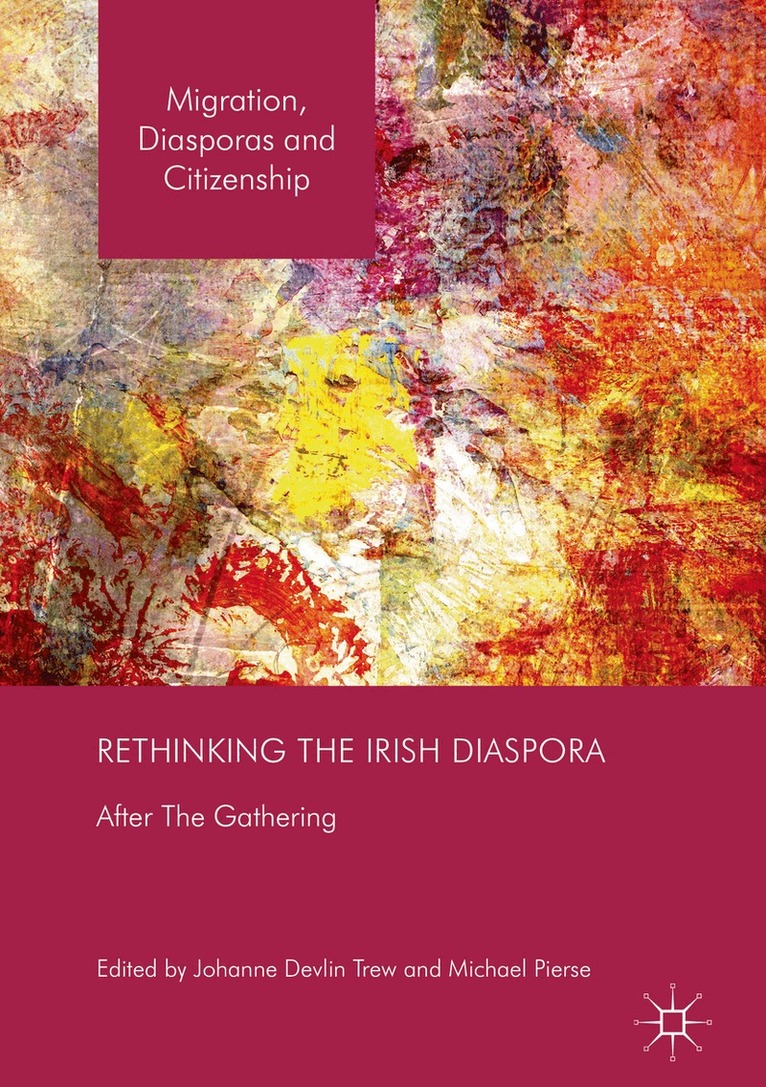
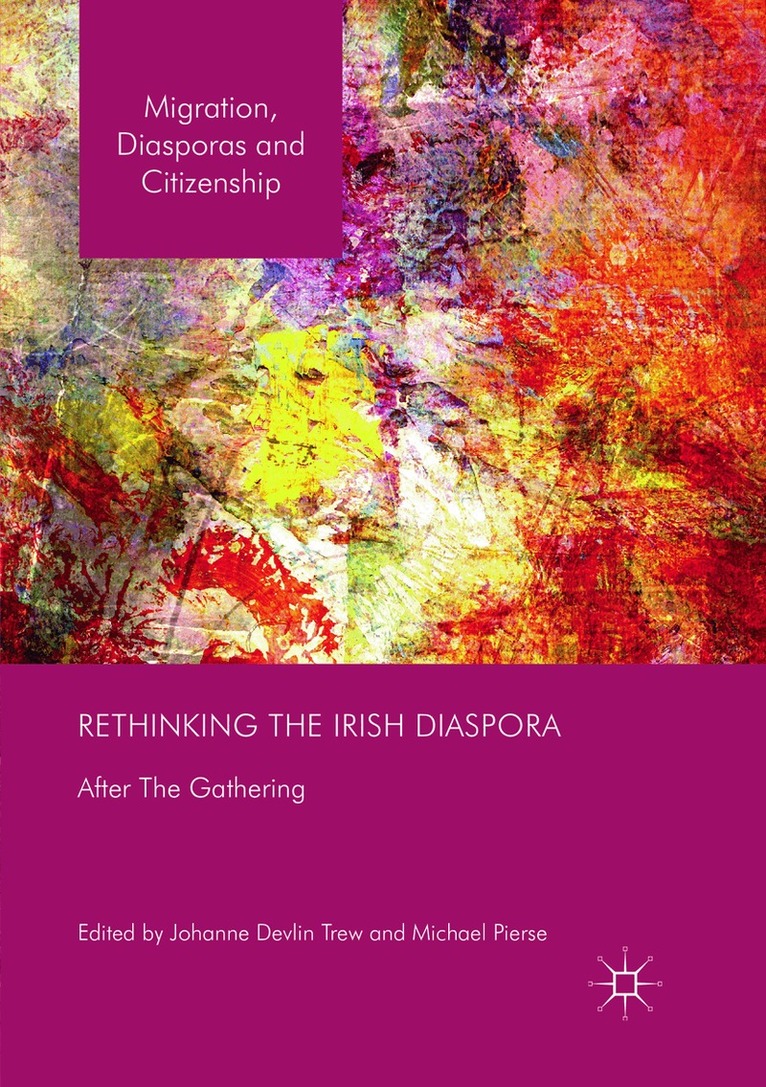
This book provides scholarly perspectives on a range of timely concerns in Irish diaspora studies. It offers a focal point for fresh interchanges and theoretical insights on questions of identity, Irishness, historiography and the academy’s role in all of these. In doing so, it chimes with the significant public debates on Irish and Irish emigrant identities that have emerged from Ireland’s The Gathering initiative (2013) and that continue to reverberate throughout the Decade of Centenaries (2012-2023) in Ireland, North and South. In ten chapters of new research on key areas of concern in this field, the book sustains a conversation centred on three core questions: what is diaspora in the Irish context and who does it include/exclude? What is the view of Ireland and Northern Ireland from the diaspora? How can new perspectives in the academy engage with a more rigorous and probing theorisation of these concerns? This thought-provoking work will appeal to students and scholars of history, geography, literature, sociology, tourism studies and Irish studies.
Inbunden, Engelska, 2018
1 457 kr
Skickas inom 10-15 vardagar
This book provides scholarly perspectives on a range of timely concerns in Irish diaspora studies. It offers a focal point for fresh interchanges and theoretical insights on questions of identity, Irishness, historiography and the academy’s role in all of these. In doing so, it chimes with the significant public debates on Irish and Irish emigrant identities that have emerged from Ireland’s The Gathering initiative (2013) and that continue to reverberate throughout the Decade of Centenaries (2012-2023) in Ireland, North and South. In ten chapters of new research on key areas of concern in this field, the book sustains a conversation centred on three core questions: what is diaspora in the Irish context and who does it include/exclude? What is the view of Ireland and Northern Ireland from the diaspora? How can new perspectives in the academy engage with a more rigorous and probing theorisation of these concerns? This thought-provoking work will appeal to students and scholars of history, geography, literature, sociology, tourism studies and Irish studies.
E-bok
Engelska, 20181 722 kr
Läs direkt efter köp
This book provides scholarly perspectives on a range of timely concerns in Irish diaspora studies. It offers a focal point for fresh interchanges and theoretical insights on questions of identity, Irishness, historiography and the academy’s role in all of these. In doing so, it chimes with the significant public debates on Irish and Irish emigrant identities that have emerged from Ireland’s The Gathering initiative (2013) and that continue to reverberate throughout the Decade of Centenaries (2012-2023) in Ireland, North and South. In ten chapters of new research on key areas of concern in this field, the book sustains a conversation centred on three core questions: what is diaspora in the Irish context and who does it include/exclude? What is the view of Ireland and Northern Ireland from the diaspora? How can new perspectives in the academy engage with a more rigorous and probing theorisation of these concerns? This thought-provoking work will appeal to students and scholars of history, geography, literature, sociology, tourism studies and Irish studies.