John A. - Böcker
Visar alla böcker från författaren John A.. Handla med fri frakt och snabb leverans.
5 produkter
5 produkter
1 945 kr
Skickas inom 7-10 vardagar
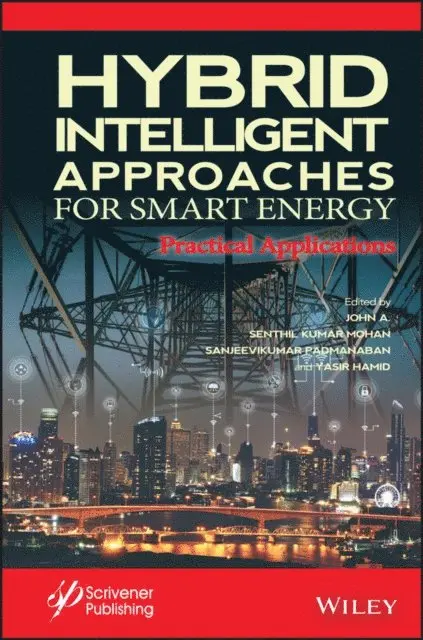
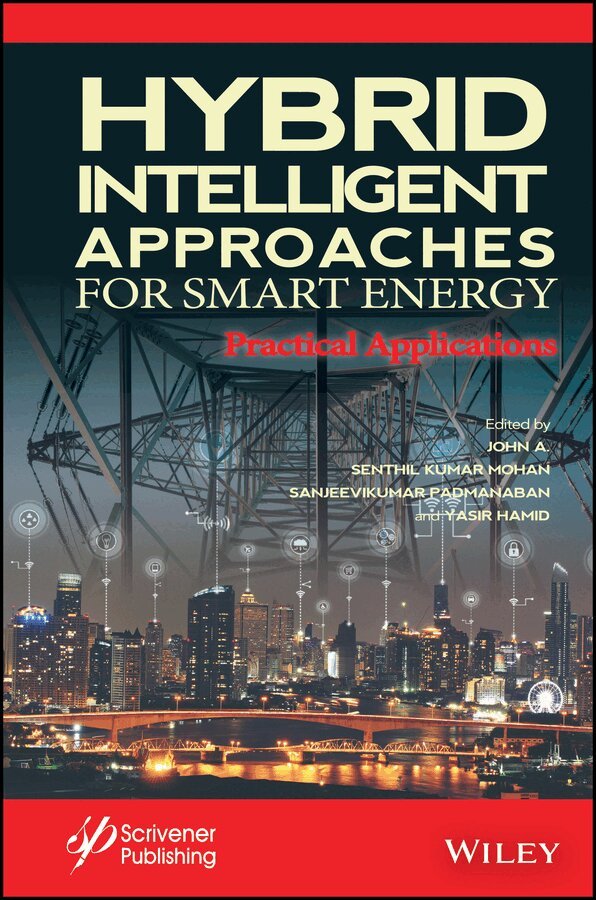
HYBRID INTELLIGENT APPROACHES FOR SMART ENERGY Green technologies and cleaner energy are two of the most important topics facing our world today, and the march toward efficient energy systems, smart cities, and other green technologies, has been, and continues to be, a long and intricate one. Books like this one keep the veteran engineer and student, alike, up to date on current trends in the technology and offer a reference for the industry for its practical applications. Energy optimization and consumption prediction are necessary to prevent energy waste, schedule energy usage, and reduce the cost. Today, smart computing technologies are slowly replacing the traditional computational methods in energy optimization, consumption, scheduling, and usage. Smart computing is an important core technology in today’s scientific and engineering environment. Smart computation techniques such as artificial intelligence, machine learning, deep learning and Internet of Things (IoT) are the key role players in emerging technologies across different applications, industries, and other areas. These newer, smart computation techniques are incorporated with traditional computation and scheduling methods to reduce power usage in areas such as distributed environment, healthcare, smart cities, agriculture and various functional areas. The scope of this book is to bridge the gap between traditional power consumption methods and modern consumptions methods using smart computation methods. This book addresses the various limitations, issues and challenges of traditional energy consumption methods and provides solutions for various issues using modern smart computation technologies. These smart technologies play a significant role in power consumption, and they are cheaper compared to traditional technologies. The significant limitations of energy usage and optimizations are rectified using smart computations techniques, and the computation techniques are applied across a wide variety of industries and engineering areas. Valuable as reference for engineers, scientists, students, and other professionals across many areas, this is a must-have for any library.
2 406 kr
Kommande
247 kr
Skickas inom 5-8 vardagar
1 957 kr
Skickas inom 10-15 vardagar
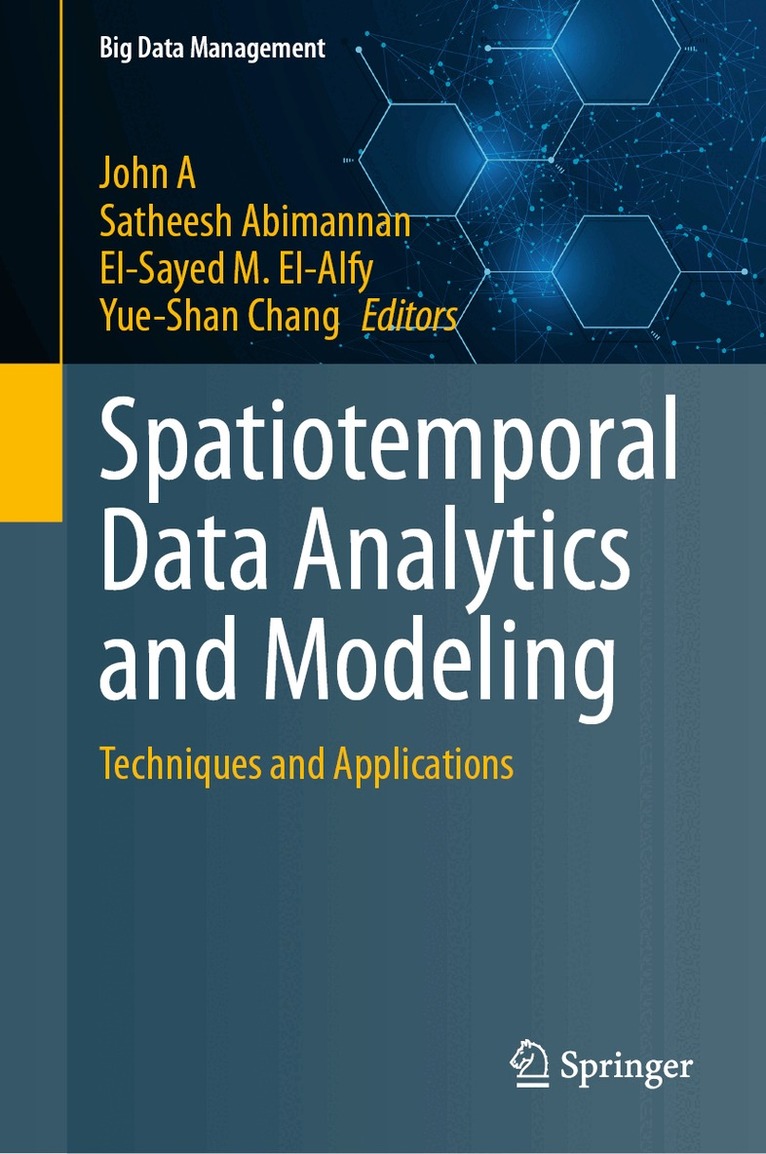
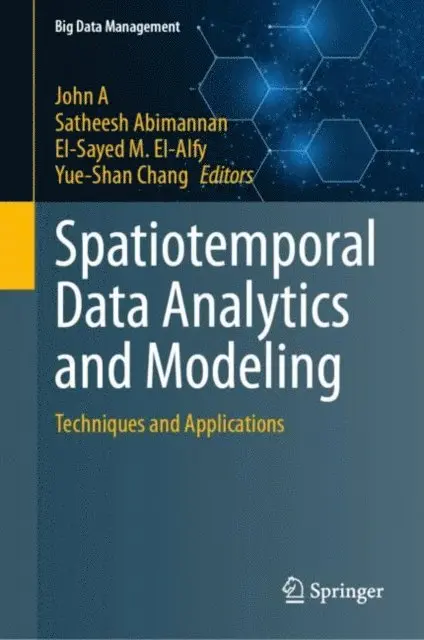
With the growing advances in technology and transformation to digital services, the world is becoming more connected and more complex. Huge heterogeneous data are generated at rapid speed from various types of sensors. Augmented with artificial intelligence and machine learning and internet of things, latent relations, and new insights can be captured helping in optimizing plans and resource utilization, improving infrastructure, and enhancing quality of services.A “spatial data management system” is a way to take care of data that has something to do with space. This could include data such as maps, satellite images, and GPS data. A temporal data management system is a system designed to manage data that has a temporal component. This could include data such as weather data, financial data, and social media data. Some advanced techniques used in spatial and temporal data management systems include geospatial indexing for efficient querying and retrieval of location-based data, time-series analysis for understanding and predicting temporal patterns in datasets like weather or financial trends, machine learning algorithms for uncovering hidden patterns and correlations in large and complex datasets, and integration with Internet of Things (IoT) technologies for real-time data collection and analysis. These techniques, augmented with artificial intelligence, enable the extraction of latent relations and insights, thereby optimizing plans, improving infrastructure, and enhancing the quality of services. This book provides essential technical knowledge, best practices, and case studies on the state-of-the-art techniques of artificial intelligence and machine learning for spatiotemporal data analysis and modeling. The book is composed of several chapters written by experts in their fields and focusing on several applications including recommendation systems, big data analytics, supply chains and e-commerce, energy consumption and demand forecasting,and traffic and environmental monitoring. It can be used as academic reference at graduate level or by professionals in science and engineering related fields such as data science and engineering, big data analytics and mining, artificial intelligence, machine learning and deep learning, cloud computing, and internet of things.
1 957 kr
Skickas inom 10-15 vardagar
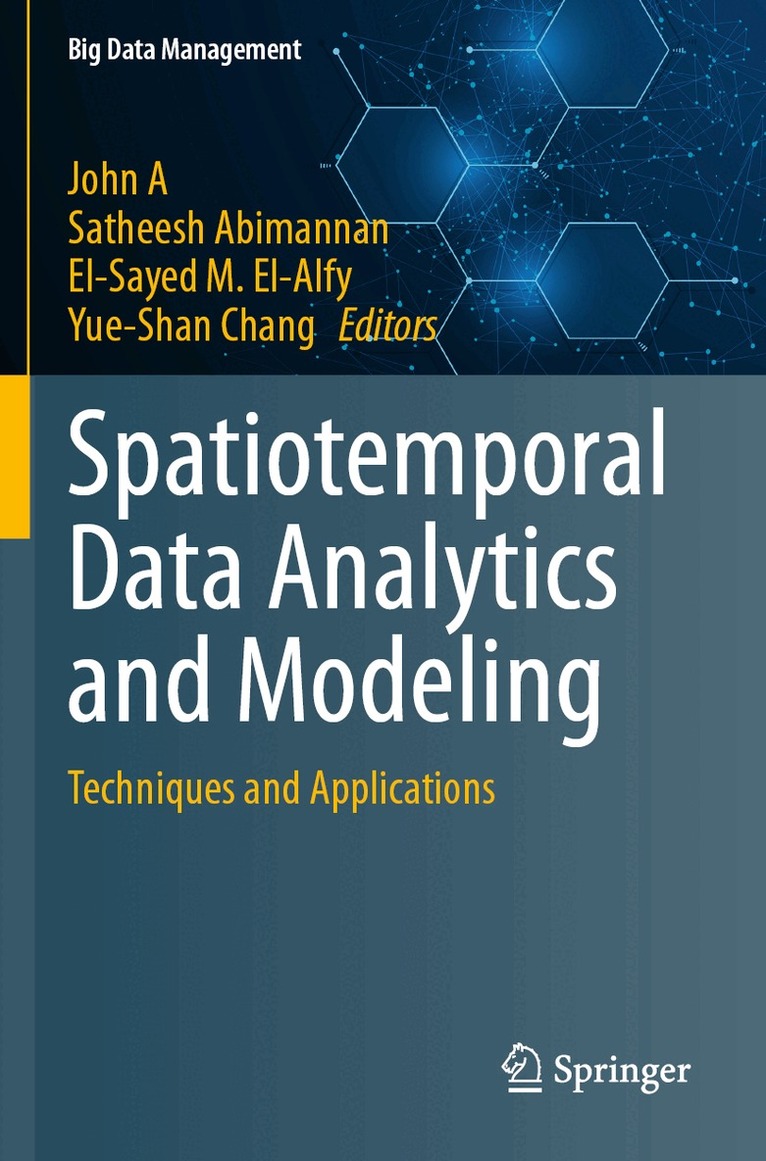
With the growing advances in technology and transformation to digital services, the world is becoming more connected and more complex. Huge heterogeneous data are generated at rapid speed from various types of sensors. Augmented with artificial intelligence and machine learning and internet of things, latent relations, and new insights can be captured helping in optimizing plans and resource utilization, improving infrastructure, and enhancing quality of services.A “spatial data management system” is a way to take care of data that has something to do with space. This could include data such as maps, satellite images, and GPS data. A temporal data management system is a system designed to manage data that has a temporal component. This could include data such as weather data, financial data, and social media data. Some advanced techniques used in spatial and temporal data management systems include geospatial indexing for efficient querying and retrieval of location-based data, time-series analysis for understanding and predicting temporal patterns in datasets like weather or financial trends, machine learning algorithms for uncovering hidden patterns and correlations in large and complex datasets, and integration with Internet of Things (IoT) technologies for real-time data collection and analysis. These techniques, augmented with artificial intelligence, enable the extraction of latent relations and insights, thereby optimizing plans, improving infrastructure, and enhancing the quality of services. This book provides essential technical knowledge, best practices, and case studies on the state-of-the-art techniques of artificial intelligence and machine learning for spatiotemporal data analysis and modeling. The book is composed of several chapters written by experts in their fields and focusing on several applications including recommendation systems, big data analytics, supply chains and e-commerce, energy consumption and demand forecasting,and traffic and environmental monitoring. It can be used as academic reference at graduate level or by professionals in science and engineering related fields such as data science and engineering, big data analytics and mining, artificial intelligence, machine learning and deep learning, cloud computing, and internet of things.