John A. Lee – författare
Visar alla böcker från författaren John A. Lee. Handla med fri frakt och snabb leverans.
6 produkter
Nonlinear Dimensionality Reduction
Av John A. Lee, Michel Verleysen
Häftad, 2010
1528 kr
Lägg i varukorg
Methods of dimensionality reduction provide a way to understand and visualize the structure of complex data sets. Traditional methods like principal component analysis and classical metric multidimensional scaling suffer from being based on linear models. Until recently, very few methods were able …
Nonlinear Dimensionality Reduction
Av John A. Lee, Michel Verleysen
Inbunden, 2007
1524 kr
Lägg i varukorg
Methods of dimensionality reduction provide a way to understand and visualize the structure of complex data sets. Traditional methods like principal component analysis and classical metric multidimensional scaling suffer from being based on linear models. Until recently, very few methods were able …
Nonlinear Dimensionality Reduction
Av Michel Verleysen, John A. Lee
E-bok, 2007
1948 kr
Lägg i varukorg
Methods of dimensionality reduction provide a way to understand and visualize the structure of complex data sets. Traditional methods like principal component analysis and classical metric multidimensional scaling suffer from being based on linear models. Until recently, very few methods were able …
Lasting Hymns
a Collection of Songs Specially Designed for Every Department of Worship and Suitable for All the Services of the Churches /
Av John a Lee
Häftad, 2021
279 kr
Lägg i varukorg
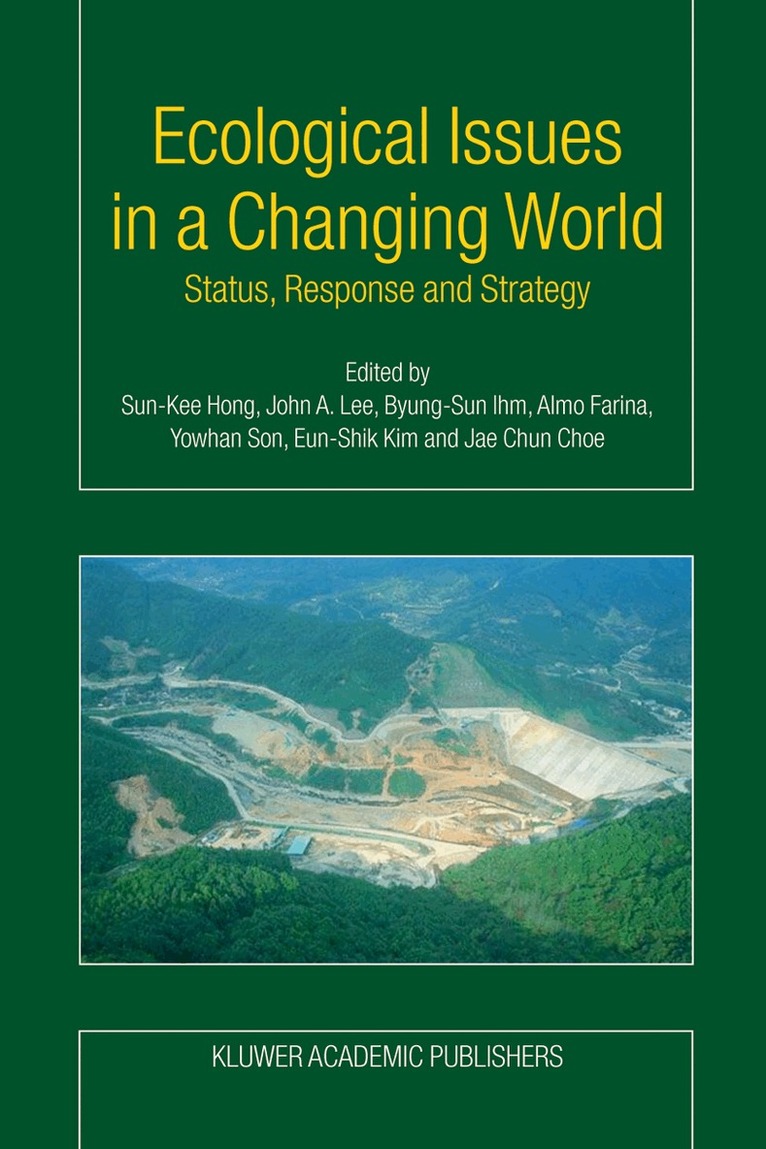
Ecological Issues in a Changing World
Status, Response and Strategy
Av Sun-Kee Hong, John A. Lee m. fl.
Inbunden, 2005
1637 kr
Lägg i varukorg
Problems of scale have exercised the minds of ecologists for many years, and will continue to do so into the future. This volume deals with this subject and with mathematical approaches to improve our understanding of complex ecological systems. The book also concentrates on monitoring the …
Ecological Issues in a Changing World
Status, Response and Strategy
Av Sun-Kee Hong, John A. Lee m. fl.
Häftad, 2010
1641 kr
Lägg i varukorg
Problems of scale have exercised the minds of ecologists for many years, and will continue to do so into the future. This volume deals with this subject and with mathematical approaches to improve our understanding of complex ecological systems. The book also concentrates on monitoring the …