John A. Sloboda – författare
Visar alla böcker från författaren John A. Sloboda. Handla med fri frakt och snabb leverans.
12 produkter
12 produkter
Inbunden, Engelska, 2007
599 kr
Skickas inom 5-8 vardagar
This book provides a concise, accessible, and up-to-date introduction to psychological research for musicians - performers, music educators, and studio teachers. Designed to address the needs and priorities of the performing musician rather than the research community, it reviews the relevant psychological research findings in relation to situations and issues faced by musicians, and draws out practical implications for the practice of teaching and performance. Rather than a list of DOs and DON'Ts, this book equips musicians with an understanding of the basic psychological principles that underlie music performcance, enabling each reader to apply the content flexibly to the task at hand.Following a brief review of the scientific method as a way of thinking about the issues and problems in music, this text addresses the nature-nurture problem, identification and assessment of musical aptitude, musical development, adult skill maintenance, technical and expressive skills, practice, interpretation and expressivity, sight-reading, memorization, creativity, and composition, performance anxiety, critical listening, and teaching and learning. While there is a large body of empirical research regarding music, most musicians lack the scientific training to interpret these studies. This text bridges this gap by relating these skills to the musician's experiences, addressing their needs directly with non-technical language and practical application. The book includes multiple illustrations, brief music examples, cases, questions, and suggestions for further reading.
E-bok
PDF, Engelska, 2007513 kr
Läs direkt efter köp
What is it that accounts for the differences between musical beginners, advanced music makers, and world class performers? Virtually everyone likes music and has the capacity to be musical in some way (despite what some may say about themselves). Yet far fewer people come to be so involved with it that they identify themselves as musicians, and fewer still become musicians of international class. Psychology for Musicians provides the basis for answering this question. Examining the processes that underlie the acquisition of musical skills, Lehmann, Sloboda, and Woody provide a concise, accessible, and up-to-date introduction to psychological research for musicians.
Del 5 - Oxford Psychology Series
The Musical Mind
The Cognitive Psychology of Music
Häftad, Engelska, 1986
882 kr
Skickas inom 5-8 vardagar
What are the mental processes involved in listening to, performing, and composing music? What is involved in 'understanding' a piece of music? How are such skills acquired?Questions such as these form the basis of the cognitive psychology of music. The author addresses these questions by surveying the growing experimental literature on the subject. The topics covered will be of interest to psychologists, as windows onto a human cognitive skill of some complexity that is only now beginning to receive the attention devoted to such skills as language. They are also relevant to musicians who are seeking to understand the psychological bases of their skills.The author does not simply review existing research, but takes a critical look at what has been achieved in the subject, introducing such topics as composition and musical skill in non-literate cultures. He draws freely on his own knowledge and experience as a practising musician, as well as a psychologist, to provide an overview that is scholarly and also accessible to the general reader.
E-bok
Engelska, 2007513 kr
Läs direkt efter köp
What is it that accounts for the differences between musical beginners, advanced music makers, and world class performers? Virtually everyone likes music and has the capacity to be musical in some way (despite what some may say about themselves). Yet far fewer people come to be so involved with it that they identify themselves as musicians, and fewer still become musicians of international class. Psychology for Musicians provides the basis for answering this question. Examining the processes that underlie the acquisition of musical skills, Lehmann, Sloboda, and Woody provide a concise, accessible, and up-to-date introduction to psychological research for musicians.
Inbunden, Engelska, 1997
2 727 kr
Skickas inom 10-15 vardagar
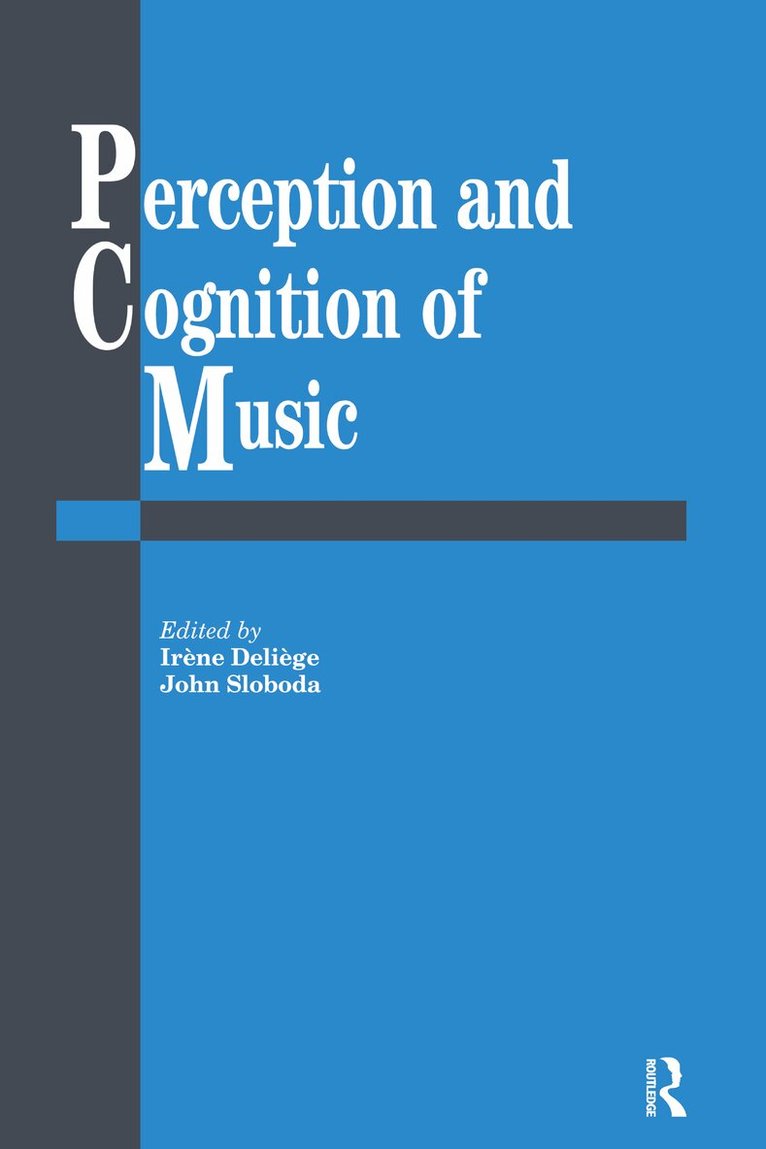
This text comprises of reviews of work relating to music and mind. It presents a range of approaches from the psychological through the computational, to the musicological. The reviews were selected from papers submitted at the Third International Conference on Music Perception and Cognition Liege 1994 to illustrate the wide range of perspectives now being adopted in studying how humans make and respond to music. The book is divided ino five sections. The first part illustrates the role of analysis and ethnomusicology in understanding cultural determinants of musical behaviour. The second part charts what is known about aquisition of musical competence, from pre-birth through to the expert performer. The evidence accumulated about specific areas of the brain which control musical thinking and behaviour is examined in Part Three. The fourth part examines how neurological, behavioural and artificial intelligence approaches are converging to shed light on processes in auditory perception. Finally, Part Five highlights the important developments in how we conceptualize the way in which musical structures are represented in the mind.
E-bok
Engelska, 2004930 kr
Läs direkt efter köp
This text comprises of reviews of work relating to music and mind. It presents a range of approaches from the psychological through the computational, to the musicological. The reviews were selected from papers submitted at the Third International Conference on Music Perception and Cognition Liege 1994 to illustrate the wide range of perspectives now being adopted in studying how humans make and respond to music. The book is divided ino five sections. The first part illustrates the role of analysis and ethnomusicology in understanding cultural determinants of musical behaviour. The second part charts what is known about aquisition of musical competence, from pre-birth through to the expert performer. The evidence accumulated about specific areas of the brain which control musical thinking and behaviour is examined in Part Three. The fourth part examines how neurological, behavioural and artificial intelligence approaches are converging to shed light on processes in auditory perception. Finally, Part Five highlights the important developments in how we conceptualize the way in which musical structures are represented in the mind.
E-bok
PDF, Engelska, 2004930 kr
Läs direkt efter köp
This text comprises of reviews of work relating to music and mind. It presents a range of approaches from the psychological through the computational, to the musicological. The reviews were selected from papers submitted at the Third International Conference on Music Perception and Cognition Liege 1994 to illustrate the wide range of perspectives now being adopted in studying how humans make and respond to music. The book is divided ino five sections. The first part illustrates the role of analysis and ethnomusicology in understanding cultural determinants of musical behaviour. The second part charts what is known about aquisition of musical competence, from pre-birth through to the expert performer. The evidence accumulated about specific areas of the brain which control musical thinking and behaviour is examined in Part Three. The fourth part examines how neurological, behavioural and artificial intelligence approaches are converging to shed light on processes in auditory perception. Finally, Part Five highlights the important developments in how we conceptualize the way in which musical structures are represented in the mind.
Häftad, Engelska, 2015
809 kr
Skickas inom 10-15 vardagar
This text comprises of reviews of work relating to music and mind. It presents a range of approaches from the psychological through the computational, to the musicological. The reviews were selected from papers submitted at the Third International Conference on Music Perception and Cognition Liege 1994 to illustrate the wide range of perspectives now being adopted in studying how humans make and respond to music. The book is divided ino five sections. The first part illustrates the role of analysis and ethnomusicology in understanding cultural determinants of musical behaviour. The second part charts what is known about aquisition of musical competence, from pre-birth through to the expert performer. The evidence accumulated about specific areas of the brain which control musical thinking and behaviour is examined in Part Three. The fourth part examines how neurological, behavioural and artificial intelligence approaches are converging to shed light on processes in auditory perception. Finally, Part Five highlights the important developments in how we conceptualize the way in which musical structures are represented in the mind.
E-bok
PDF, Engelska, 2013708 kr
Läs direkt efter köp
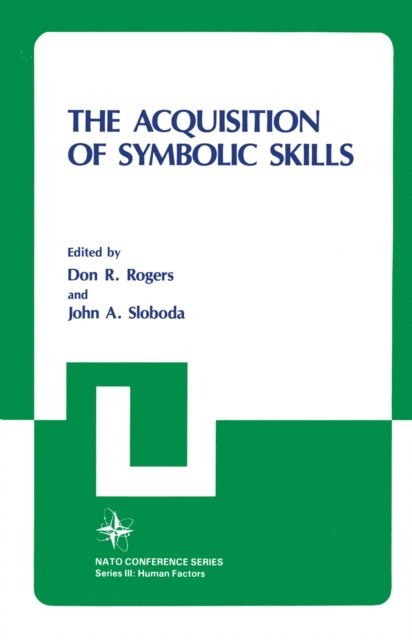
This book is a selection of papers from a conference which took place at the University of Keele in July 1982. The conference was an extraordinarily enjoyable one, and we would like to take this opportunity of thanking all participants for helping to make it so. The conference was intended to allow scholars working on different aspects of symbolic behaviour to compare findings, to look for common ground, and to identify differences between the various areas. We hope that it was successful in these aims: the assiduous reader may judge for himself. Several themes emerged during the course of the conference. Some of these were: 1. There is a distinction to be made between those symbol systems which attempt, more or less directly, to represent a state of affairs in the world (e. g. language, drawing, map and navigational skill) and those in which the representational function is complemented, if not overshadowed, by properties of the symbol system itself, and the systematic inter-relations that symbols can have to one another (e. g. music, mathematics). The distinction is not absolute, for the nature of all symbolic skills is, in part, a function of the structure of the symbolic system employed. Nonetheless, this distinction helps us to understand some common acquisition difficulties, such as that experienced in mathematics, where mental manipulation of symbols can go awry if a child assumes too close a correspondence between mathematical symbols and the world they represent. 2.
Häftad, Engelska, 2011
564 kr
Skickas inom 10-15 vardagar
This book is a selection of papers from a conference which took place at the University of Keele in July 1982. The conference was an extraordinarily enjoyable one, and we would like to take this opportunity of thanking all participants for helping to make it so. The conference was intended to allow scholars working on different aspects of symbolic behaviour to compare findings, to look for common ground, and to identify differences between the various areas. We hope that it was successful in these aims: the assiduous reader may judge for himself. Several themes emerged during the course of the conference. Some of these were: 1. There is a distinction to be made between those symbol systems which attempt, more or less directly, to represent a state of affairs in the world (e. g. language, drawing, map and navigational skill) and those in which the representational function is complemented, if not overshadowed, by properties of the symbol system itself, and the systematic inter-relations that symbols can have to one another (e. g. music, mathematics). The distinction is not absolute, for the nature of all symbolic skills is, in part, a function of the structure of the symbolic system employed. Nonetheless, this distinction helps us to understand some common acquisition difficulties, such as that experienced in mathematics, where mental manipulation of symbols can go awry if a child assumes too close a correspondence between mathematical symbols and the world they represent. 2.
E-bok
Spanska, 2015108 kr
Läs direkt efter köp
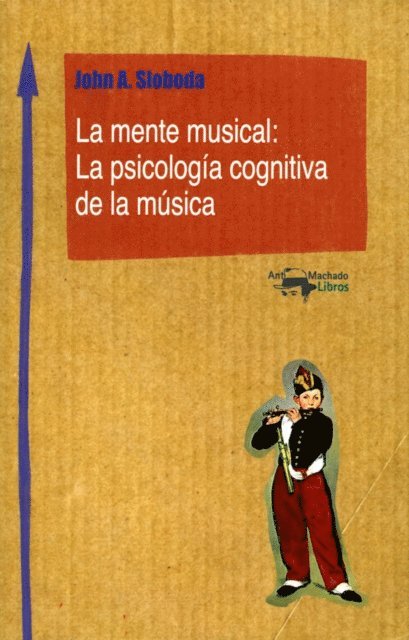
¿Qué procesos mentales están involucrados al escuchar, interpretar y componer música? ¿Qué interviene al "comprender" una pieza musical? ¿Cómo se adquieren estas habilidades? Preguntas como estas forman la base de la psicología cognitiva de la música. El autor plantea estas preguntas al analizar el aumento de la investigación en este campo. Los temas abordados interesarán a los psicólogos como ventanas hacia las habilidades cognitivas complejas que solamente ahora comienzan a recibir la atención que se le ha dedicado a habilidades tales como el lenguaje. Son también relevantes para músicos que tratan de comprender las bases psicológicas de sus habilidades. El autor no solo analiza la investigación existente, sino que adopta una mirada crítica a lo que se ha realizado en el área, introduciendo temas como composición y habilidad musical en culturas no alfabetizadas. Utiliza libremente su propio conocimiento y experiencia como músico, y como psicólogo, para proporcionar un mirada que es al mismo tiempo académica y accesible a cualquier lector.Dirigido a psicólogos, músicos y a cualquier lector en general.
Inbunden, Engelska
1 198 kr
Tillfälligt slut