John A. Trangenstein – författare
Visar alla böcker från författaren John A. Trangenstein. Handla med fri frakt och snabb leverans.
11 produkter
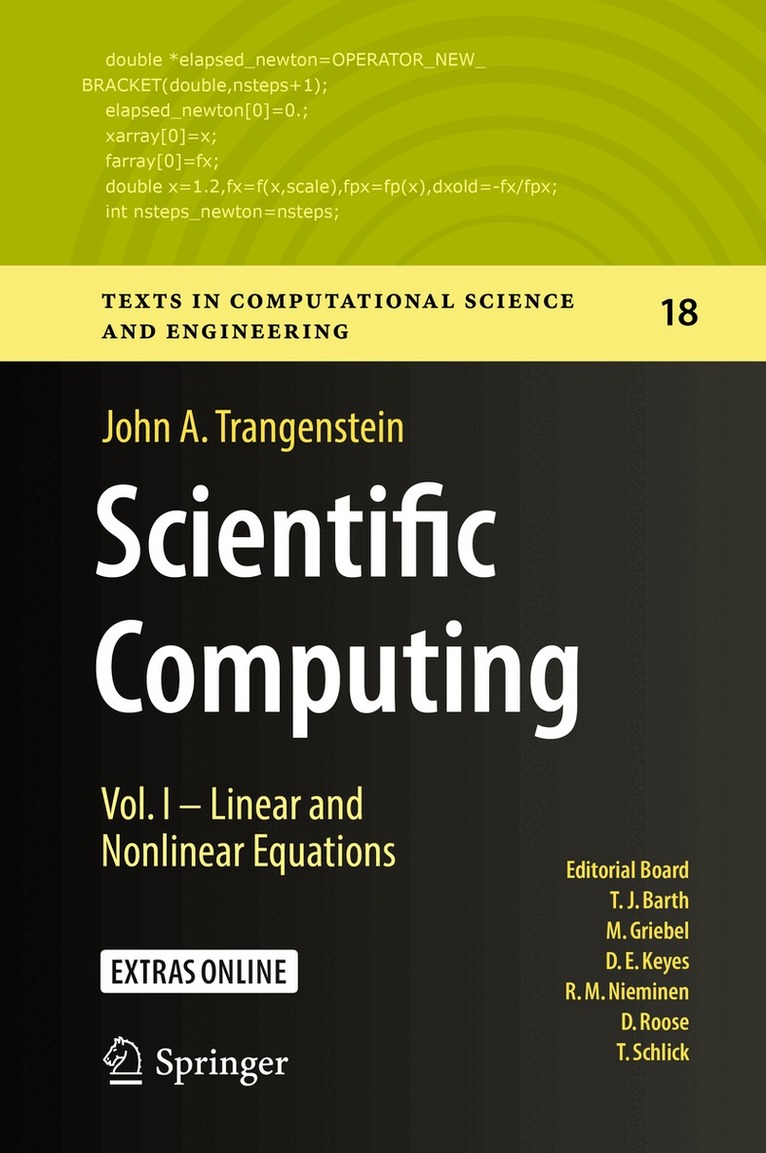
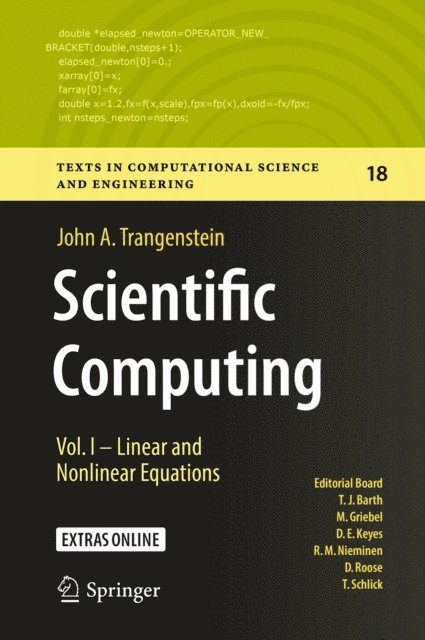
Scientific Computing
Vol. I - Linear and Nonlinear Equations
Inbunden, 2018
732 kr
Lägg i varukorg
This is the first of three volumes providing a comprehensive presentation of the fundamentals of scientific computing. This volume discusses basic principles of computation, and fundamental numerical algorithms that will serve as basic tools for the subsequent two volumes. This book and its …
Multiphase Flow in Porous Media
Mechanics, Mathematics, and Numerics
Av Myron B. III Allen, Grace A. Behie m. fl.
Häftad, 1988
1094 kr
Lägg i varukorg
The past decade has seen remarkable growth in research related to petroleum reseIVoir simulation. This growth reflects several developments, not the least of which is the increased interest in oil recovery technologies requiring sophisticated engineer ing. Augmenting this interest has been the …
Multiphase Flow in Porous Media
Mechanics, Mathematics, and Numerics
Av John A. Trangenstein, Grace A. Behie m. fl.
E-bok, 2013
1427 kr
Lägg i varukorg
The past decade has seen remarkable growth in research related to petroleum reseIVoir simulation. This growth reflects several developments, not the least of which is the increased interest in oil recovery technologies requiring sophisticated engineer ing. Augmenting this interest has been the …
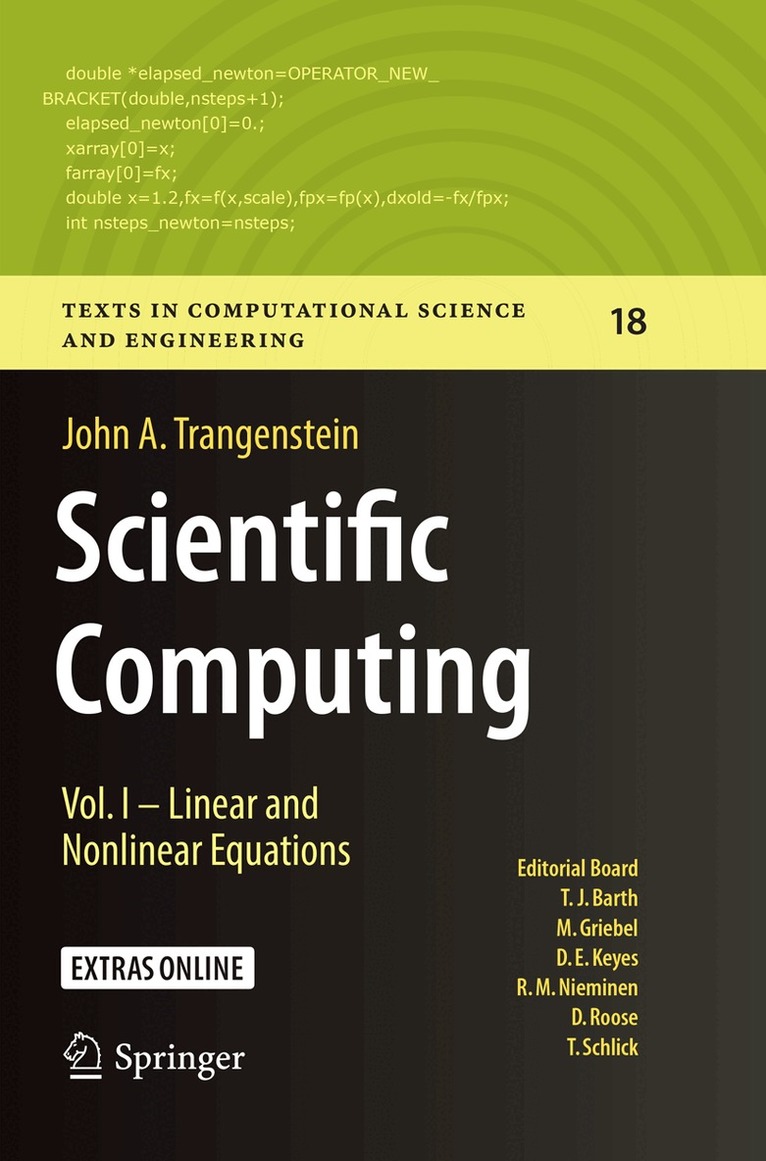
Scientific Computing
Vol. I - Linear and Nonlinear Equations
Häftad, 2018
714 kr
Lägg i varukorg
This is the first of three volumes providing a comprehensive presentation of the fundamentals of scientific computing. This volume discusses basic principles of computation, and fundamental numerical algorithms that will serve as basic tools for the subsequent two volumes. This book and its …
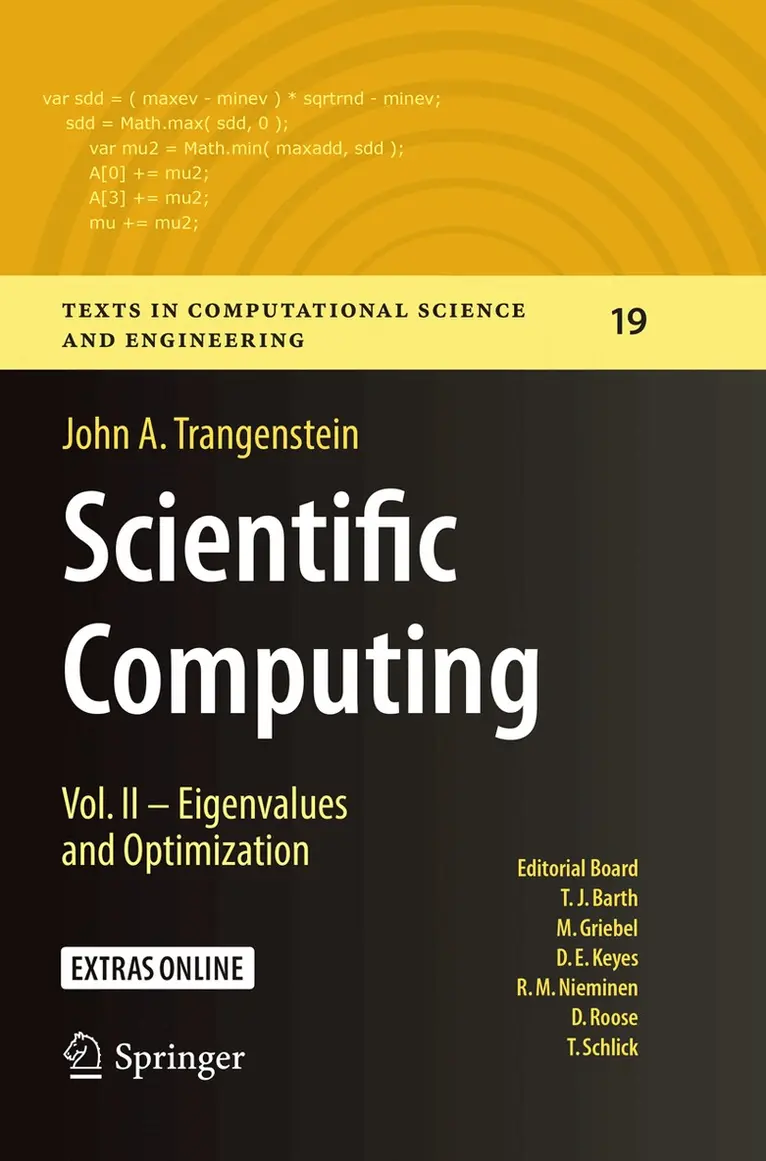
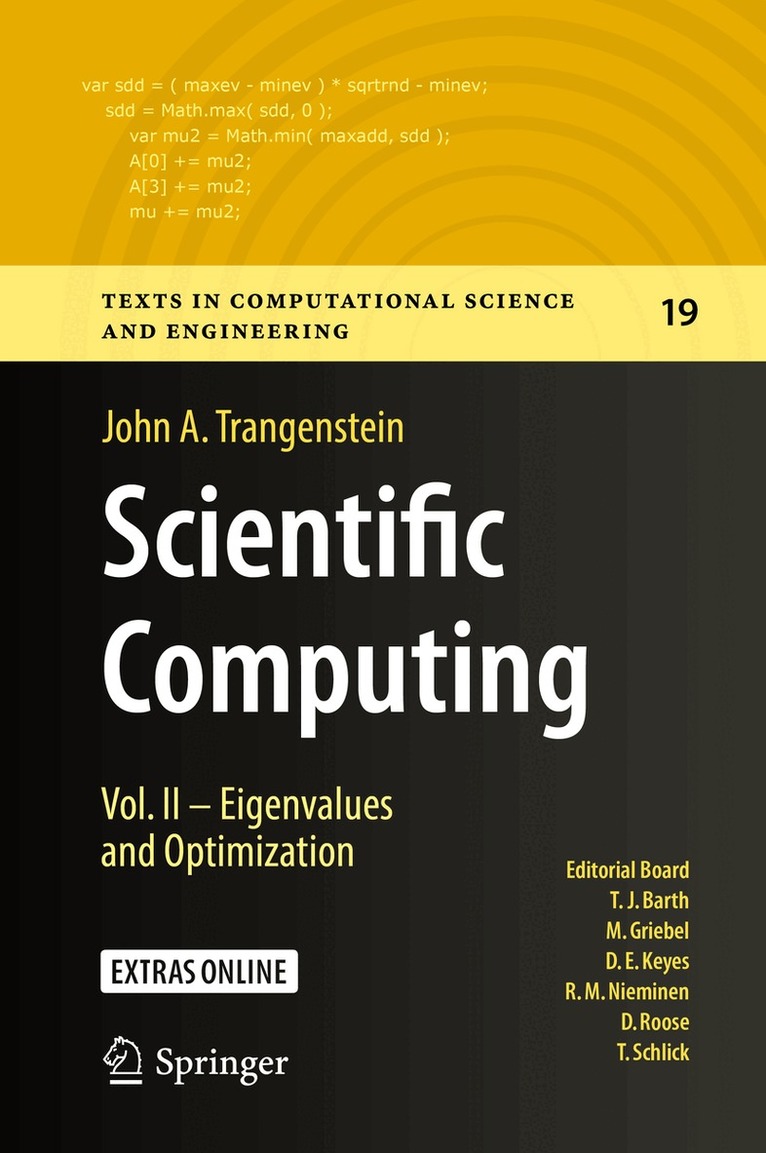
Scientific Computing
Vol. II - Eigenvalues and Optimization
Häftad, 2018
714 kr
Lägg i varukorg
This is the second of three volumes providing a comprehensive presentation of the fundamentals of scientific computing. This volume discusses more advanced topics than volume one, and is largely not a prerequisite for volume three. This book and its companions show how to determine the quality of …
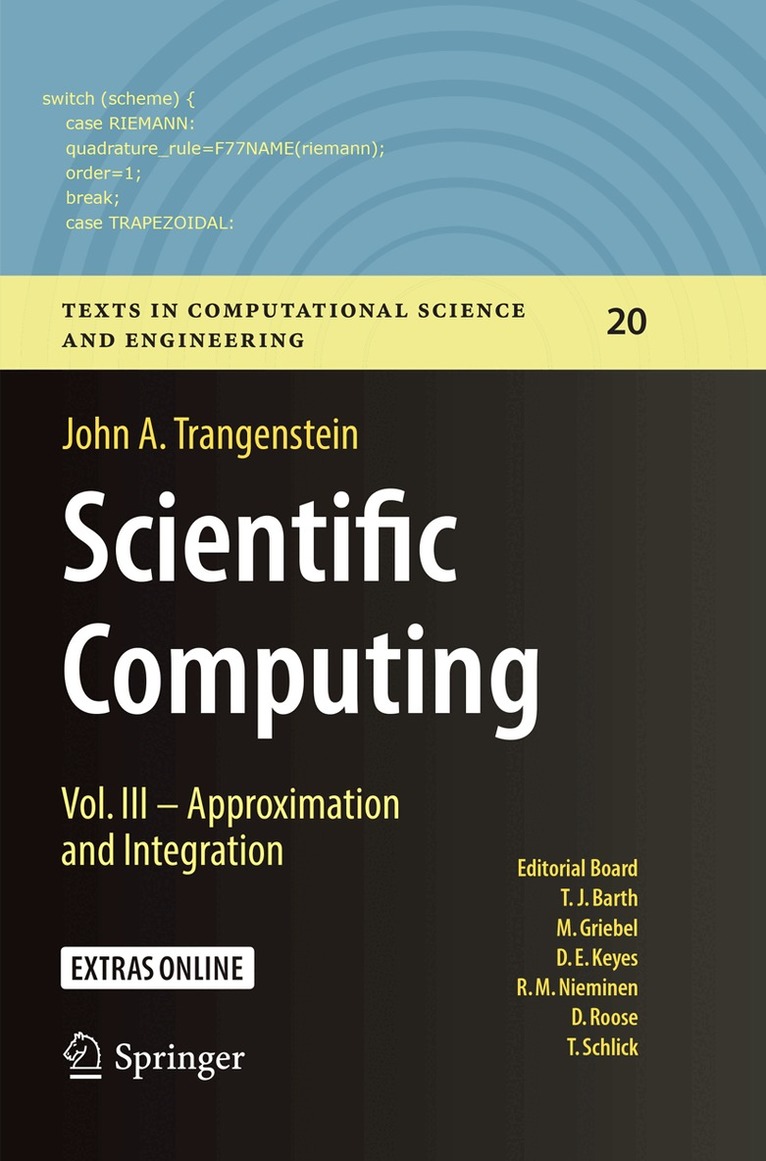
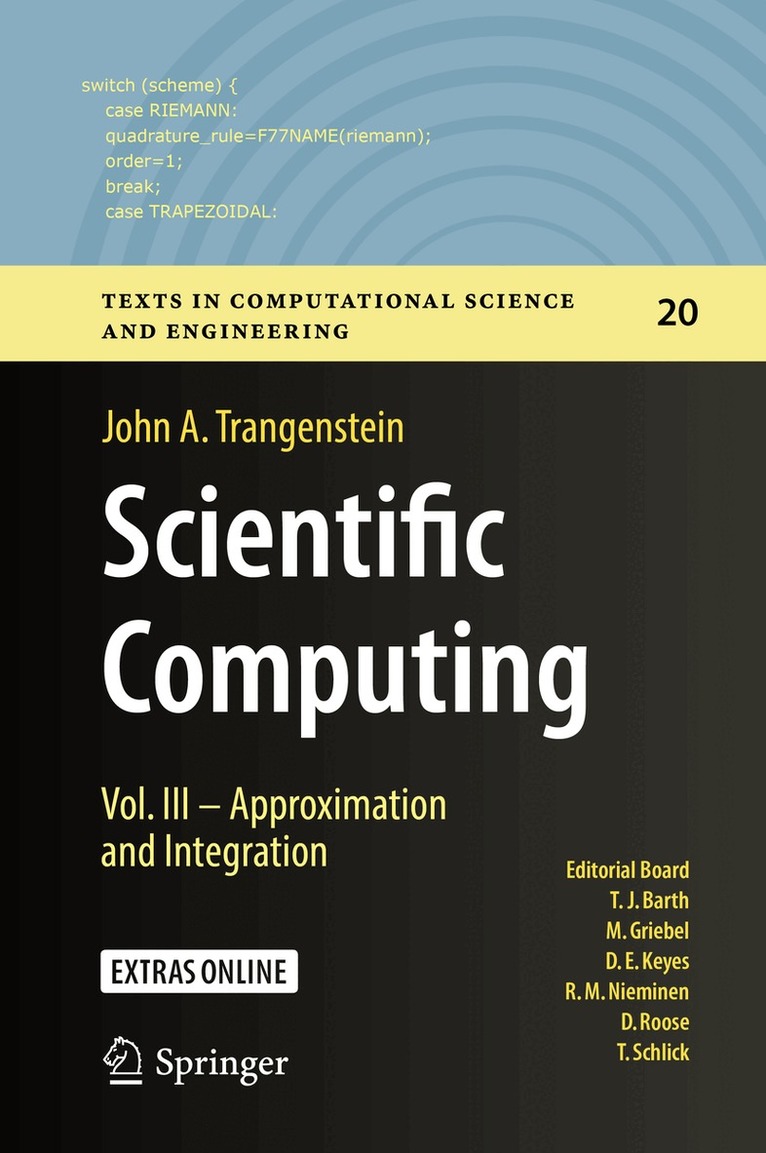
Scientific Computing
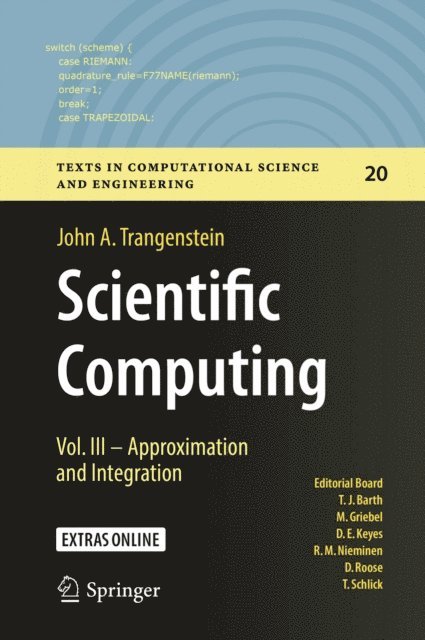
Vol. III - Approximation and Integration
Häftad, 2018
714 kr
Lägg i varukorg
This is the third of three volumes providing a comprehensive presentation of the fundamentals of scientific computing. This volume discusses topics that depend more on calculus than linear algebra, in order to prepare the reader for solving differential equations. This book and its companions show …
Scientific Computing
Vol. I - Linear and Nonlinear Equations
E-bok, 2018
897 kr
Lägg i varukorg
This is the first of three volumes providing a comprehensive presentation of the fundamentals of scientific computing. This volume discusses basic principles of computation, and fundamental numerical algorithms that will serve as basic tools for the subsequent two volumes. This book and its …
Scientific Computing
Vol. II - Eigenvalues and Optimization
Inbunden, 2018
667 kr
Lägg i varukorg
This is the second of three volumes providing a comprehensive presentation of the fundamentals of scientific computing. This volume discusses more advanced topics than volume one, and is largely not a prerequisite for volume three. This book and its companions show how to determine the quality of …
Scientific Computing
Vol. II - Eigenvalues and Optimization
E-bok, 2018
877 kr
Lägg i varukorg
This is the second of three volumes providing a comprehensive presentation of the fundamentals of scientific computing. This volume discusses more advanced topics than volume one, and is largely not a prerequisite for volume three. This book and its companions show how to determine the quality of …
Scientific Computing
Vol. III - Approximation and Integration
Inbunden, 2018
667 kr
Lägg i varukorg
This is the third of three volumes providing a comprehensive presentation of the fundamentals of scientific computing. This volume discusses topics that depend more on calculus than linear algebra, in order to prepare the reader for solving differential equations. This book and its companions show …
Scientific Computing
Vol. III - Approximation and Integration
E-bok, 2018
877 kr
Lägg i varukorg
This is the third of three volumes providing a comprehensive presentation of the fundamentals of scientific computing. This volume discusses topics that depend more on calculus than linear algebra, in order to prepare the reader for solving differential equations. This book and its companions show …