John Agresto – författare
Visar alla böcker från författaren John Agresto. Handla med fri frakt och snabb leverans.
5 produkter
5 produkter
252 kr
Skickas inom 10-15 vardagar
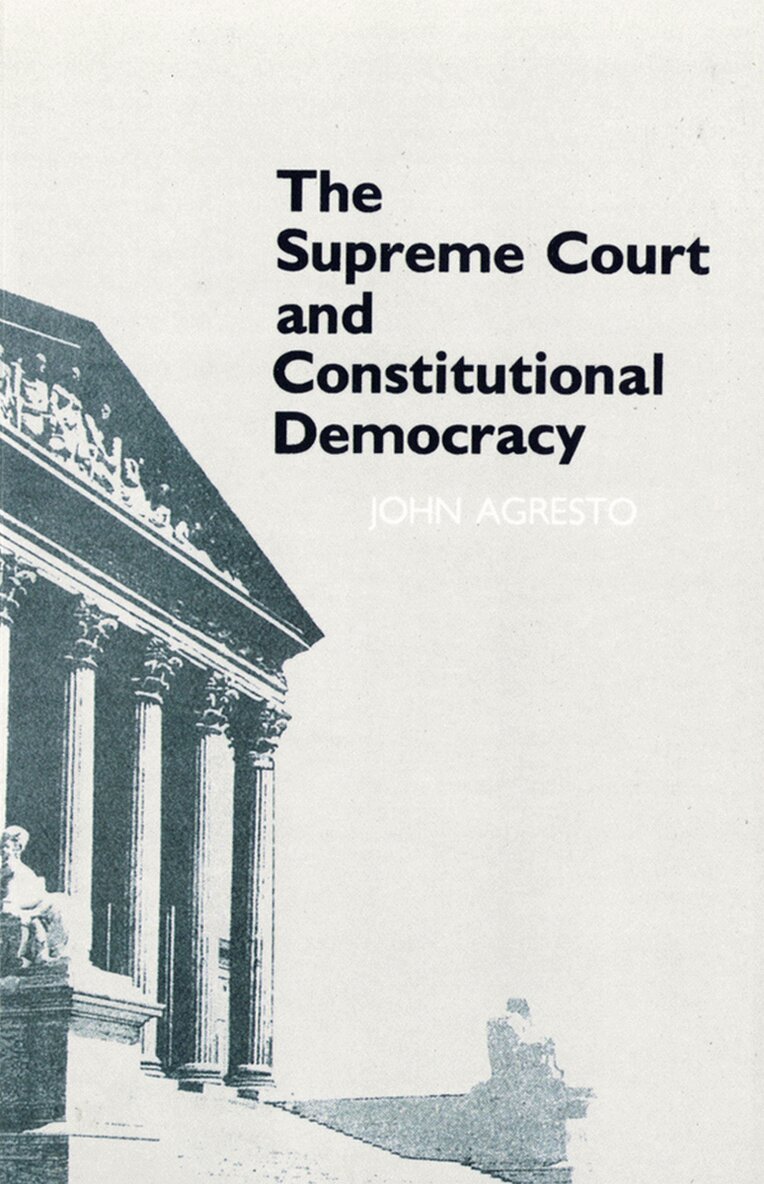
In The Supreme Court and Constitutional Democracy John Agresto traces the development of American judicial power, paying close attention to what he views as the very real threat of judicial supremacy. Agresto examines the role of the judiciary in a democratic society and discusses the proper place of congressional power in constitutional issues. Agresto argues that while the separation of congressional and judicial functions is a fundamental tenet of American government, the present system is not effective in maintaining an appropriate balance of power. He shows that continued judicial expansion, especially into the realm of public policy, might have severe consequences for America's national life and direction, and offers practical recommendations for safeguarding against an increasingly powerful Supreme Court. John Agresto's controversial argument, set in the context of a historical and theoretical inquiry, will be of great interest to scholars and students in political science and law, especially American constitutional law and political theory.
217 kr
Tillfälligt slut
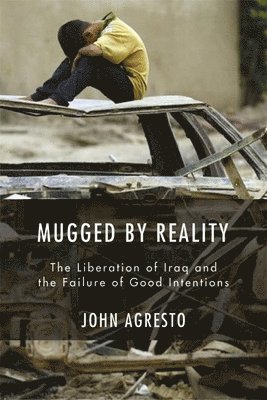
John Agresto spent nine months in Iraq--from September 2003 to June 2004--working under Ambassador Paul Bremer as senior adviser to the Ministry of Higher Education and Scientific Research. His daunting task was to assist Iraqis in rebuilding their once distinguished system of colleges, universities, and vocational schools. As he left Iraq, Agresto was asked by the Pentagon to write a few paragraphs about the "lessons learned" during his time there. Those paragraphs were never written, but a book was born instead. Mugged by Reality is partly the memoir of an American civilian and educator trying to help a devastated country revive its educational institutions. It is also a compendium of the successes and failures that followed in the wake of Iraq's liberation. Many books discuss what the United States and its allies did or didn't do, making our mistakes look simple in hindsight: we disbanded the army, we didn't have enough troops, we de-Ba'athified too thoroughly. If only we had done things differently, they say.But the sober truth is that we have been thwarted not simply by failures to "understand the culture of the Middle East," but by failures of Americans in Iraq to understand their own culture and what America really stands for. In the end, Mugged by Reality offers "lessons learned" not only about Iraq and Middle Eastern culture, but also about American democracy and about our common human nature.
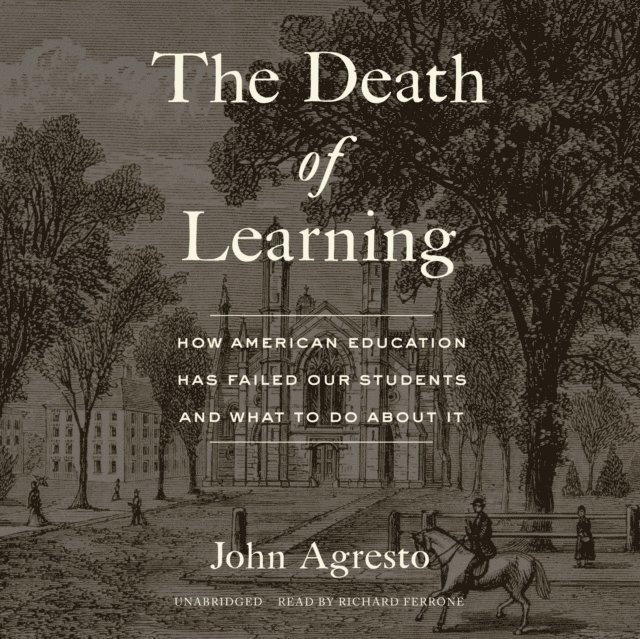
Liberal Arts and the Future of American Democracy
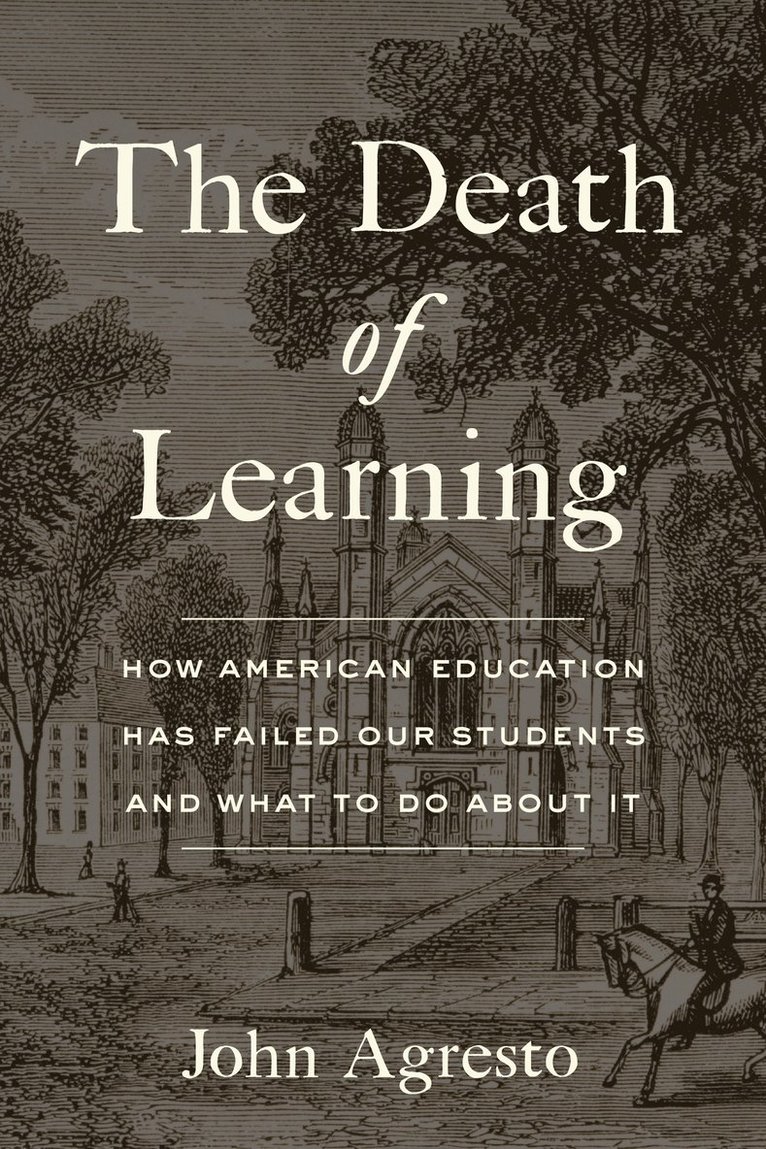
How American Education Has Failed Our Students and What to Do about It
Inbunden, Engelska, 2022
242 kr
Tillfälligt slut
The liberal arts are dying. They are dying because most Americans don’t see the point of them. Americans don’t understand why anyone would study literature or history or the classics—or, more contemporarily, feminist criticism, whiteness studies, or the literature of postcolonial states—when they can get an engineering or business degree. Even more concerning is when they read how “Western civilization” has become a termof reproach at so many supposedly thoughtful institutions; or how fanatical political correctness works hard to silence alternative viewpoints; or, more generally, how liberal studies have become scattered, narrow, and small. In this atmosphere, it’s hard to convince parents or their progeny that a liberal education is all that wonderful or that it’s even worthy of respect. Over sixty years ago, we were introduced to the idea of “the two cultures” in higher education— that is, the growing rift in the academy between the humanities and the sciences, a rift wherein neither side understood the other, spoke to the other, or cared for the other. But this divide in the academy, real as it may be, is nothing compared to another great divide—the rift today between our common American culture and the culture of the academy itself. So, how can we rebuild the notion that a liberal education is truly of value, both to our students and to the nation? Our highest hopes may be not to “restore” the liberal arts to what they looked like fifty or a hundred years ago but to ask ourselves what a true contemporary American liberal education at its best might look like. Remedying this situation will involve knowing clearly where we wish to go and then understanding how we might get there. For those objectives, this book is meant to be the beginning.
203 kr
Skickas inom 5-8 vardagar
309 kr
Skickas inom 5-8 vardagar