John B Vickery - Böcker
Visar alla böcker från författaren John B Vickery. Handla med fri frakt och snabb leverans.
3 produkter
3 produkter
727 kr
Skickas inom 7-10 vardagar
Frazer, with Freud, Marx, and Jung, is one of the thinkers who have had a deep and pervasive influence on modern literature. One of the great nineteenth-century syntheses, The Golden Bough was the culmination of a century of investigations into myth and ritual. John Vickery locates The Golden Bough in the context of its age and shows how, by gathering up many strands of nineteenth-century thought, it embodied the dominant intellectual tradition shaping the modern spirit. The author's intimate acquaintance with an extraordinary range of modern literature enables him to demonstrate the variety of strategies that poets and novelists have used to assimilate The Golden Bough in their individual attitudes and preoccupations. The remaining chapters of the book are devoted to extended discussions of the intellectual, thematic, and format impact of The Golden Bough on Yeats, Eliot, Lawrence, and Joyce. Originally published in 1973. The Princeton Legacy Library uses the latest print-on-demand technology to again make available previously out-of-print books from the distinguished backlist of Princeton University Press.These editions preserve the original texts of these important books while presenting them in durable paperback and hardcover editions. The goal of the Princeton Legacy Library is to vastly increase access to the rich scholarly heritage found in the thousands of books published by Princeton University Press since its founding in 1905.
3 287 kr
Skickas inom 3-6 vardagar
Frazer, with Freud, Marx, and Jung, is one of the thinkers who have had a deep and pervasive influence on modern literature. One of the great nineteenth-century syntheses, The Golden Bough was the culmination of a century of investigations into myth and ritual. John Vickery locates The Golden Bough in the context of its age and shows how, by gathering up many strands of nineteenth-century thought, it embodied the dominant intellectual tradition shaping the modern spirit. The author's intimate acquaintance with an extraordinary range of modern literature enables him to demonstrate the variety of strategies that poets and novelists have used to assimilate The Golden Bough in their individual attitudes and preoccupations. The remaining chapters of the book are devoted to extended discussions of the intellectual, thematic, and format impact of The Golden Bough on Yeats, Eliot, Lawrence, and Joyce. Originally published in 1973. The Princeton Legacy Library uses the latest print-on-demand technology to again make available previously out-of-print books from the distinguished backlist of Princeton University Press.These editions preserve the original texts of these important books while presenting them in durable paperback and hardcover editions. The goal of the Princeton Legacy Library is to vastly increase access to the rich scholarly heritage found in the thousands of books published by Princeton University Press since its founding in 1905.
423 kr
Skickas inom 10-15 vardagar
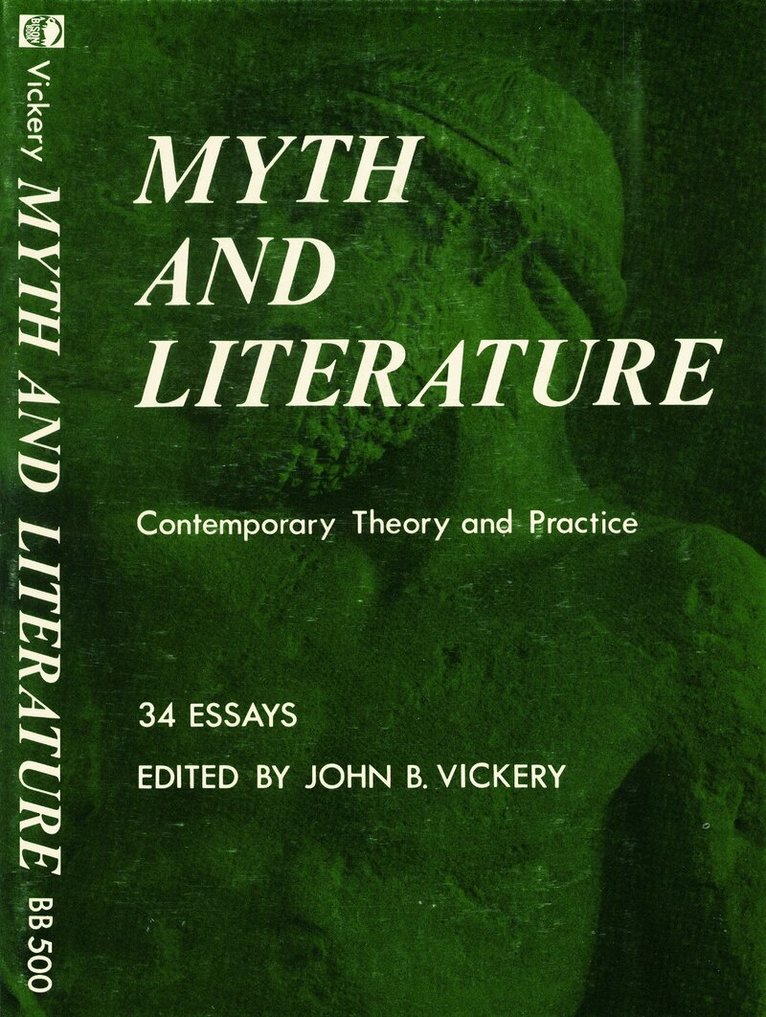
This collection of thirty-four major essays devoted to the theories, methods, and problems of myth criticism offers a convenient and substantial introduction to one of the most distinctive trends in contemporary literary study. The essays (many of them previously uncollected) are arranged to lead from general considerations to analyses of specific authors. The four Part I selections constitute an informal survey of the views of myth and ritual taken by disciplines other than literature. In Part II the first six essays relate the concept of myth and ritual to general literary theory, while the final three evaluate the uses of myth in critical theory and practice. The twenty-one Part III essays, which apply myth criticism to individual literary works or authors, afford a representative sampling of the mythopoeic patterns discerned in literature from Home to Faulkner. Among the contributors are: David Bidney, GÉza RÓheim, Joseph Campbell, Clyde Kluckhohn, Stanley Hyman, Philip Wheelwright, Richard Chase, Harold Watts, Northrop Frye, Andrew Lytle, Philip Rahv, Francis Fergusson, Marvin Magalaner, John Lydenberg, and Harry Slochower.