John Bodnar - Böcker
Visar alla böcker från författaren John Bodnar. Handla med fri frakt och snabb leverans.
13 produkter
13 produkter
346 kr
Skickas inom 7-10 vardagar
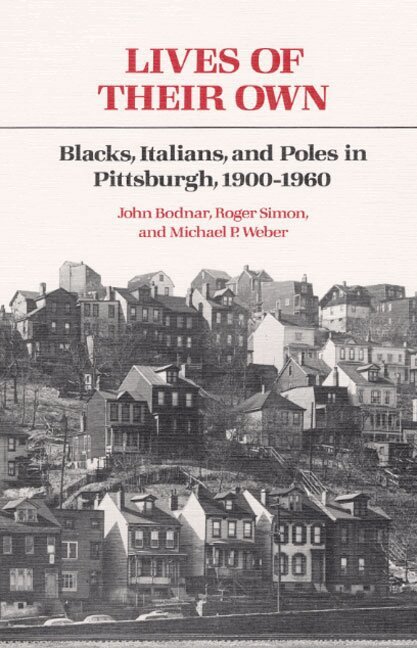
Lives of Their Own depicts the strikingly different lives of black, Italian, and Polish immigrants in Pittsburgh. Within a comparative framework, the book focuses on the migration process itself, job procurement, and occupational mobility, family structure, home-ownership, and neighborhood institutions. By blending oral histories with quantitative data, the authors have created a convincing multilayered portrait of working-class life in one of our great industrial cities.
234 kr
Skickas inom 10-15 vardagar
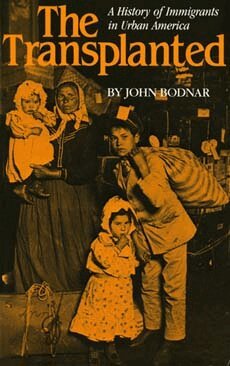
" . . . an excellent broad overview . . . " —Journal of Social History" . . . powerfully argued . . . " —Moses Rischin" . . . imaginative and soundly based . . . " —Choice"Highly recommended . . . " —Library Journal" . . . an outstanding major contribution to the literature on immigration history." —History" . . . a very important new synthesis of American immigration history . . . " —Journal of American Ethnic History" . . . a state of the art discussion, impressively encyclopaedic . . . The Transplanted is a tour de force, and a fitting summation to Bodnar's own prolific, creative, and insightful writings on immigrants." —Journal of Interdisciplinary HistoryA major survey of the immigrant experience between 1830 and 1930, this book has implications for all students and scholars of American social history.
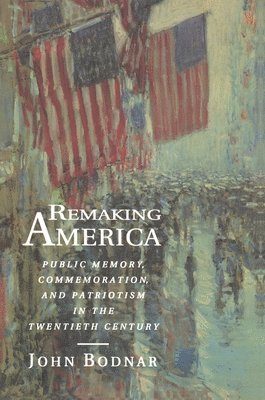
Remaking America
Public Memory, Commemoration, and Patriotism in the Twentieth Century
Häftad, Engelska, 1994
477 kr
Skickas inom 7-10 vardagar
In a compelling inquiry into public events ranging from the building of the Vietnam Veterans Memorial through ethnic community fairs to pioneer celebrations, John Bodnar explores the stories, ideas, and symbols behind American commemorations over the last century. Such forms of historical consciousness, he argues, do not necessarily preserve the past but rather address serious political matters in the present.
870 kr
Skickas inom 3-6 vardagar
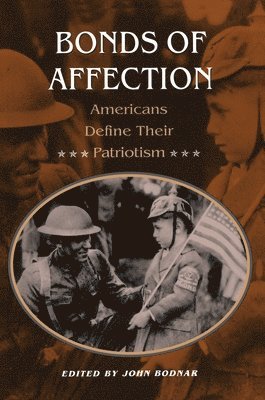
During the Civil War, Walt Whitman described his admiration for the Union soldiers' loyalty to the ideal of democracy. His argument, that this faith bonded Americans to their nation, has received little critical attention, yet today it raises increasingly relevant questions about American patriotism in the face of growing nationalist sentiment worldwide. Here a group of scholars explores the manner in which Americans have discussed and practiced their patriotism over the past two hundred years. Their essays investigate, for example, the extent to which the promise of democracy has explained citizen loyalty, what other factors--such as devotion to home and family--have influenced patriotism, and how patriotism has often served as a tool to maintain the power of a dominant group and to obscure internal social ills. This volume examines the use of patriotic language and symbols in building unity in the early republic, rebuilding the nation after the Civil War, and sustaining loyalty in an increasingly diverse society. Continuing through the World Wars to the Clinton presidency, the essay topics range from multiculturalism to reactions toward masculine power.In addition to the editor, the contributors include Cynthia M. Koch, Cecilia Elizabeth O'Leary, Andrew Neather, Stuart McConnell, Gaines M. Foster, Kimberly Jensen, David Glassberg and J. Michael Moore, Lawrence R. Samuel, Robert B. Westbrook, Wendy Kozol, George Lipsitz, Barbara Truesdell, Robin Wagner-Pacifici, and William B. Cohen.
Blue-Collar Hollywood
Liberalism, Democracy, and Working People in American Film
Inbunden, Engelska, 2003
483 kr
Tillfälligt slut
From Tom Joad to Norma Rae to Spike Lee's Mookie in Do the Right Thing, Hollywood has regularly dramatized the lives and struggles of working people in America. Ranging from idealistic to hopeless, from sympathetic to condescending, these portrayals confronted audiences with the vital economic, social, and political issues of their times while providing a diversion-sometimes entertaining, sometimes provocative-from the realities of their own lives. In Blue-Collar Hollywood, John Bodnar examines the ways in which popular American films made between the 1930s and the 1980s depicted working-class characters, comparing these cinematic representations with the aspirations of ordinary Americans and the promises made to them by the country's political elites.Based on close and imaginative viewings of dozens of films from every genre-among them Public Enemy, Black Fury, Baby Face, The Grapes of Wrath, It's a Wonderful Life, I Married a Communist, A Streetcar Named Desire, Peyton Place, Taxi Driver, Raging Bull, Coal Miner's Daughter, and Boyz N the Hood-this book explores such topics as the role of censorship, attitudes toward labor unions and worker militancy, racism, the place of women in the workforce and society, communism and the Hollywood blacklist, and faith in liberal democracy. Whether made during the Great Depression, World War II, the Cold War, or the Vietnam era, the majority of films about ordinary working Americans, Bodnar finds, avoided endorsing specific political programs, radical economic reform, or overtly reactionary positions. Instead, these movies were infused with the same current of liberalism and popular notion of democracy that flow through the American imagination.
Blue-Collar Hollywood
Liberalism, Democracy, and Working People in American Film
Häftad, Engelska, 2006
331 kr
Skickas inom 7-10 vardagar
From Tom Joad to Norma Rae to Spike Lee's Mookie in Do the Right Thing, Hollywood has regularly dramatized the lives and struggles of working people in America. Ranging from idealistic to hopeless, from sympathetic to condescending, these portrayals confronted audiences with the vital economic, social, and political issues of their times while providing a diversion-sometimes entertaining, sometimes provocative-from the realities of their own lives. In Blue-Collar Hollywood, John Bodnar examines the ways in which popular American films made between the 1930s and the 1980s depicted working-class characters, comparing these cinematic representations with the aspirations of ordinary Americans and the promises made to them by the country's political elites.Based on close and imaginative viewings of dozens of films from every genre-among them Public Enemy, Black Fury, Baby Face, The Grapes of Wrath, It's a Wonderful Life, I Married a Communist, A Streetcar Named Desire, Peyton Place, Taxi Driver, Raging Bull, Coal Miner's Daughter, and Boyz N the Hood-this book explores such topics as the role of censorship, attitudes toward labor unions and worker militancy, racism, the place of women in the workforce and society, communism and the Hollywood blacklist, and faith in liberal democracy. Whether made during the Great Depression, World War II, the Cold War, or the Vietnam era, the majority of films about ordinary working Americans, Bodnar finds, avoided endorsing specific political programs, radical economic reform, or overtly reactionary positions. Instead, these movies were infused with the same current of liberalism and popular notion of democracy that flow through the American imagination.
663 kr
Skickas inom 7-10 vardagar
A study of the immigrants who flocked to this Central Pennsylvania steel town in the late nineteenth century in search of employment. Comprised primarily of Southern blacks and Eastern European immigrants, they formed the lower class of this town. Analyzes the social structure and dominance of the white, Anglo-Saxon, Protestant elite.
171 kr
Skickas inom 5-8 vardagar
291 kr
Skickas inom 5-8 vardagar
398 kr
Skickas inom 5-8 vardagar
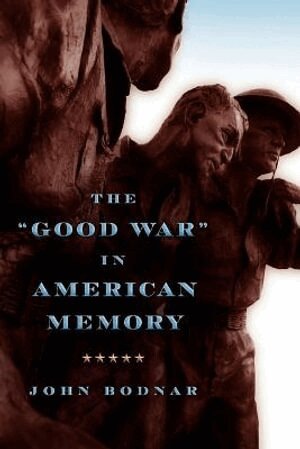
The "Good War" in American Memory dispels the long-held myth that Americans forged an agreement on why they had to fight in World War II. John Bodnar's sociocultural examination of the vast public debate that took place in the United States over the war's meaning reveals that the idea of the "good war" was highly contested. Bodnar's comprehensive study of the disagreements that marked the American remembrance of World War II in the six decades following its end draws on an array of sources: fiction and nonfiction, movies, theater, and public monuments. He identifies alternative strands of memory-tragic and brutal versus heroic and virtuous-and reconstructs controversies involving veterans, minorities, and memorials. In building this narrative, Bodnar shows how the idealism of President Franklin Roosevelt's Four Freedoms was lost in the public commemoration of World War II, how the war's memory became intertwined in the larger discussion over American national identity, and how it only came to be known as the "good war" many years after its conclusion.
Del 2 - Studies in Industry and Society
Workers' World
Kinship, Community, and Protest in an Industrial Society, 1900-1940
Häftad, Engelska, 2020
363 kr
Skickas inom 7-10 vardagar
Originally published 1982. Bodnar's central concern in Workers' World is with the working people of Pennsylvania prior to World War II. He examines how ordinary people throughout the state navigated the changing set of industrial relations that fanned out across the United States in the late nineteenth and early twentieth centuries. Since workers could not rely on unionism or government-sponsored safety nets, workers in Pennsylvania relied on kinship ties, job structures, and community relationships. In the past, Bodnar contends, American labor historians have focused mainly on the history of strikes, the rise of unionism, and the struggle for control over the workplace. In an effort to mitigate historians' flattening of workers into the two-dimensional plane of politics and protest, Bodnar revives workers and the world in which they lived by conducting oral interviews with textile workers, coal miners, steelworkers, and others in Pennsylvania.
386 kr
Skickas inom 7-10 vardagar
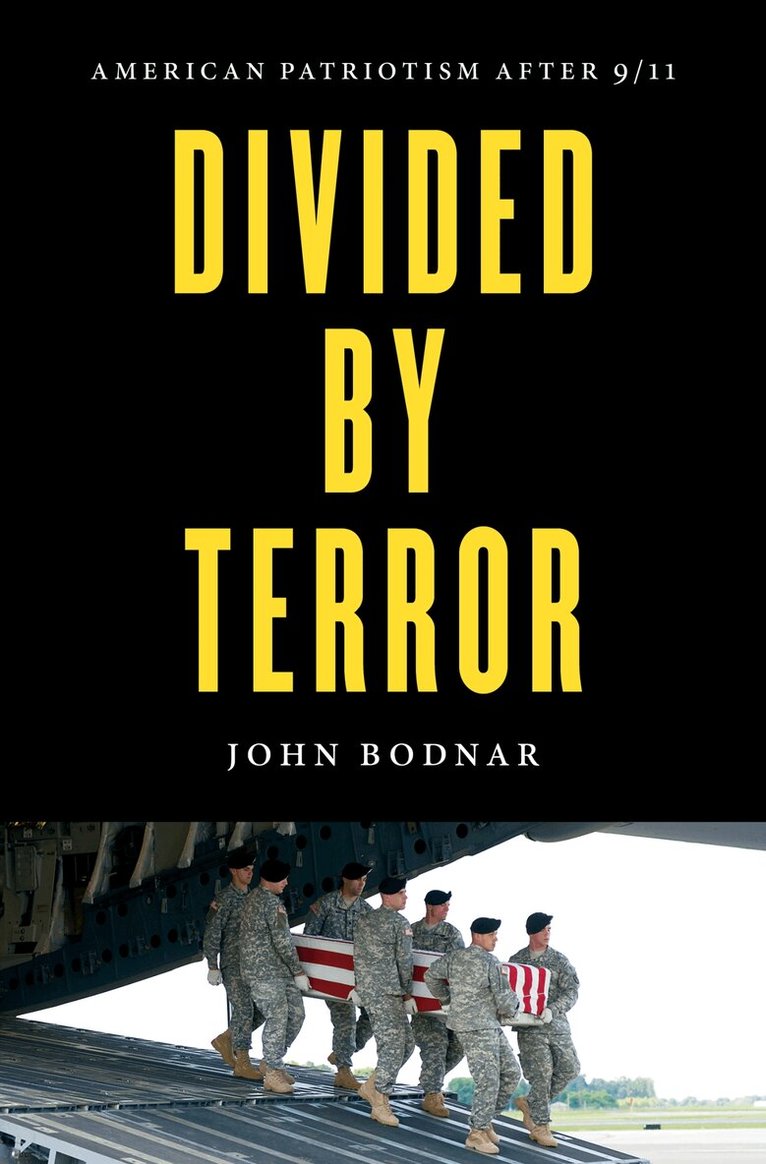
Americans responded to the deadly terrorist attacks on September 11, 2001, with an outpouring of patriotism, though all were not united in their expression. A war-based patriotism inspired millions of Americans to wave the flag and support a brutal War on Terror in Afghanistan and Iraq, while many other Americans demanded an empathic patriotism that would bear witness to the death and suffering surrounding the attack. Twenty years later, the war still simmers, and both forms of patriotism continue to shape historical understandings of 9/11's legacy and the political life of the nation. John Bodnar's compelling history shifts the focus on America's War on Terror from the battlefield to the arena of political and cultural conflict, revealing how fierce debates over the war are inseparable from debates about the meaning of patriotism itself. Bodnar probes how honor, brutality, trauma, and suffering have become highly contested in commemorations, congressional correspondence, films, soldier memoirs, and works of art. He concludes that Americans continue to be deeply divided over the War on Terror and how to define the terms of their allegiance--a fissure that has deepened as American politics has become dangerously polarized over the first two decades of this new century.
296 kr
Skickas inom 10-15 vardagar
Americans responded to the deadly terrorist attacks on September 11, 2001, with an outpouring of patriotism, though all were not united in their expression. A war-based patriotism inspired millions of Americans to wave the flag and support a brutal War on Terror in Afghanistan and Iraq, while many other Americans demanded an empathic patriotism that would bear witness to the death and suffering surrounding the attack. Twenty years later, the war still simmers, and both forms of patriotism continue to shape historical understandings of 9/11's legacy and the political life of the nation. John Bodnar's compelling history shifts the focus on America's War on Terror from the battlefield to the arena of political and cultural conflict, revealing how fierce debates over the war are inseparable from debates about the meaning of patriotism itself. Bodnar probes how honor, brutality, trauma, and suffering have become highly contested in commemorations, congressional correspondence, films, soldier memoirs, and works of art. He concludes that Americans continue to be deeply divided over the War on Terror and how to define the terms of their allegiance--a fissure that has deepened as American politics has become dangerously polarized over the first two decades of this new century.