John Buckingham – författare
Visar alla böcker från författaren John Buckingham. Handla med fri frakt och snabb leverans.
27 produkter
Dictionary of Organic Compounds, Sixth Edition, Supplement 1
Av John Buckingham, Fiona Macdonald
Inbunden, 1996
15168 kr
Lägg i varukorg
This first supplement to the new Edition of the Dictionary of Organic Compounds (DOC), published in nine volumes in 1995, extends the literature coverage of the dictionary to mid-1996. It includes over 2,500 entries, some of which are major updates to entries which appeared in volumes 1-9, while …
Dictionary Organic Compounds, Sixth Edition, Supplement 2
Av John Buckingham, Fiona Macdonald
Inbunden, 1997
15386 kr
Lägg i varukorg
This book includes over 2,500 entries of organic compounds, some of which cover recently synthesized molecules of research interest, while others refer to known compounds which have come into prominence. It is an invaluable resource for Organic and Pharmaceutical chemists.
Dictionary of Natural Products, Supplement 1
Inbunden, 1994
30329 kr
Lägg i varukorg
This Dictionary draws and checks the structure diagrams to ensure their accuracy and consistency, and presents the data within entries of natural products in a logical manner which reconciles as far as possible inconsistencies and inaccuracies in the literature.
Dictionary of Natural Products, Supplement 2
Inbunden, 1995
15168 kr
Lägg i varukorg
Containing fully authenticated data on virtually all known natural products, the "Dictionary of Natural Products", main work, published in 1993 was the end result of over 12 years compilation and editing by a large team of contributors. The resulting Dictionary contains 100,000 natural products and …
Dictionary Organic Compounds, Sixth Edition, Supplement 2
Av Fiona Macdonald, John Buckingham
E-bok, 2020
14710 kr
Lägg i varukorg
This book includes over 2,500 entries of organic compounds, some of which cover recently synthesized molecules of research interest, while others refer to known compounds which have come into prominence. It is an invaluable resource for Organic and Pharmaceutical chemists.
Dictionary of Natural Products, Supplement 1
E-bok, 2020
22507 kr
Lägg i varukorg
This Dictionary draws and checks the structure diagrams to ensure their accuracy and consistency, and presents the data within entries of natural products in a logical manner which reconciles as far as possible inconsistencies and inaccuracies in the literature.
Dictionary Organic Compounds, Sixth Edition, Supplement 2
Av Fiona Macdonald, John Buckingham
E-bok, 2020
14710 kr
Lägg i varukorg
This book includes over 2,500 entries of organic compounds, some of which cover recently synthesized molecules of research interest, while others refer to known compounds which have come into prominence. It is an invaluable resource for Organic and Pharmaceutical chemists.
Dictionary of Natural Products, Supplement 1
E-bok, 2020
22020 kr
Lägg i varukorg
This Dictionary draws and checks the structure diagrams to ensure their accuracy and consistency, and presents the data within entries of natural products in a logical manner which reconciles as far as possible inconsistencies and inaccuracies in the literature.
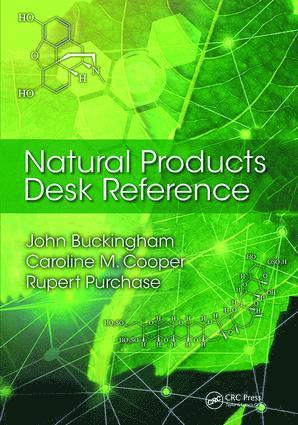
Natural Products Desk Reference
Av Rupert Purchase, Caroline M. Cooper m. fl.
E-bok, 2015
2603 kr
Lägg i varukorg
Written by a group of experts affiliated with the prestigious Dictionary of Natural Products, this book provides a concise overview of the key structural types of natural products and their interrelationship. A structurally diverse group, ranging from simple aliphatic carbon chains to high …
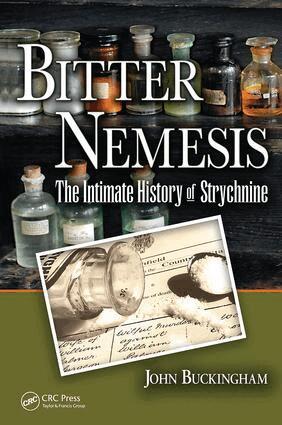
Bitter Nemesis
The Intimate History of Strychnine
E-bok, 2007
1082 kr
Lägg i varukorg
Encouraged by the medicinal success of quinine, early 19th century scientists hoped strychnine, another plant alkaloid with remarkable properties, might also become a new weapon against disease. Physicians tried for over a century, despite growing evidence to the contrary, to treat everything from …
Dictionary of Organic Compounds, Sixth Edition, Supplement 1
Av Fiona Macdonald, John Buckingham
E-bok, 2026
13975 kr
Lägg i varukorg
This first supplement to the new Edition of the Dictionary of Organic Compounds (DOC), published in nine volumes in 1995, extends the literature coverage of the dictionary to mid-1996. It includes over 2,500 entries, some of which are major updates to entries which appeared in volumes 1-9, while …
Dictionary of Organic Compounds, Sixth Edition, Supplement 1
Av Fiona Macdonald, John Buckingham
E-bok, 2026
13975 kr
Lägg i varukorg
This first supplement to the new Edition of the Dictionary of Organic Compounds (DOC), published in nine volumes in 1995, extends the literature coverage of the dictionary to mid-1996. It includes over 2,500 entries, some of which are major updates to entries which appeared in volumes 1-9, while …
Natural Products Desk Reference
Av John Buckingham, Caroline M. Cooper m. fl.
Inbunden, 2017
3175 kr
Lägg i varukorg
Written by the team that brought you the prestigious Dictionary of Natural Products (DNP), the Natural Products Desk Reference provides a concise overview of the key structural types of natural products and their interrelationship. A structurally diverse group, ranging from simple aliphatic carbon …
Bitter Nemesis
The Intimate History of Strychnine
Inbunden, 2018
3175 kr
Lägg i varukorg
Encouraged by the medicinal success of quinine, early 19th century scientists hoped strychnine, another plant alkaloid with remarkable properties, might also become a new weapon against disease. Physicians tried for over a century, despite growing evidence to the contrary, to treat everything from …
Dictionary of Natural Products, Supplement 2
E-bok, 2023
14284 kr
Lägg i varukorg
Containing fully authenticated data on virtually all known natural products, the "Dictionary of Natural Products", main work, published in 1993 was the end result of over 12 years compilation and editing by a large team of contributors. The resulting Dictionary contains 100,000 natural products and …
Dictionary of Natural Products, Supplement 2
E-bok, 2023
14284 kr
Lägg i varukorg
Containing fully authenticated data on virtually all known natural products, the "Dictionary of Natural Products", main work, published in 1993 was the end result of over 12 years compilation and editing by a large team of contributors. The resulting Dictionary contains 100,000 natural products and …
Bitter Nemesis
The Intimate History of Strychnine
Häftad, 2007
915 kr
Lägg i varukorg
Encouraged by the medicinal success of quinine, early 19th century scientists hoped strychnine, another plant alkaloid with remarkable properties, might also become a new weapon against disease. Physicians tried for over a century, despite growing evidence to the contrary, to treat everything from …
Bitter Nemesis
The Intimate History of Strychnine
E-bok, 2007
1074 kr
Lägg i varukorg
Encouraged by the medicinal success of quinine, early 19th century scientists hoped strychnine, another plant alkaloid with remarkable properties, might also become a new weapon against disease. Physicians tried for over a century, despite growing evidence to the contrary, to treat everything from …
Natural Products Desk Reference
Av John Buckingham, Caroline M. Cooper m. fl.
Häftad, 2015
2209 kr
Lägg i varukorg
Written by the team that brought you the prestigious Dictionary of Natural Products (DNP), the Natural Products Desk Reference provides a concise overview of the key structural types of natural products and their interrelationship. A structurally diverse group, ranging from simple aliphatic carbon …
Natural Products Desk Reference
Av Rupert Purchase, Caroline M. Cooper m. fl.
E-bok, 2015
2603 kr
Lägg i varukorg
Written by the team that brought you the prestigious Dictionary of Natural Products (DNP), the Natural Products Desk Reference provides a concise overview of the key structural types of natural products and their interrelationship. A structurally diverse group, ranging from simple aliphatic carbon …
Chasing the Molecule
Discovering the Building Blocks of Life
Häftad, 2005
104 kr
Tillfälligt slut
In the Fifties, a tremendous conceptual breakthrough was about to take place in science, revolutionising the way we think about the molecules of life. The story ranged across laboratories throughout Europe in which the protagonists built molecular models that promised to unlock the natural world's …
Dictionary of Natural Products, ASCII
2012
80180 kr
Tillfälligt slut
The Dictionary of Natural Products on DVD provides today’s busy scientist with fast access to chemical, physical, and biological data on more than 230,000 compounds contained in over 68,000 entries. Continually reviewed to keep pace with the current literature, coupled with the inclusion of the …