John C. Travis - Böcker
Visar alla böcker från författaren John C. Travis. Handla med fri frakt och snabb leverans.
3 produkter
3 produkter
Del 179 - Chemical Analysis: A Series of Monographs on Analytical Chemistry and Its Applications
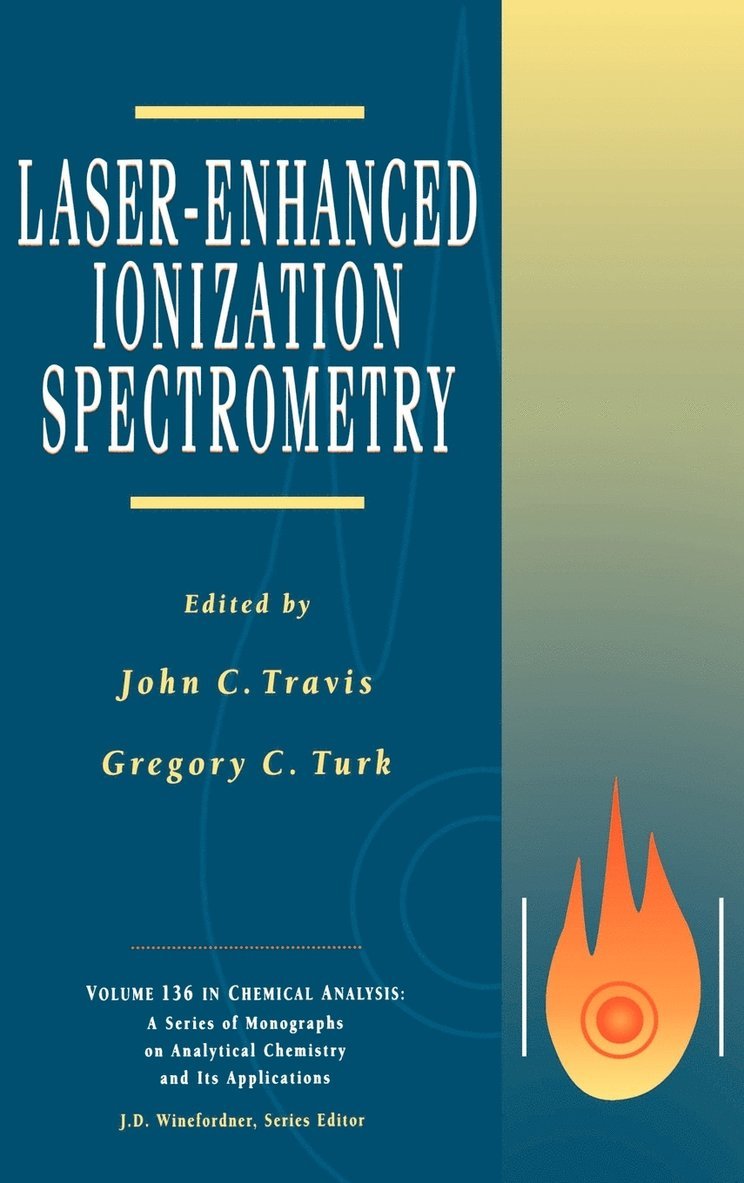
Laser-Enhanced Ionization Spectroscopy
Inbunden, Engelska, 1996
2 458 kr
Skickas inom 7-10 vardagar
Laser-enhanced ionization (LEI) is a type of optical spectrometrythat employs photoexcitation to ionize atoms selectively. Over thepast two decades, this method--originally known as the optogalvaniceffect--has been the object of extensive worldwide research and thesubject of numerous papers and published articles. Until now,however, no single volume has presented this wealth of theory anddata in a cohesive and accessible form. Laser-Enhanced Ionization Spectrometry fills this gap in theliterature. It synthesizes vast amounts of information previouslyavailable only through scattered research papers and covers everyaspect of the technology, from underlying principles and theory tomethodology and applications. This book examines the state of theart of LEI, compares it with other methods, and demonstrates howlaser-enhanced collisional ionization is especially well suited toanalytical atomic spectrometry. The contributors to this collaborative effort--from Russia,Australia, Europe, and the United States--clarify terminology,explain the inner workings of LEI, and offer derivations for bothidealized forms and realistic approximations. They also analyze thecapabilities and limitations of this technique as an analyticalmethod, including instrumentation, sources of noise, limits ofdetection, interferences, and applications. After concentrating largely on flame LEI as the most commonly usedmethod to derive LEI measurements, the discussion moves to thedevelopment of nonflame technologies for LEI. There is alsoextended coverage of the relationship between LEI and laser-inducedfluorescence, including an examination of the interplay oflaser-induced ionization and fluorescence techniques in differentatomic and molecular reservoirs. Laser-Enhanced Ionization Spectrometry places understanding,usefulness, and practical applications ahead of detailedderivations. For practicing analytical chemists andspectroscopists, it offers a clear and uncluttered approach to acomplex subject, as well as a fresh perspective on a still-emergingtechnology. This book sums up the present understanding and state of the art oflaser-enhanced ionization (LEI)-a unique but underutilized tool foranalytical atomic spectrometry. LEI possesses the special abilityto ionize atoms selectively. The text focuses on the role of thistechnology in analytical chemistry, and covers both theory andapplications in one complete, self-contained volume. Carefully crafted by leading experts from around the globe, withcontributions under six key headings, Laser-Enhanced IonizationSpectrometry* Draws on hundreds of research papers to create a comprehensivereference for LEI* Describes in depth how ions are produced, and how a signal isgenerated and detected* Provides an extensive and up-to-date compilation of published LEIdetection limits* Emphasizes basic understanding and practical applications ratherthan detailed derivations* Discusses terms and definitions and clears up sources ofconfusion in the field* Offers up-to-date coverage of instrumentation and applications* Evaluates the usefulness of LEI as an analytical tool* Deals with questions of limits of detection, interference, andnoise* Devotes an entire segment to nonflame technologies for LEI* Extends the discussion to fluorescence techniques and how theycan be interrelated with LEI in various atomic and molecularreservoirs
1 064 kr
Skickas inom 10-15 vardagar
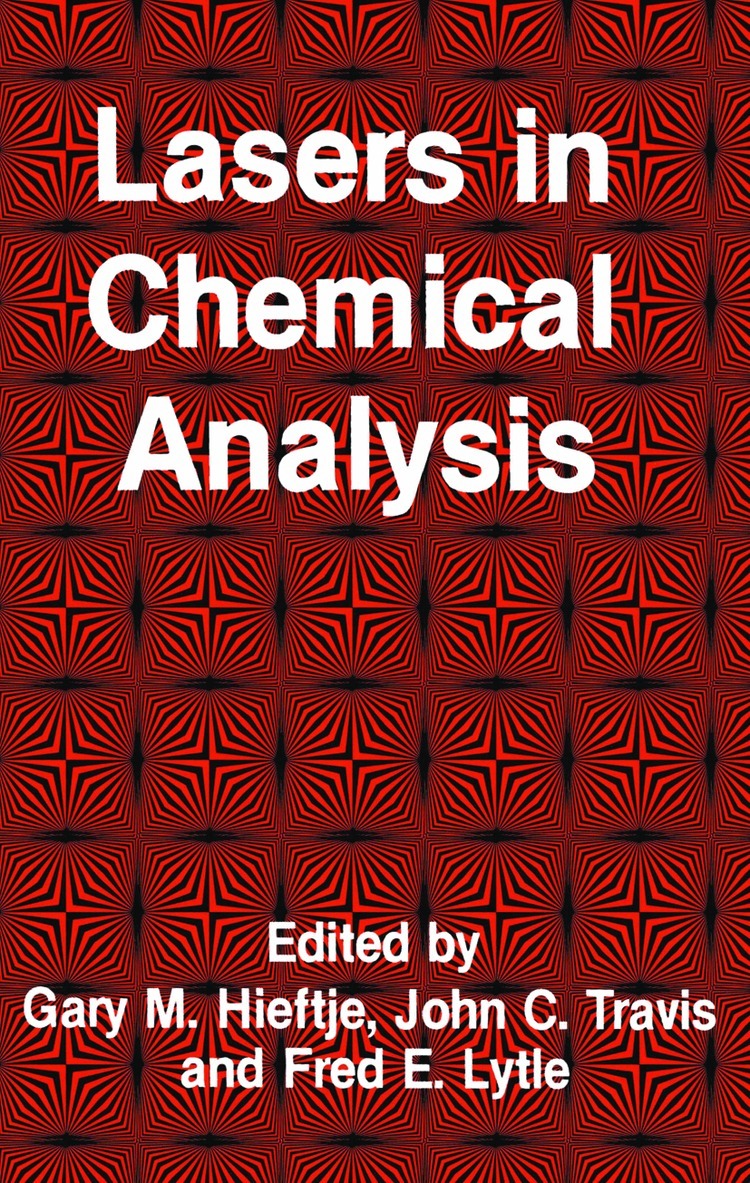
Lasers are relatively recent additions to the analytical scientist's arsenal. Because of this, many analysts-whether their concern is research or some range of applications-are in need of a tutorial introduction not only to the principles of lasers, their optics, and radiation, but also to their already diverse and burgeoning applications. The artic1es presented in this volume, carefully enhanced and edited from lectures prepared for the ACS Division of Analytical Chemistry 1979 Summer Symposium, are designed to provide just such a broad introduction to the subject. Thus, in addition to several excellent chapters on laser fundamentals, there are many practically oriented artic1es dealing with laser analytical methodology, inc1uding techniques based on the absorption oflaser radiation, on laser-induced fluorescence, and on some of the uses of lasers in chemical instru mentation. The first of these sections is pivotal and reflects in part our philosophy in organizing this collection. The authors of the initial chapters were invited not only because of their expertise in the field of lasers and analytical chemistry, but also because their didactic approach to writing and their c1arity of presentation were well known to us. It is our hope that individual readers with little knowledge of lasers will gain from these introductory chapters sufficient information to render the later, more detailed artic1es both useful and meaningful.
1 064 kr
Skickas inom 10-15 vardagar
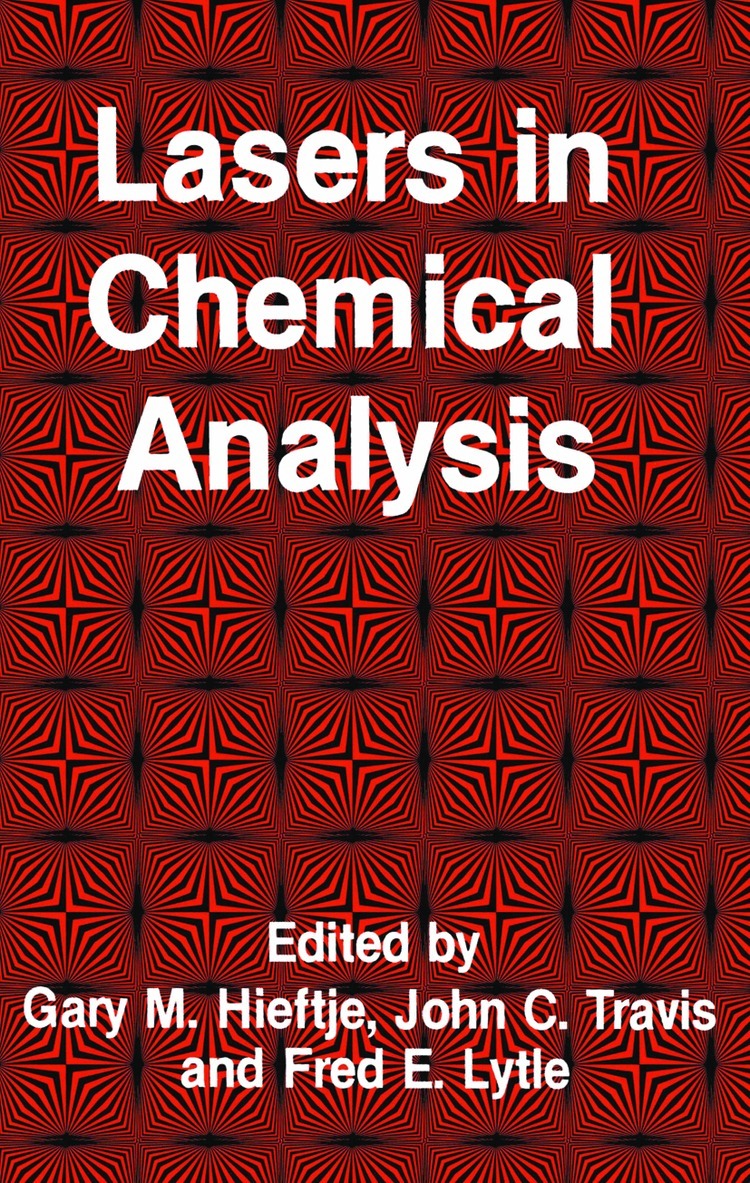
Lasers are relatively recent additions to the analytical scientist's arsenal. Because of this, many analysts-whether their concern is research or some range of applications-are in need of a tutorial introduction not only to the principles of lasers, their optics, and radiation, but also to their already diverse and burgeoning applications. The artic1es presented in this volume, carefully enhanced and edited from lectures prepared for the ACS Division of Analytical Chemistry 1979 Summer Symposium, are designed to provide just such a broad introduction to the subject. Thus, in addition to several excellent chapters on laser fundamentals, there are many practically oriented artic1es dealing with laser analytical methodology, inc1uding techniques based on the absorption oflaser radiation, on laser-induced fluorescence, and on some of the uses of lasers in chemical instru mentation. The first of these sections is pivotal and reflects in part our philosophy in organizing this collection. The authors of the initial chapters were invited not only because of their expertise in the field of lasers and analytical chemistry, but also because their didactic approach to writing and their c1arity of presentation were well known to us. It is our hope that individual readers with little knowledge of lasers will gain from these introductory chapters sufficient information to render the later, more detailed artic1es both useful and meaningful.