John Coleman Darnell - Böcker
Visar alla böcker från författaren John Coleman Darnell. Handla med fri frakt och snabb leverans.
8 produkter
8 produkter
Tutankhamun's Armies
Battle and Conquest During Ancient Egypt's Late Eighteenth Dynasty
Inbunden, Engelska, 2007
252 kr
Skickas inom 7-10 vardagar
The force that forged an empire. The furious thunder of thousands of hooves, the clatter and sheen of bronze armor sparkling in the desert sun, the crunch of wooden wheels racing across a rock-strewn battlefield-and leading this terrifying chariot charge, the gallant Pharaoh, the ribbons of his blue war crown streaming behind him as he launches yet another arrow into the panicking mass of his soon-to-be-routed enemies. While scenes like the one depicted above did occur in ancient Egypt, they represent only one small aspect of the vast, complex, and sophisticated military machine that secured, defended, and expanded the borders of the empire during the late Eighteenth Dynasty. In Tutankhamun's Armies, you'll discover the harsh reality behind the imperial splendor of the New Kingdom and gain a new appreciation for the formidable Egyptian army-from pharaoh to foot soldier. You'll follow "the heretic king" Akhenaten, his son Tutankhamun, and their three Amana-Period successors as they employ double-edge diplomacy and military might to defeat competing powers, quell internal insurrections, and keep reluctant subject states in line. This vivid and absorbing chronicle will forever change the way you think about the glories and riches of ancient Egypt.
1 329 kr
Skickas inom 5-8 vardagar
Del 59 - Annual of ASOR
ASOR Annual 59
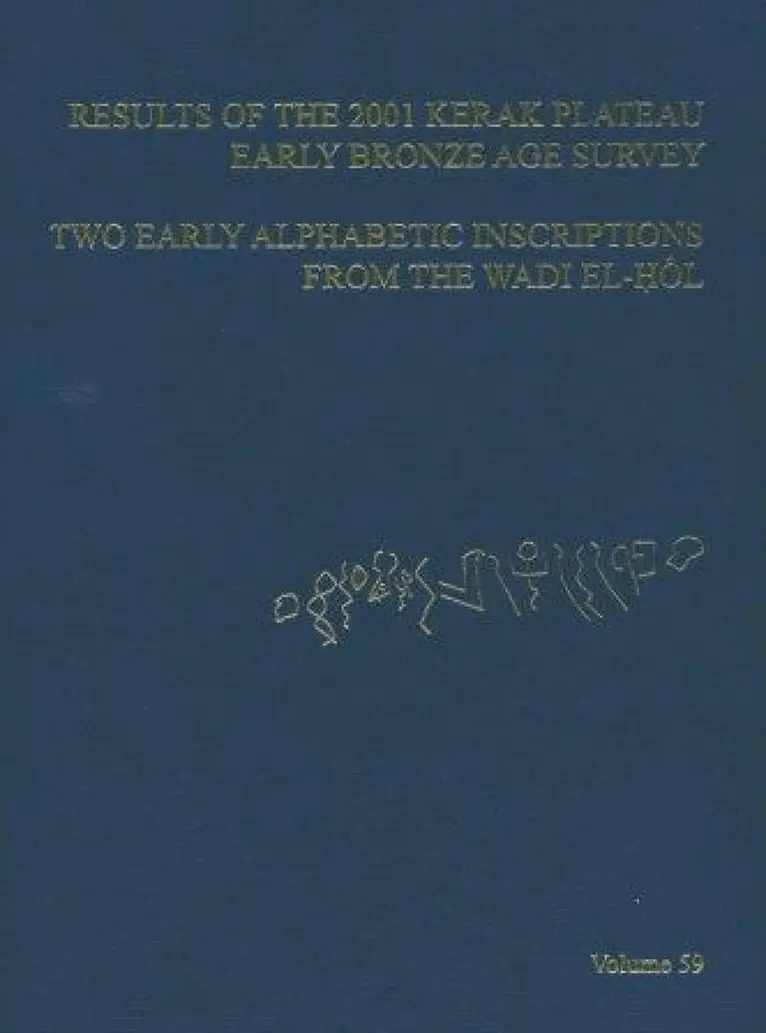
Pt. 1, Results of the 2001 Kerak Plateau Early Bronze Age Survey : Pt. 2, Two Early Alphabetic Inscriptions from the Wadi El- Hol
Inbunden, Engelska, 2005
219 kr
Tillfälligt slut
Part I presents the results from the 2001 research project combining surface surveys and limited test excavations at eight Early Bronze Age (c. 3600-2000 BC) settlement sites identified in a previous survey by Miller (1991) on the Kerak Plateau. The team collected data to determine the suitability of these sites for a future, multi-year research project, and to assess the applicability of an alternative perspective for reconstructing the nature of the earliest walled towns in the southern Levant. Aside from documenting the state of preservation of these sites, the proposed research sought to evaluate propositions about (1) the nature of the chronological development of urbanism within the region, and (2) the relationship between environmental and ecological zones and the scale of urban settlements in the region. Includes 27 figures. Part II is the editio princeps of two early alphabetic inscriptions discovered by John and Deborah Darnell along the Farshut Road, Wadi el-Hol, near Luxor, Egypt. The work includes photographs, drawings and discussions of the inscriptions, together with a discussion of the source of the signs and significance of the find. The authors argue that the discovery of these inscriptions points to the origins of the alphabet in an Egyptian context as long ago as 2000 BC. Includes 22 figures and 13 plates.
Del 7 - Yale Egyptological Studies
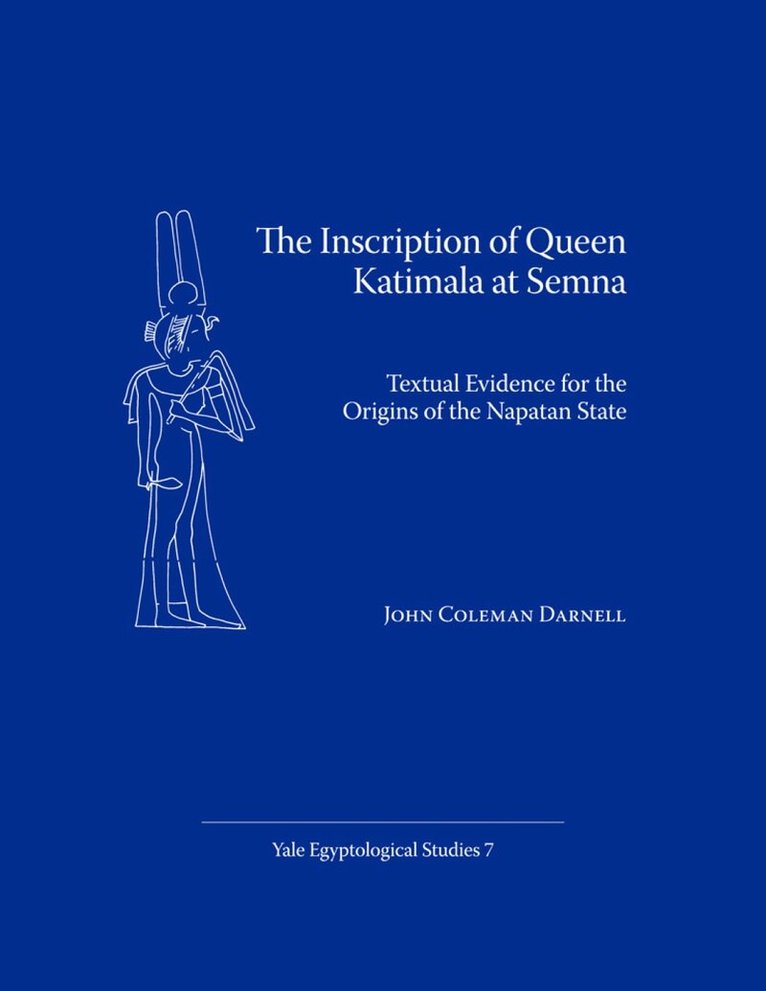
Inscription of Queen Katimala at Semna
Textual Evidence for the Origins of the Napatan State
Häftad, Engelska, 2006
317 kr
Skickas inom 5-8 vardagar
This is the first complete translation and commentary on the important tableau and inscription of Queen Katimala/Karimala at Semna. Proper understanding of the paleography, grammar and content reveals Katimala to have been a Nubian ruler at the time of the Twenty-First to Twenty-Second Dynasties of Ancient Egypt. She emerges as a political and military leader who took control of at least Lower Nubia in the wake of failed military activities on the part of a male predecessor. Katimala's inscription is not illegible, as has often been stated, but is a well-composed Lower Nubian example of a politico-religious manifesto applying many of the conventions of early Egyptian literary and historical compositions.
Del 1 - Yale Egyptological Publications
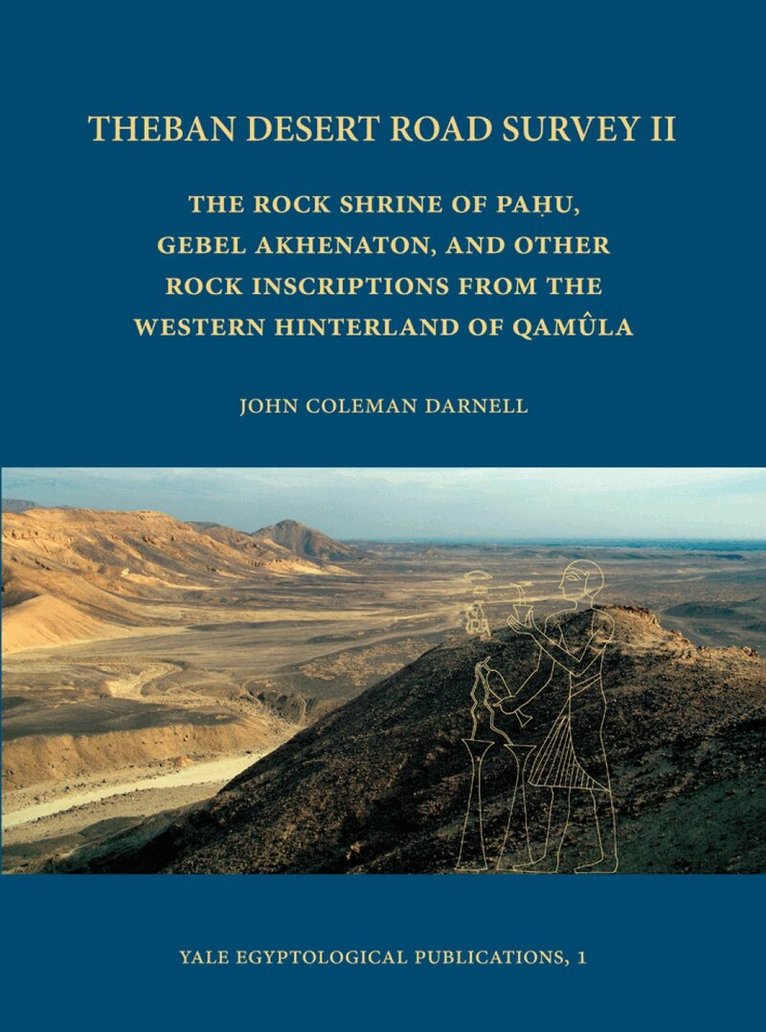
Theban Desert Road Survey II
The Rock Shrine of Pahu, Gebel Akhenaton, and other Rock Inscriptions from the Western Hinterland of Qamula
Inbunden, Engelska, 2014
2 233 kr
Skickas inom 5-8 vardagar
Illustrated in colour and b&w with 248 illustrations. The second monograph devoted to the work of the Theban Desert Road Survey presents the major rock inscriptions of the northwestern Theban Desert and the western hinterlands of Qamûla. The material includes six larger sites and several smaller collections and individual inscriptions and images, sites discovered by the Theban Desert Road Survey over the course of approximately twelve field seasons. The major groupings of inscriptions, from south to north, are the rock shrine of Pahu and the inscriptions of Gebel Akhenaton, sites in the vicinity of the Wadi Himdaniya; a small but interesting collection of inscriptions near the Wadi Arqub Baghla, with two smaller, outlying sites; inscriptions of the Wadi Magar to the north, including the site of the great Predynastic tableau with its plethora of crocodiles, the associated vignette of Elephant-on-the-Gebel, along with the nearby Gebel Sutekh site, and smaller concentrations beyond; and finally the inscriptions of the area of the Matna el-Barqa. Highlights of the epigraphic material include new prayers to Amun and Hathor-one a genuine New Kingdom de profundis recording an appeal to Amun during a storm on the Nile-several important Predynastic and Protodynastic tableaux, and the only rock art depictions of Akhenaton in a true Amarna style.
241 kr
Skickas inom 7-10 vardagar
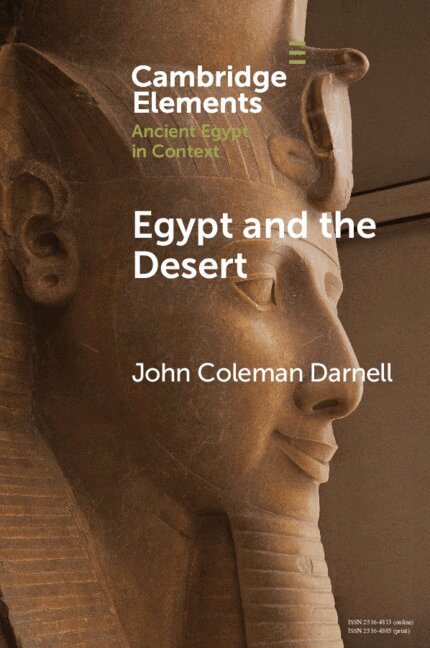
Deserts, the Red Land, bracket the narrow strip of alluvial Black Land that borders the Nile. Networks of desert roads ascended to the high desert from the Nile Valley, providing access to the mineral wealth and Red Sea ports of the Eastern Desert, the oasis depressions and trade networks of the Western Desert. A historical perspective from the Predynastic through the Roman Periods highlights how developments in the Nile Valley altered the Egyptian administration and exploitation of the deserts. For the ancient Egyptians, the deserts were a living landscape, and at numerous points along the desert roads, the ancient Egyptians employed rock art and rock inscriptions to create and mark places. Such sites provide considerable evidence for the origin of writing in northeast Africa, the religious significance of the desert and expressions of personal piety, and the development of the early alphabet.
1 113 kr
Skickas inom 5-8 vardagar
Del 119 - Oriental Institute Publications
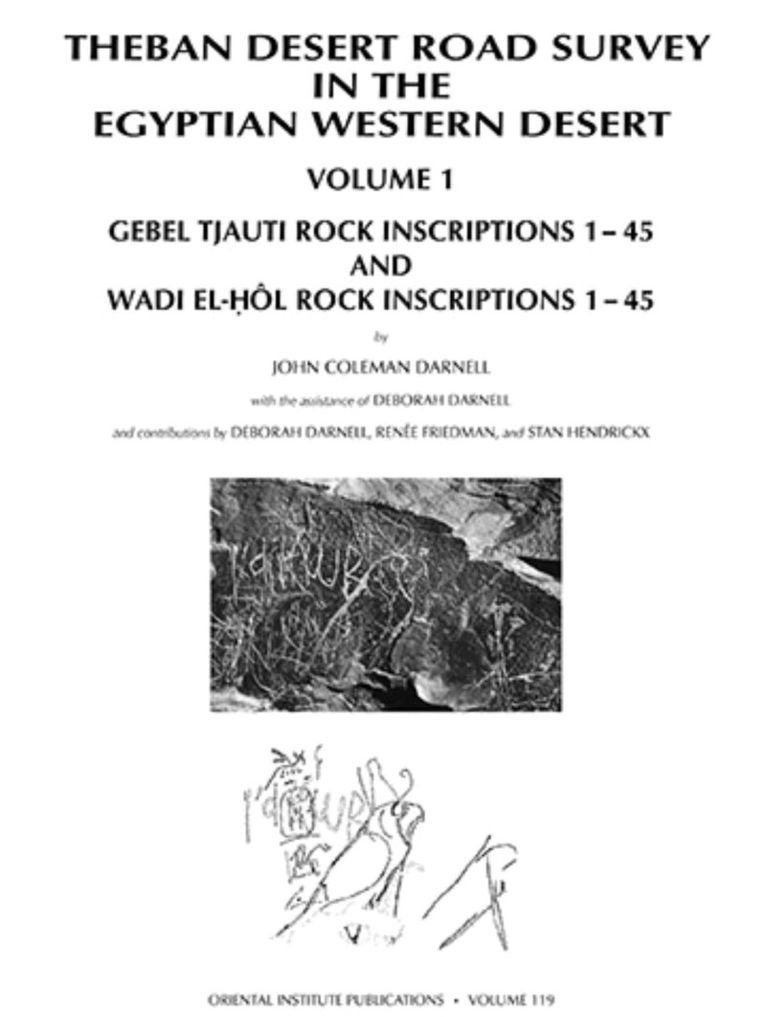
Theban Desert Road Survey in the Egyptian Western Desert, Volume 1
Gebel Tjauti Rock Inscriptions 1-45 and Wadi el-Hol Rock Inscriptions 1-45
Inbunden, Engelska, 2002
1 142 kr
Tillfälligt slut
This volume publishes forty-five inscriptions from Gebel Tjauti and forty-five inscriptions from Wadi el-Hôl, two major concentrations of rock inscriptions and rock art on pharaonic caravan routes of the Egyptian Western Desert. The inscriptions range in date from predynastic to Christian times. Inscriptions of particular interest in this first volume include those from Gebel Tjauti: a Naqada IID/IIIA tableau revealing important new information concerning the unification of Upper Egypt and the founding of Dynasty 0; a road construction inscription of the Coptite nomarch Tjauti providing evidence for the beginnings of the northern expansion of the Theban realm during the middle Eleventh Dynasty; the depiction of a Nubian ranger; and Coptic cryptography; and from the Wadi el-Hôl: epigraphic evidence for the use of the Farshût Road for transport of supplies to the temple of Amun during the New Kingdom; a new Middle Egyptian literary inscription; a rock-cut letter that contributes to our understanding of the history of the textual variants of the Story of Sinuhe; and an inscription recounting desert celebrations in honour of the goddess Hathor. The inscriptions are published as photographs and facsimile drawings, with hieroglyphic transcriptions, translations, commentaries, and glossary.