John Crabtree – författare
Visar alla böcker från författaren John Crabtree. Handla med fri frakt och snabb leverans.
23 produkter
23 produkter
Inbunden, Engelska, 2023
856 kr
Skickas inom 5-8 vardagar
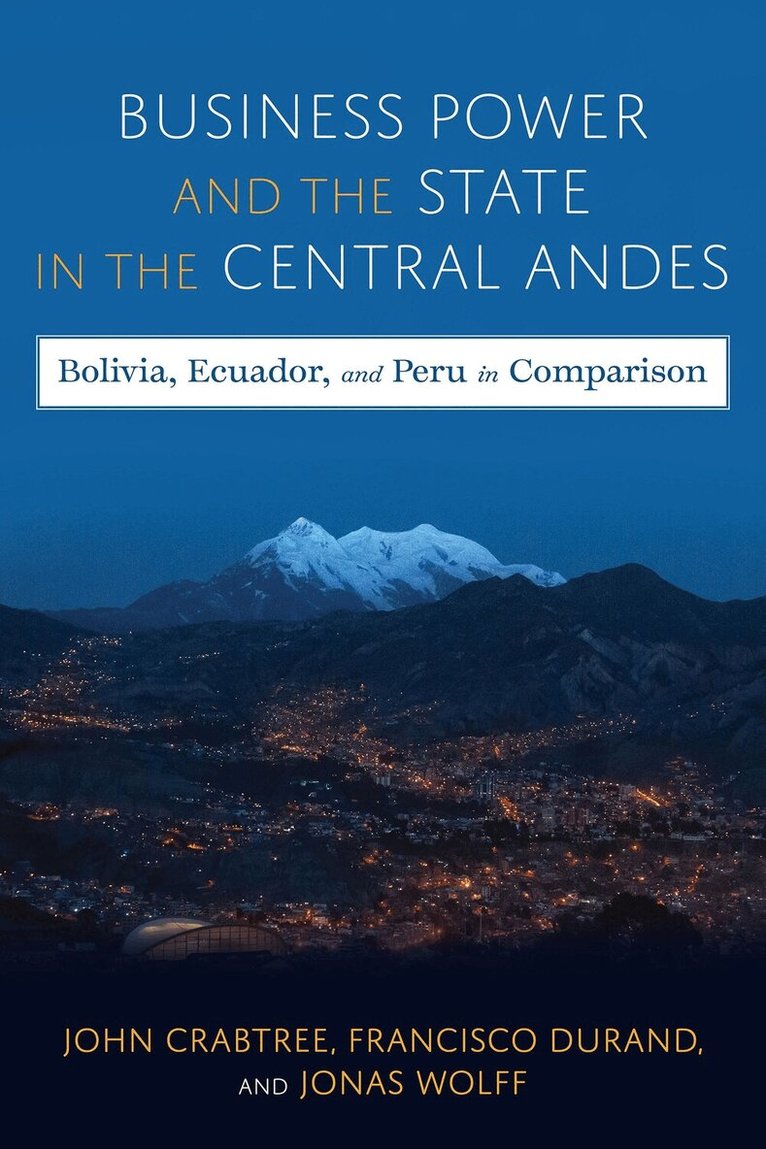
This coauthored monograph examines how business groups have interacted with state authorities in the three central Andean countries from the mid-twentieth century through the early twenty-first. This time span covers three distinct economic regimes: the period of state-led import substitutive industrialization from the 1950s through the 1970s, the neoliberalism of the 1980s and 1990s, and the post-neoliberal period since the earlier 2000s. These three countries share many similarities but also have important differences that reveal how power is manifested. Peru has had an almost unbroken hegemony of business elites who leverage their power over areas of state activity that affect them. Bolivia, by contrast, shows how strong social movements have challenged business dominance at crucial periods, reflecting a weaker elite class that is less able to exercise influence over decision-making. Ecuador falls in between these two, with business elites being more fragmented than in Peru and social movements being weaker than in Bolivia. The authors analyze the viability of these different regimes and economic models, why they change in specific circumstances, and how they affect the state and its citizens.
E-bok
Engelska, 2023853 kr
Läs direkt efter köp
This coauthored monograph examines how business groups have interacted with state authorities in the three central Andean countries from the mid-twentieth century through the early twenty-first. This time span covers three distinct economic regimes: the period of state-led import substitutive industrialization from the 1950s through the 1970s, the neoliberalism of the 1980s and 1990s, and the post-neoliberal period since the earlier 2000s. These three countries share many similarities but also have important differences that reveal how power is manifested. Peru has had an almost unbroken hegemony of business elites who leverage their power over areas of state activity that affect them. Bolivia, by contrast, shows how strong social movements have challenged business dominance at crucial periods, reflecting a weaker elite class that is less able to exercise influence over decision-making. Ecuador falls in between these two, with business elites being more fragmented than in Peru and social movements being weaker than in Bolivia. The authors analyze the viability of these different regimes and economic models, why they change in specific circumstances, and how they affect the state and its citizens.
Häftad, Engelska, 2002
152 kr
Skickas inom 5-8 vardagar
Häftad, Engelska, 2011
618 kr
Skickas inom 5-8 vardagar
E-bok
PDF, Engelska, 2026723 kr
Läs direkt efter köp
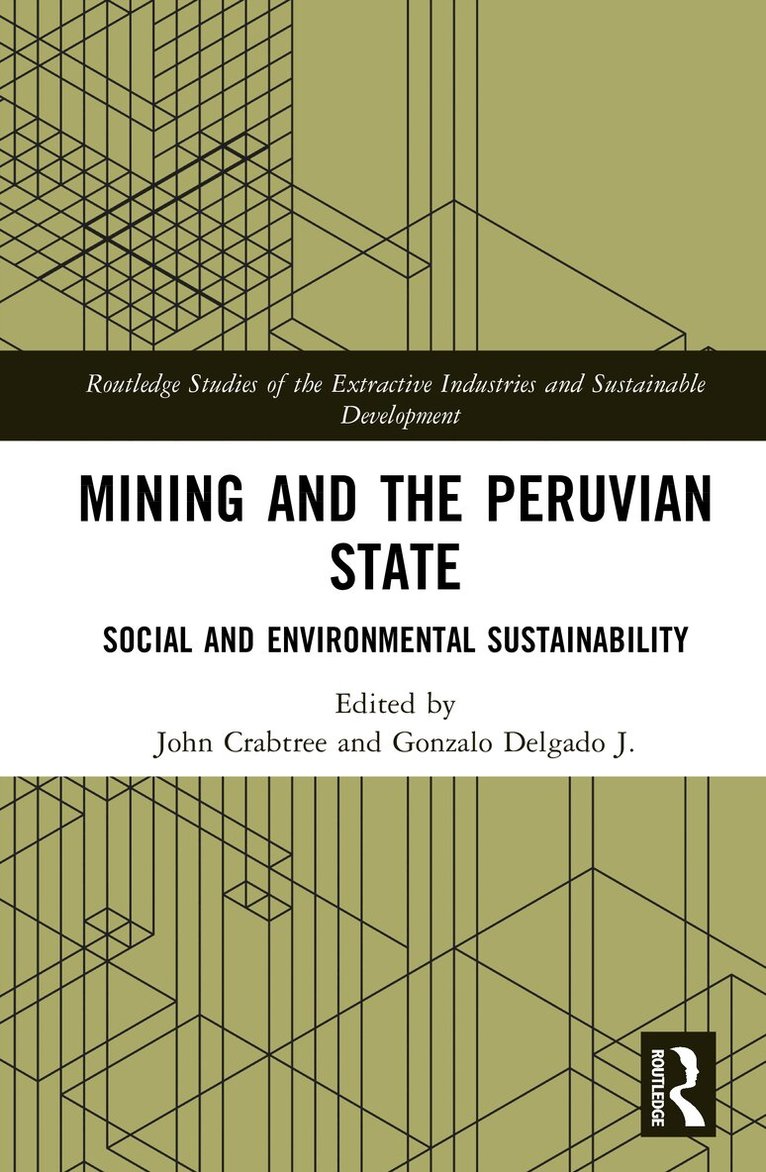
This book examines the social, environmental, and political sustainability of Peru's mining industry as it seeks to garner the benefits of the energy transition between now and 2050.As the global shift toward net-zero emissions accelerates, Peru is uniquely positioned to play a vital role in the energy transition, thanks to its abundant reserves of critical minerals. This growing global demand presents an unprecedented opportunity for the country to harness its natural wealth to support sustainable development. Yet, the experiences of the past 25 years have shown that maximizing these benefits requires more than resource abundance alone. Social and environmental challenges have too often accompanied mining expansion, leading to significant conflicts around new projects. This book moves the conversation forward by offering a deeper understanding of the structural challenges posed by modern industrial mining and identifying the public policies needed to address them. It goes beyond the traditional 'resource curse' narrative to explore how mining can serve as a driver of inclusive growth - provided it is responsibly managed, transparently governed, and aligned with the needs of affected communities. A key message is that the future of mining in Peru depends on building a stronger, more democratic, and participatory state: one capable of representing all sectors of society, not just corporate interests. By learning from past missteps and committing to institutional reforms that promote dialogue, accountability, and equitable development, Peru can chart a new path. The goal is not simply to avoid conflict, but to contribute to a governance model and the building of institutional mechanisms capable of meeting and resolving variant interests in society, and that enable mining to contribute meaningfully to national well-being and long-term sustainability. While Peru provides key examples of the problems arising from mining development, it typifies problems encountered elsewhere not just in Latin America but further afield. It will therefore be of interest to a far wider readership concerned with the extractive industries.This book will be of great interest to students and scholars of mining and the extractive industries, Latin American development, and natural resource management more widely, as well as those involved in government and NGOs.
E-bok
Engelska, 2026698 kr
Läs direkt efter köp
This book examines the social, environmental, and political sustainability of Peru's mining industry as it seeks to garner the benefits of the energy transition between now and 2050.As the global shift toward net-zero emissions accelerates, Peru is uniquely positioned to play a vital role in the energy transition, thanks to its abundant reserves of critical minerals. This growing global demand presents an unprecedented opportunity for the country to harness its natural wealth to support sustainable development. Yet, the experiences of the past 25 years have shown that maximizing these benefits requires more than resource abundance alone. Social and environmental challenges have too often accompanied mining expansion, leading to significant conflicts around new projects. This book moves the conversation forward by offering a deeper understanding of the structural challenges posed by modern industrial mining and identifying the public policies needed to address them. It goes beyond the traditional 'resource curse' narrative to explore how mining can serve as a driver of inclusive growth - provided it is responsibly managed, transparently governed, and aligned with the needs of affected communities. A key message is that the future of mining in Peru depends on building a stronger, more democratic, and participatory state: one capable of representing all sectors of society, not just corporate interests. By learning from past missteps and committing to institutional reforms that promote dialogue, accountability, and equitable development, Peru can chart a new path. The goal is not simply to avoid conflict, but to contribute to a governance model and the building of institutional mechanisms capable of meeting and resolving variant interests in society, and that enable mining to contribute meaningfully to national well-being and long-term sustainability. While Peru provides key examples of the problems arising from mining development, it typifies problems encountered elsewhere not just in Latin America but further afield. It will therefore be of interest to a far wider readership concerned with the extractive industries.This book will be of great interest to students and scholars of mining and the extractive industries, Latin American development, and natural resource management more widely, as well as those involved in government and NGOs.
Inbunden, Engelska, 2026
2 433 kr
Skickas inom 10-15 vardagar
This book examines the social, environmental, and political sustainability of Peru’s mining industry as it seeks to garner the benefits of the energy transition between now and 2050.As the global shift toward net-zero emissions accelerates, Peru is uniquely positioned to play a vital role in the energy transition, thanks to its abundant reserves of critical minerals. This growing global demand presents an unprecedented opportunity for the country to harness its natural wealth to support sustainable development. Yet, the experiences of the past 25 years have shown that maximizing these benefits requires more than resource abundance alone. Social and environmental challenges have too often accompanied mining expansion, leading to significant conflicts around new projects. This book moves the conversation forward by offering a deeper understanding of the structural challenges posed by modern industrial mining and identifying the public policies needed to address them. It goes beyond the traditional ‘resource curse’ narrative to explore how mining can serve as a driver of inclusive growth – provided it is responsibly managed, transparently governed, and aligned with the needs of affected communities. A key message is that the future of mining in Peru depends on building a stronger, more democratic, and participatory state: one capable of representing all sectors of society, not just corporate interests. By learning from past missteps and committing to institutional reforms that promote dialogue, accountability, and equitable development, Peru can chart a new path. The goal is not simply to avoid conflict, but to contribute to a governance model and the building of institutional mechanisms capable of meeting and resolving variant interests in society, and that enable mining to contribute meaningfully to national well-being and long-term sustainability. While Peru provides key examples of the problems arising from mining development, it typifies problems encountered elsewhere not just in Latin America but further afield. It will therefore be of interest to a far wider readership concerned with the extractive industries.This book will be of great interest to students and scholars of mining and the extractive industries, Latin American development, and natural resource management more widely, as well as those involved in government and NGOs.
Häftad, Engelska, 2011
371 kr
Skickas inom 5-8 vardagar
E-bok
PDF, Engelska, 2016744 kr
Läs direkt efter köp
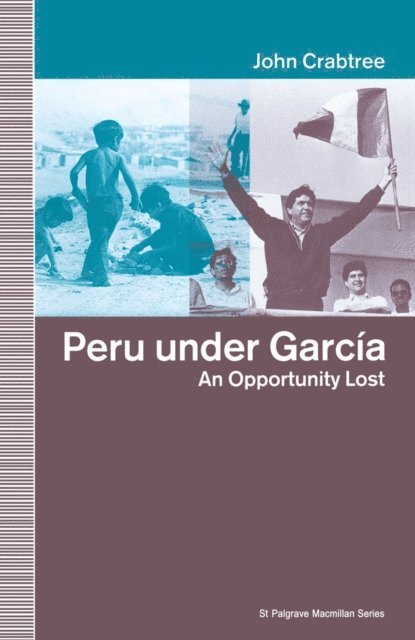
Alan Garcia became President of Peru in July 1985. This book examines his administration and its effects on Peru. The author argues that initially Garcia was successful in tackling the countries problems but that when he left office in 1990 Peru''s social, political and economic ills looked worse.
Häftad, Engelska, 2013
285 kr
Skickas inom 10-15 vardagar
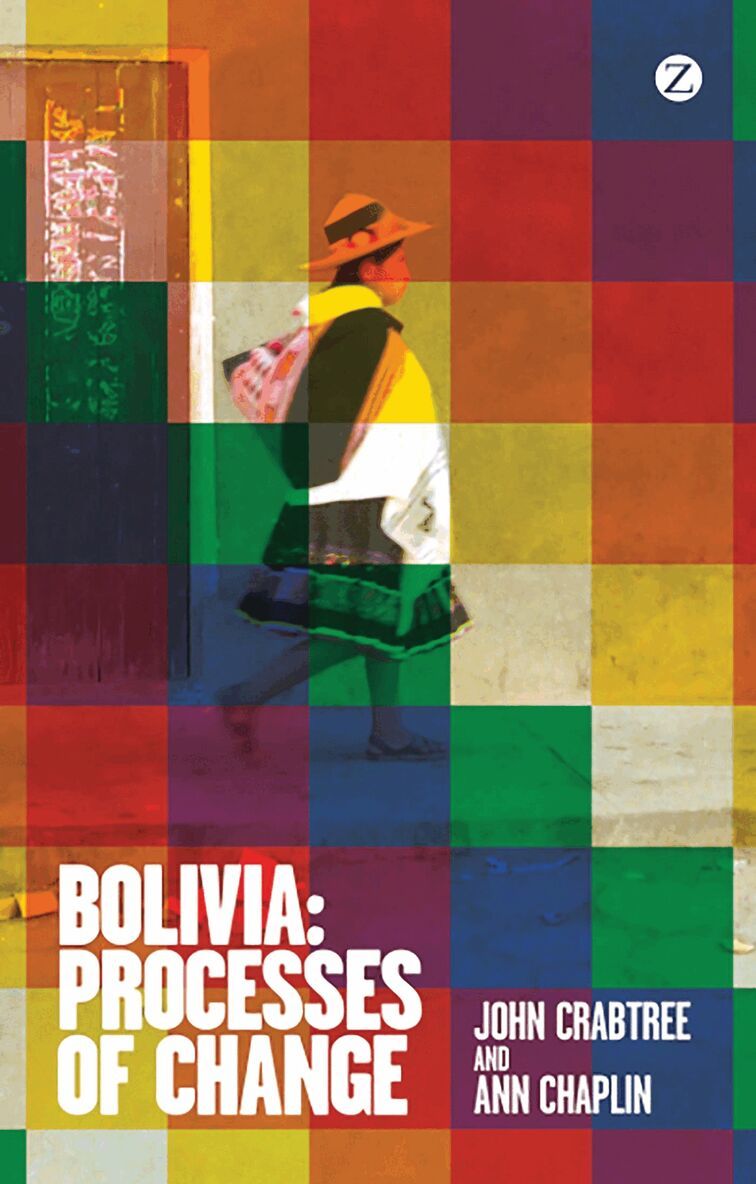
Since Evo Morales was elected president in 2006 as leader of the MAS, the first social movement to achieve political power in Latin America, Bolivia has seen radical changes and continues to generate huge interest worldwide. In this revealing new book, Crabtree and Chaplin show how ordinary people have responded to the processes of change that have taken place in the country over the last few years.Based on a wealth of interview material and original reportage, the book enters the terrain of grassroots politics, identifying how Bolivians work within the country's social movements and how they view the effects that this participation has achieved. It asks how they see their lives as being altered - for better or for worse - by this experience, as well as how they evaluate the experience of becoming politically involved, often for the first time. This unique bottom-up analysis explores the often complex relationship between Bolivia's people, social movements and the state, highlighting both the achievements and limitations of the MAS administration. In doing so, it casts important new light both on the nature of the Bolivian 'experiment' and its implications for participatory politics in other parts of the developing world.
E-bok
Engelska, 2013292 kr
Läs direkt efter köp
Since Evo Morales was elected president in 2006 as leader of the MAS, the first social movement to achieve political power in Latin America, Bolivia has seen radical changes and continues to generate huge interest worldwide. In this revealing new book, Crabtree and Chaplin show how ordinary people have responded to the processes of change that have taken place in the country over the last few years.Based on a wealth of interview material and original reportage, the book enters the terrain of grassroots politics, identifying how Bolivians work within the country's social movements and how they view the effects that this participation has achieved. It asks how they see their lives as being altered - for better or for worse - by this experience, as well as how they evaluate the experience of becoming politically involved, often for the first time. This unique bottom-up analysis explores the often complex relationship between Bolivia's people, social movements and the state, highlighting both the achievements and limitations of the MAS administration. In doing so, it casts important new light both on the nature of the Bolivian 'experiment' and its implications for participatory politics in other parts of the developing world.
Häftad, Engelska, 2017
349 kr
Skickas inom 5-8 vardagar
While leftist governments have been elected across Latin America, this ‘Pink Tide’ has so far failed to reach Peru. Instead, the corporate elite remains firmly entrenched, and the left continues to be marginalised. Peru therefore represents a particularly stark example of ‘state capture’, in which an extreme concentration of wealth in the hands of a few corporations and pro-market technocrats has resulted in a monopoly on political power.Post the 2016 elections, John Crabtree and Francisco Durand look at the ways in which these elites have been able to consolidate their position at the expense of genuine democracy, with a particular focus on the role of mining and other extractive industries, where extensive privatization and deregulation has contributed to extreme disparities in wealth and power.In the process, Crabtree and Durand provide a unique case study of state development, by revealing the mechanisms used by elites to dominate political discussion and marginalize their opponents, as well as the role played by external actors such as international financial institutions and foreign investors. The significance of Crabtree’s findings therefore extends far beyond Peru, and illuminates the wider issue of why mineral-rich countries so often struggle to attain meaningful democracy.
Inbunden, Engelska, 2017
1 256 kr
Skickas inom 10-15 vardagar
While leftist governments have been elected across Latin America, this ‘Pink Tide’ has so far failed to reach Peru. Instead, the corporate elite remains firmly entrenched, and the left continues to be marginalised. Peru therefore represents a particularly stark example of ‘state capture’, in which an extreme concentration of wealth in the hands of a few corporations and pro-market technocrats has resulted in a monopoly on political power.Post the 2016 elections, John Crabtree and Francisco Durand look at the ways in which these elites have been able to consolidate their position at the expense of genuine democracy, with a particular focus on the role of mining and other extractive industries, where extensive privatization and deregulation has contributed to extreme disparities in wealth and power.In the process, Crabtree and Durand provide a unique case study of state development, by revealing the mechanisms used by elites to dominate political discussion and marginalize their opponents, as well as the role played by external actors such as international financial institutions and foreign investors. The significance of Crabtree’s findings therefore extends far beyond Peru, and illuminates the wider issue of why mineral-rich countries so often struggle to attain meaningful democracy.
E-bok
Engelska, 2017365 kr
Läs direkt efter köp
While leftist governments have been elected across Latin America, this 'Pink Tide' has so far failed to reach Peru. Instead, the corporate elite remains firmly entrenched, and the left continues to be marginalised. Peru therefore represents a particularly stark example of 'state capture', in which an extreme concentration of wealth in the hands of a few corporations and pro-market technocrats has resulted in a monopoly on political power.Post the 2016 elections, John Crabtree and Francisco Durand look at the ways in which these elites have been able to consolidate their position at the expense of genuine democracy, with a particular focus on the role of mining and other extractive industries, where extensive privatization and deregulation has contributed to extreme disparities in wealth and power.In the process, Crabtree and Durand provide a unique case study of state development, by revealing the mechanisms used by elites to dominate political discussion and marginalize their opponents, as well as the role played by external actors such as international financial institutions and foreign investors. The significance of Crabtree's findings therefore extends far beyond Peru, and illuminates the wider issue of why mineral-rich countries so often struggle to attain meaningful democracy.
E-bok
PDF, Engelska, 2017379 kr
Läs direkt efter köp
While leftist governments have been elected across Latin America, this 'Pink Tide' has so far failed to reach Peru. Instead, the corporate elite remains firmly entrenched, and the left continues to be marginalised. Peru therefore represents a particularly stark example of 'state capture', in which an extreme concentration of wealth in the hands of a few corporations and pro-market technocrats has resulted in a monopoly on political power.Post the 2016 elections, John Crabtree and Francisco Durand look at the ways in which these elites have been able to consolidate their position at the expense of genuine democracy, with a particular focus on the role of mining and other extractive industries, where extensive privatization and deregulation has contributed to extreme disparities in wealth and power.In the process, Crabtree and Durand provide a unique case study of state development, by revealing the mechanisms used by elites to dominate political discussion and marginalize their opponents, as well as the role played by external actors such as international financial institutions and foreign investors. The significance of Crabtree's findings therefore extends far beyond Peru, and illuminates the wider issue of why mineral-rich countries so often struggle to attain meaningful democracy.
Häftad, Engelska, 2005
222 kr
Skickas inom 5-8 vardagar
Häftad, Engelska, 1998
267 kr
Skickas inom 5-8 vardagar
Inbunden, Engelska, 2006
1 160 kr
Skickas inom 5-8 vardagar
Häftad, Engelska, 2006
427 kr
Skickas inom 5-8 vardagar
E-bok
PDF, Engelska, 1990332 kr
Läs direkt efter köp
On 24 October 1985, the price of tin fell by half. The collapse of the international tin market sent shock waves around the world. Despite a gradual recovery, many mines have been forced to close forever. The Great Tin Crash traces the story of tin: from the rise of the tin can, through the collapse of the tin market, to the present. It looks at the crisis in the tin industry from the point of view of those who have lost the most: the miners and their families. From Siglo XX in Bolivia to Geevor in England, thousands of miners have seen their livelihoods disappear.
159 kr
Läs direkt efter köp
En este libro, John Crabtree, Francisco Durand y Jonas Wolff investigan el rol político de las élites económicas en Bolivia, Ecuador y Perú desde una perspectiva histórico-comparativa. Sobre la base de las teorías del poder empresarial y de la captura del Estado, el estudio sigue la interacción de los grupos empresariales y las autoridades estatales en los tres países de la región andina central desde mediados del siglo XX hasta principios del siglo XXI. Este lapso abarca tres modelos de desarrollo económico que se caracterizan por diferentes configuraciones de poder empresarial y relaciones Estado-empresariado: el período del modelo Estado-céntrico de industrialización por sustitución de importaciones desde la década de 1950 hasta la de 1970, el auge del neoliberalismo de las décadas 1980 y 1990, y el giro hacia un modelo posneoliberal con la «marea rosa» de principios de la década de 2000. El libro también aborda los últimos desarrollos en los tres países desde la pandemia del Covid-19, incluidas las recientes turbulencias políticas.
E-bok
Spanska, 201764 kr
Läs direkt efter köp
Crabtree y Durand estudian cómo las élites económicas logran tener peso sobre decisiones en áreas claves del Estado vía la influencia legal. El Perú les sirve de modelo para demostrar cómo funcionan los mecanismos de influencia que permiten a las élites económicas "capturar" el Estado y mantener hegemonía sobre la sociedad. Esta captura es más evidente en las decisiones de política económica, y expresa la acumulación de poder material de las corporaciones en las últimas décadas, que ha sido posible por la debilidad de la sociedad civil y las dificultades de la izquierda para ser una alternativa de gobierno.
Häftad, Engelska, 1990
242 kr
Tillfälligt slut