John D. Speth – författare
Visar alla böcker från författaren John D. Speth. Handla med fri frakt och snabb leverans.
17 produkter
Paleoanthropology and Archaeology of Big-Game Hunting
Protein, Fat, or Politics?
Inbunden, 2010
1128 kr
Lägg i varukorg
Since its inception, paleoanthropology has been closely wedded to the idea that big-game hunting by our hominin ancestors arose, first and foremost, as a means for acquiring energy and vital nutrients. This assumption has rarely been questioned, and seems intuitively obvious—meat is a nutrient-rich …
Paleoanthropology and Archaeology of Big-Game Hunting
Protein, Fat, or Politics?
E-bok, 2010
1175 kr
Lägg i varukorg
Since its inception, paleoanthropology has been closely wedded to the idea that big-game hunting by our hominin ancestors arose, first and foremost, as a means for acquiring energy and vital nutrients. This assumption has rarely been questioned, and seems intuitively obvious—meat is a nutrient-rich …
Paleoanthropology and Archaeology of Big-Game Hunting
Protein, Fat, or Politics?
Häftad, 2012
904 kr
Lägg i varukorg
Since its inception, paleoanthropology has been closely wedded to the idea that big-game hunting by our hominin ancestors arose, first and foremost, as a means for acquiring energy and vital nutrients. This assumption has rarely been questioned, and seems intuitively obvious—meat is a nutrient-rich …
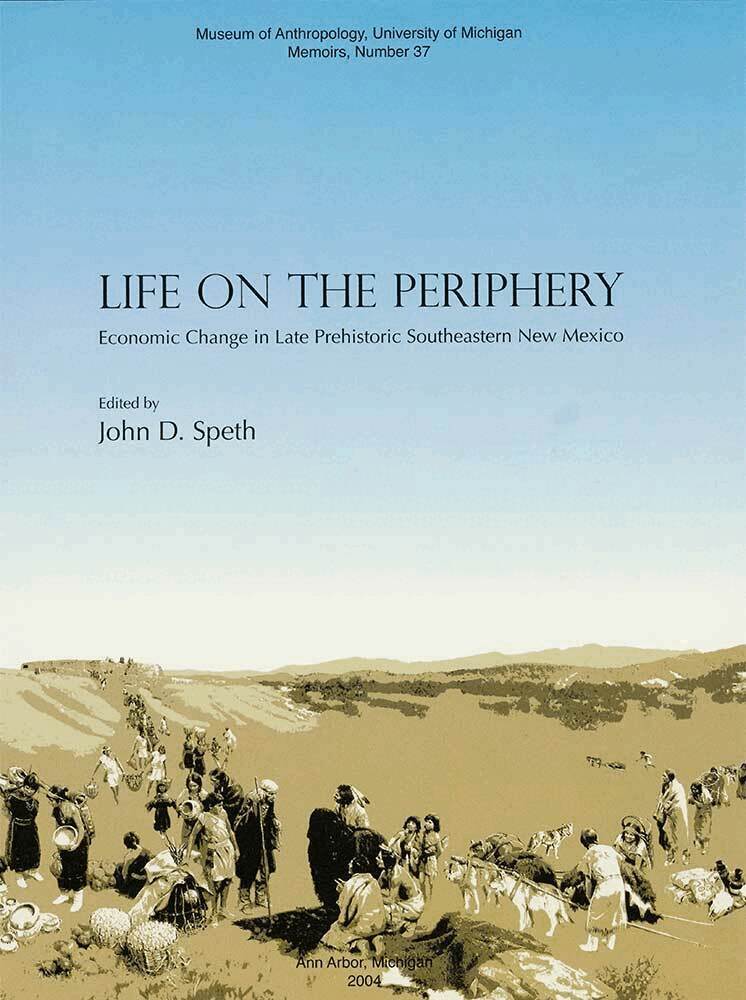
Life on the Periphery
Economic Change in Late Prehistoric Southeastern New Mexico
E-bok, 2020
840 kr
Lägg i varukorg
Dramatic economic changes transformed an isolated 13th-century village of farmer-hunters in the arid grasslands of southeastern New Mexico into a community heavily engaged in long-distance bison hunting and intense exchange with the Puebloan world to the west.
Henderson Site Burials
Glimpses of a Late Prehistoric Population in the Pecos Valley
Av John D. Speth, Thomas R. Rocek
E-bok, 2020
391 kr
Lägg i varukorg
The Henderson site is a small, late prehistoric pueblo in southeastern New Mexico. It sits on a crest overlooking the Hondo River in Chaves County. The site contains a multiroom structure with two phases of occupation: the first around AD 1200 and the second around AD 1300 to 1400. This volume …
Garnsey Spring Campsite
Late Prehistoric Occupation in Southeastern New Mexico
Av John D. Speth, William J. Parry
E-bok, 2020
293 kr
Lägg i varukorg
In 1977 and 1978, Parry and Speth excavated the Garnsey Spring site, an aboriginal campsite southeast of Roswell, New Mexico. Here they describe their fieldwork and the analysis of the artifacts found at the site, including lithics and ceramics. Pollen analysis is also included.
Late Prehistoric Bison Procurement in Southeastern New Mexico
The 1978 Season at the Garnsey Site (LA-18399)
Av William J. Parry, John D. Speth
E-bok, 2020
683 kr
Lägg i varukorg
The Garnsey site is a late prehistoric-protohistoric bison kill site in southeastern New Mexico. During the 1978 excavation, the crew clarified the stratigraphy and chronology of the site and increased the number of bison remains. In this data-rich monograph, the authors present the results of …
Late Prehistoric Bison Procurement in Southeastern New Mexico
The 1977 Season at the Garnsey Site
Av William J. Parry, John D. Speth
E-bok, 2020
669 kr
Lägg i varukorg
Archaeologists John D. Speth and William J. Parry present the results of the first season of excavation at the Garnsey site, a bison kill site in southeastern New Mexico.
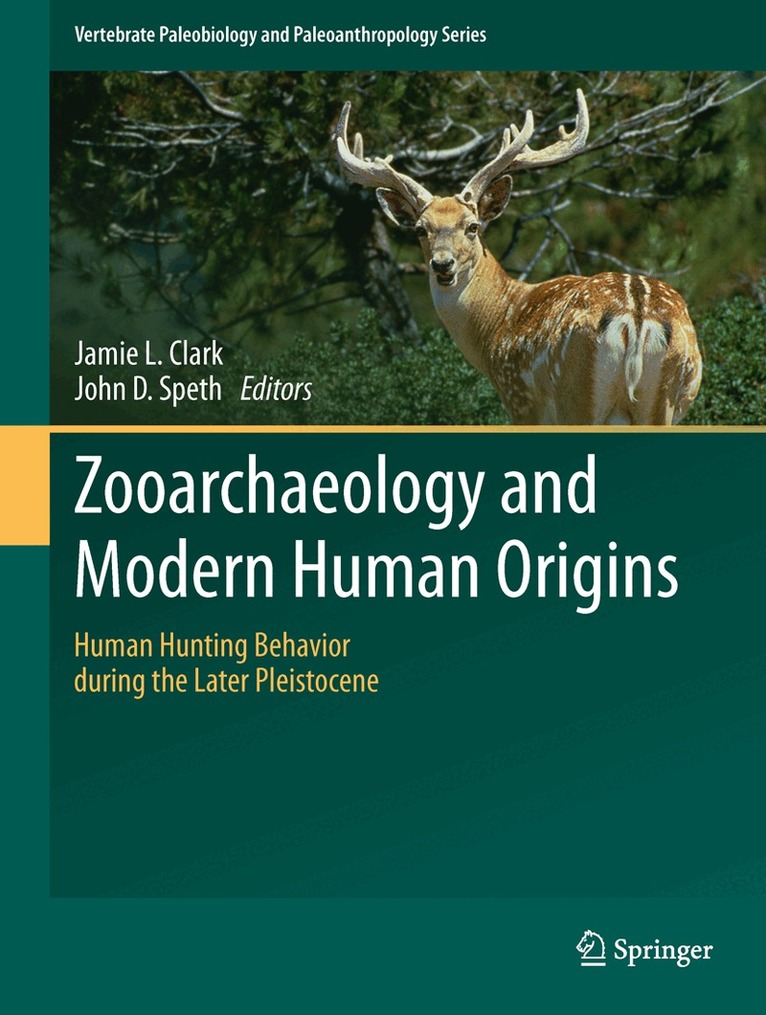
Zooarchaeology and Modern Human Origins
Human Hunting Behavior during the Later Pleistocene
Av Jamie L. Clark, John D. Speth
Inbunden, 2013
1128 kr
Lägg i varukorg
Recent genetic data showing that Neanderthals interbred with modern humans have made it clear that deeper insight into the behavioral differences between these populations will be critical to understanding the rapid spread of modern humans and the demise of the Neanderthals. This volume, which …
Zooarchaeology and Modern Human Origins
Human Hunting Behavior during the Later Pleistocene
Av John D. Speth, Jamie L. Clark
E-bok, 2013
1502 kr
Lägg i varukorg
Recent genetic data showing that Neanderthals interbred with modern humans have made it clear that deeper insight into the behavioral differences between these populations will be critical to understanding the rapid spread of modern humans and the demise of the Neanderthals. This volume, which …
Zooarchaeology and Modern Human Origins
Human Hunting Behavior during the Later Pleistocene
Av Jamie L. Clark, John D. Speth
Häftad, 2015
1128 kr
Lägg i varukorg
Recent genetic data showing that Neanderthals interbred with modern humans have made it clear that deeper insight into the behavioral differences between these populations will be critical to understanding the rapid spread of modern humans and the demise of the Neanderthals. This volume, which …
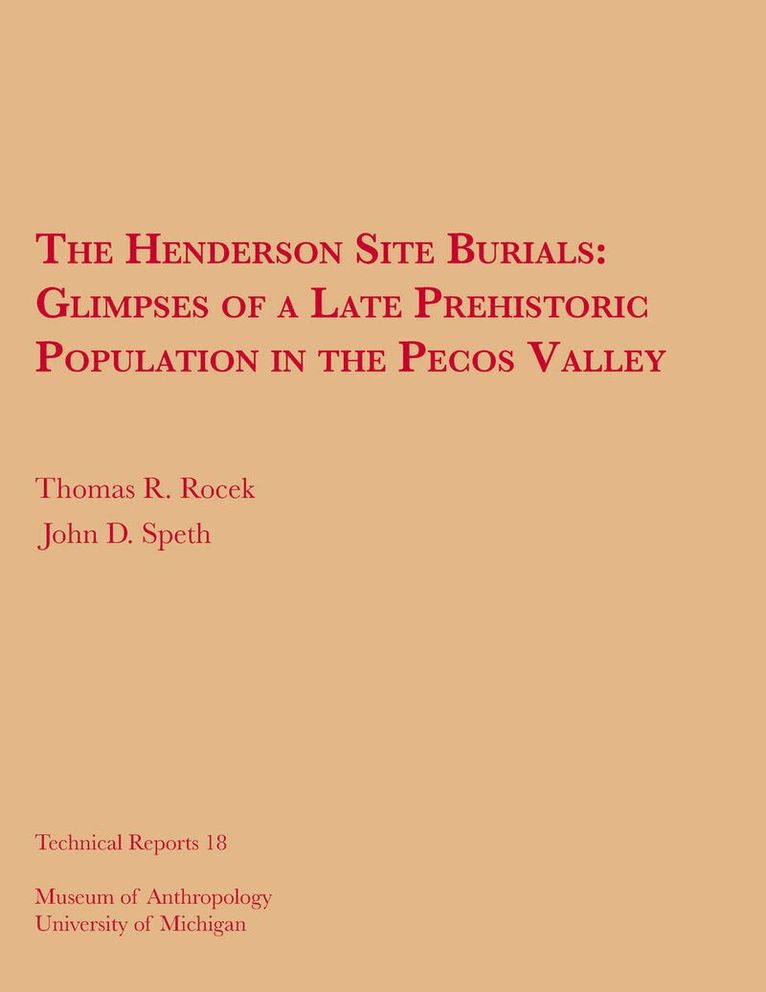
Henderson Site Burials
Glimpses of a Late Prehistoric Population in the Pecos Valley
Av Thomas R. Rocek, John D. Speth
Häftad, 1986
270 kr
Tillfälligt slut
The Henderson site is a small, late prehistoric pueblo in southeastern New Mexico. It sits on a crest overlooking the Hondo River in Chaves County. The site contains a multiroom structure with two phases of occupation: the first around AD 1200 and the second around AD 1300 to 1400. This volume …
Life on the Periphery: Economic Change in Late Prehistoric Southeastern New Mexico
Häftad, 2004
563 kr
Tillfälligt slut
Dramatic economic changes transformed an isolated 13th-century village of farmer-hunters in the arid grasslands of southeastern New Mexico into a community heavily engaged in long-distance bison hunting and intense exchange with the Puebloan world to the west.
Late Prehistoric Bison Procurement in Southeastern New Mexico
The 1977 Season at the Garnsey Site
Av John D. Speth, William J. Parry
Häftad, 1978
146 kr
Tillfälligt slut
Archaeologists John D. Speth and William J. Parry present the results of the first season of excavation at the Garnsey site, a bison kill site in southeastern New Mexico.
Late Prehistoric Bison Procurement in Southeastern New Mexico
The 1978 Season at the Garnsey Site (LA-18399)
Av John D. Speth, William J. Parry
Häftad, 1980
331 kr
Tillfälligt slut
The Garnsey site is a late prehistoric-protohistoric bison kill site in southeastern New Mexico. During the 1978 excavation, the crew clarified the stratigraphy and chronology of the site and increased the number of bison remains. In this data-rich monograph, the authors present the results of …
Garnsey Spring Campsite
Late Prehistoric Occupation in Southeastern New Mexico
Av William J. Parry, John D. Speth
Häftad, 1984
208 kr
Tillfälligt slut
In 1977 and 1978, Parry and Speth excavated the Garnsey Spring site, an aboriginal campsite southeast of Roswell, New Mexico. Here they describe their fieldwork and the analysis of the artifacts found at the site, including lithics and ceramics. Pollen analysis is also included.
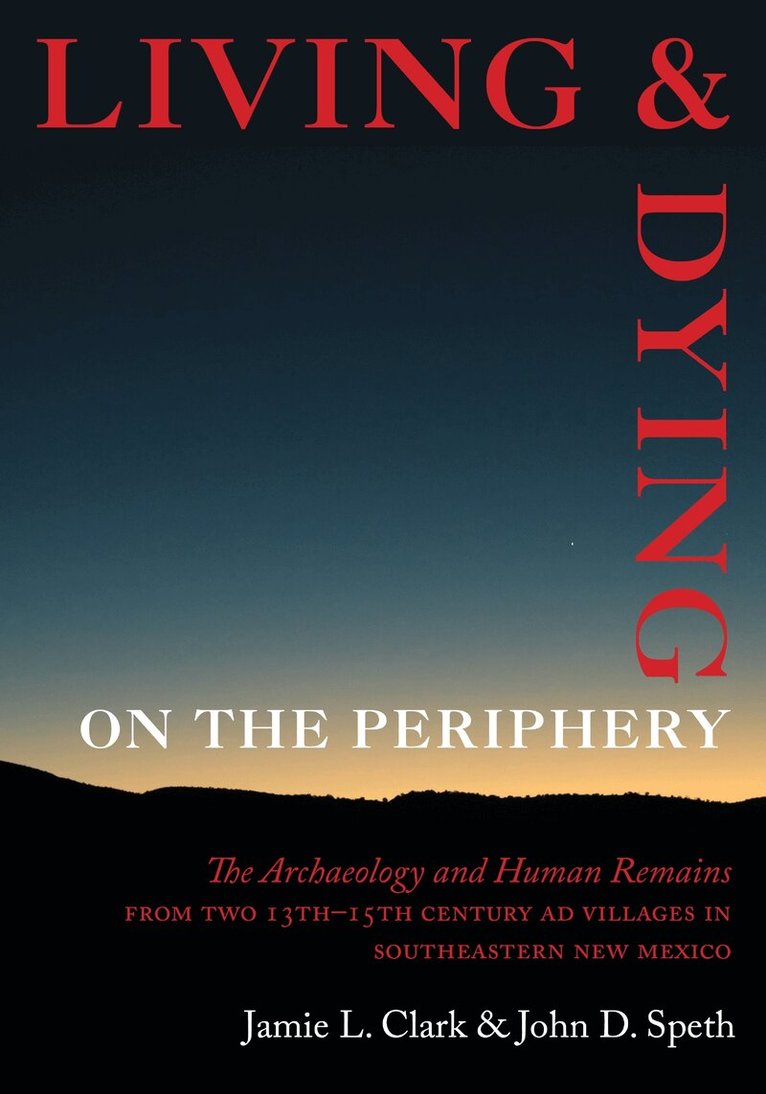
Living and Dying on the Periphery
The Archaeology and Human Remains from Two 13th-15th Century AD Villages in Southeastern New Mexico
Av Jamie L. Clark, John D. Speth
Inbunden, 2022
869 kr
Tillfälligt slut
When one thinks about southwestern archaeology, multistoried villages and cliff-dwellings generally come to mind. But on the eastern periphery of the Southwest, where mesas and mountains give way to vast grasslands, other types of villages once thrived. In this volume, archaeologists Jamie Clark …