John Dyer – författare
Visar alla böcker från författaren John Dyer. Handla med fri frakt och snabb leverans.
34 produkter
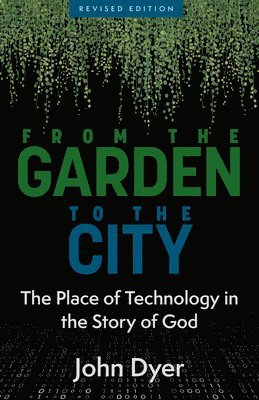
From the Garden to the City
The Place of Technology in the Story of God
Av John Dyer
Häftad, 2022
207 kr
Lägg i varukorg
People of the Screen
How Evangelicals Created the Digital Bible and How It Shapes Their Reading of Scripture
Av John Dyer
Inbunden, 2023
370 kr
Lägg i varukorg
People of the Screen traces the history of Bible software app development, showing the unique and powerful role evangelical entrepreneurs and coders have played in shaping its functionality and how their choices in turn shape the reading habits of millions of people around the world. Examining …
People of the Screen
How Evangelicals Created the Digital Bible and How It Shapes Their Reading of Scripture
Av John Dyer
E-bok, 2022
245 kr
Lägg i varukorg
People of the Screen traces the history of Bible software development, showing the unique and powerful role evangelical entrepreneurs and coders have played in shaping its functionality and how their choices in turn shape the reading habits of millions of people around the world. Examining …
People of the Screen
How Evangelicals Created the Digital Bible and How It Shapes Their Reading of Scripture
Av John Dyer
E-bok, 2022
245 kr
Lägg i varukorg
People of the Screen traces the history of Bible software development, showing the unique and powerful role evangelical entrepreneurs and coders have played in shaping its functionality and how their choices in turn shape the reading habits of millions of people around the world. Examining …
Ecclesiology for a Digital Church
Theological Reflections on a New Normal
Av Heidi A. Campbell, John Dyer
Häftad, 2022
650 kr
Lägg i varukorg
What are the ecclesiological challenges and opportunities raised by technology? How have developments related to the COVID-19 global health crisis impacted churches, forcing a swift move to mediated and online worship? And how will this change the shape churches of theological and programmatic …
Ecclesiology for a Digital Church
Theological Reflections on a New Normal
Av John Dyer, Heidi A. Campbell
E-bok, 2022
652 kr
Lägg i varukorg
What are the ecclesiological challenges and opportunities raised by technology? How have developments related to the COVID-19 global health crisis impacted churches, forcing a swift move to mediated and online worship? And how will this change the shape churches of theological and programmatic …
Ecclesiology for a Digital Church
Theological Reflections on a New Normal
Av Heidi A. Campbell, John Dyer
Inbunden, 2022
764 kr
Lägg i varukorg
What are the ecclesiological challenges and opportunities raised by technology? How have developments related to the COVID-19 global health crisis impacted churches, forcing a swift move to mediated and online worship? And how will this change the shape churches of theological and programmatic …
Façade of Excellence
Defining a New Normal of Leadership
Av John Dyer
Inbunden, 2019
762 kr
Lägg i varukorg
The crucial need to substitute true leadership for bad management practices such as Management By Objectives (MBO) and the use of fear is now well known and was often championed by Dr. W. Edwards Deming. While significant progress has been made, many organizations (especially outside of …
Facade of Excellence
Defining a New Normal of Leadership
Av John Dyer
E-bok, 2019
553 kr
Lägg i varukorg
The crucial need to substitute true leadership for bad management practices such as Management By Objectives (MBO) and the use of fear is now well known and was often championed by Dr. W. Edwards Deming. While significant progress has been made, many organizations (especially outside of …
Facade of Excellence
Defining a New Normal of Leadership
Av John Dyer
E-bok, 2019
541 kr
Lägg i varukorg
The crucial need to substitute true leadership for bad management practices such as Management By Objectives (MBO) and the use of fear is now well known and was often championed by Dr. W. Edwards Deming. While significant progress has been made, many organizations (especially outside of …
From the Garden to the City, revised edition
The Place of Techology in the Story of God
Av John Dyer
E-bok, 2022
214 kr
Lägg i varukorg
From ancient tools to modern devices, technology is part of what it means to be human and honor God Christian discussion of technology tends to focus along prescriptive lines. Don’t look at the wrong pictures. Don’t interact with pride or wrath on social media. Be careful not to join an immodest …
From the Garden to the City
The Redeeming and Corrupting Power of Technology
Av John Dyer
E-bok, 2011
175 kr
Lägg i varukorg
Where does technology belong in the biblical story of redemption? Believers and unbelievers alike are saturated with technology, yet most give it little if any thought. Consumers buy and upgrade as fast as they can, largely unaware of technology’s subtle yet powerful influence. In a world where …
Façade of Excellence
Defining a New Normal of Leadership
Av John Dyer
Häftad, 2026
424 kr
Kommande
The crucial need to substitute true leadership for bad management practices such as Management By Objectives (MBO) and the use of fear is now well known and was often championed by Dr. W. Edwards Deming. While significant progress has been made, many organizations (especially outside of …
Poems. by John Dyer, L.L.B. Viz. I. Grongar Hill. II. the Ruins of Rome. III. the Fleece, in Four Books.
Av John Dyer
Häftad, 2010
245 kr
Lägg i varukorg
Poems. By John Dyer, L.L.B. Viz. I. Grongar Hill. II. The Ruins of Rome. III. The Fleece, in Four Books
Av John Dyer
Inbunden, 2018
382 kr
Lägg i varukorg
Encounters with God in Brazil
Personal Stories to Amaze and Inspire
Av John Dyer
Häftad, 2022
164 kr
Lägg i varukorg