John E. Alvis - Böcker
Visar alla böcker från författaren John E. Alvis. Handla med fri frakt och snabb leverans.
3 produkter
3 produkter
681 kr
Skickas inom 5-8 vardagar
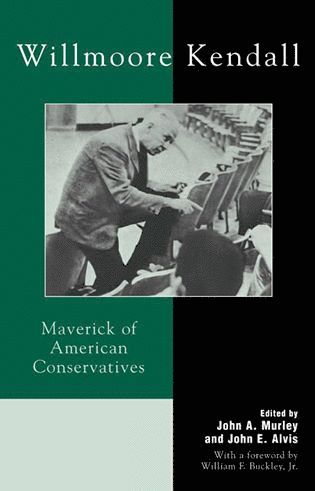
Willmoore Kendall: Maverick of American Conservatives provides the first book-length study of a man long regarded as a founding father of American intellectual conservatism. This edited collection brings together a diverse range of perspectives on Kendall's life and work and places the post-World War II political theorist in the context of modern American conservatism. Far from providing a monolithic view of Kendall's thought, the contributions illuminate an unconventional, often contradictory, thinker. The book traces the development of Kendall's body of political thought from his early years in Oxford, through his work on John Locke, to the later speculation that produced The Basic Symbols of the American Political Tradition , and analyzes the influence of Leo Strauss on his later work. Including, for the first time in print, the complete correspondence between Kendall and Strauss that significantly shaped Kendall's later work, Willmoore Kendall is a vital contribution to American intellectual history.
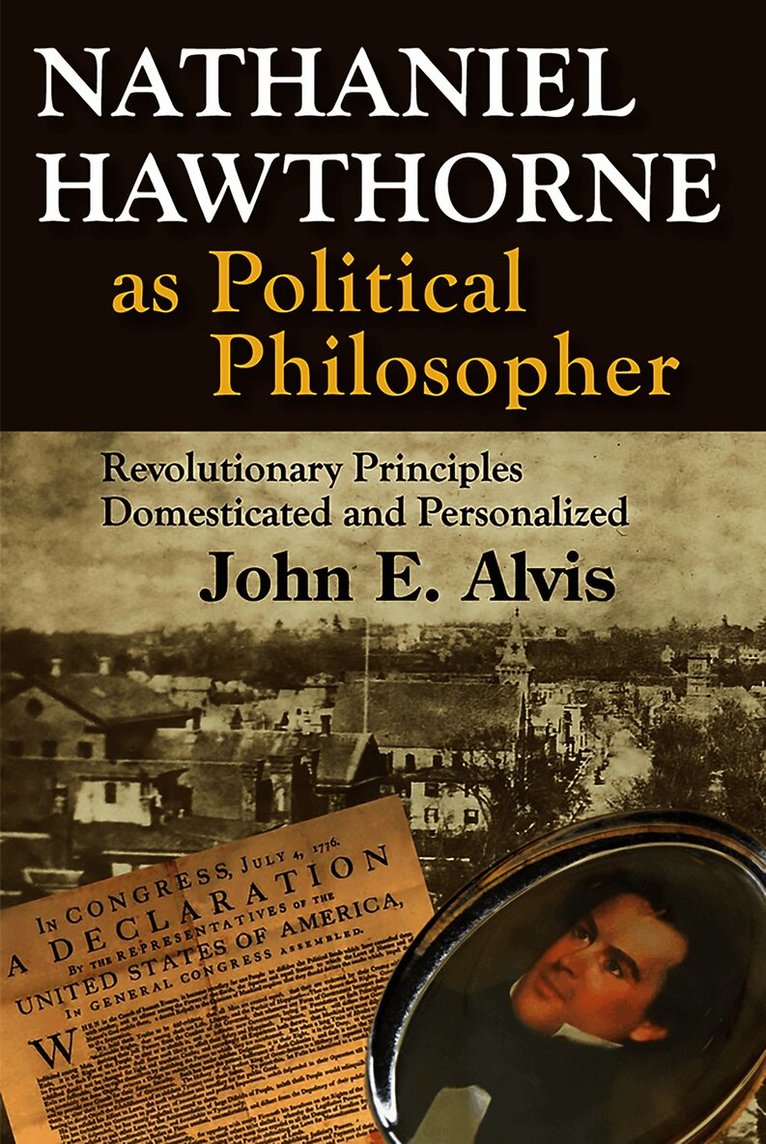
Nathaniel Hawthorne as Political Philosopher
Revolutionary Principles Domesticated and Personalized
Inbunden, Engelska, 2011
1 282 kr
Tillfälligt slut
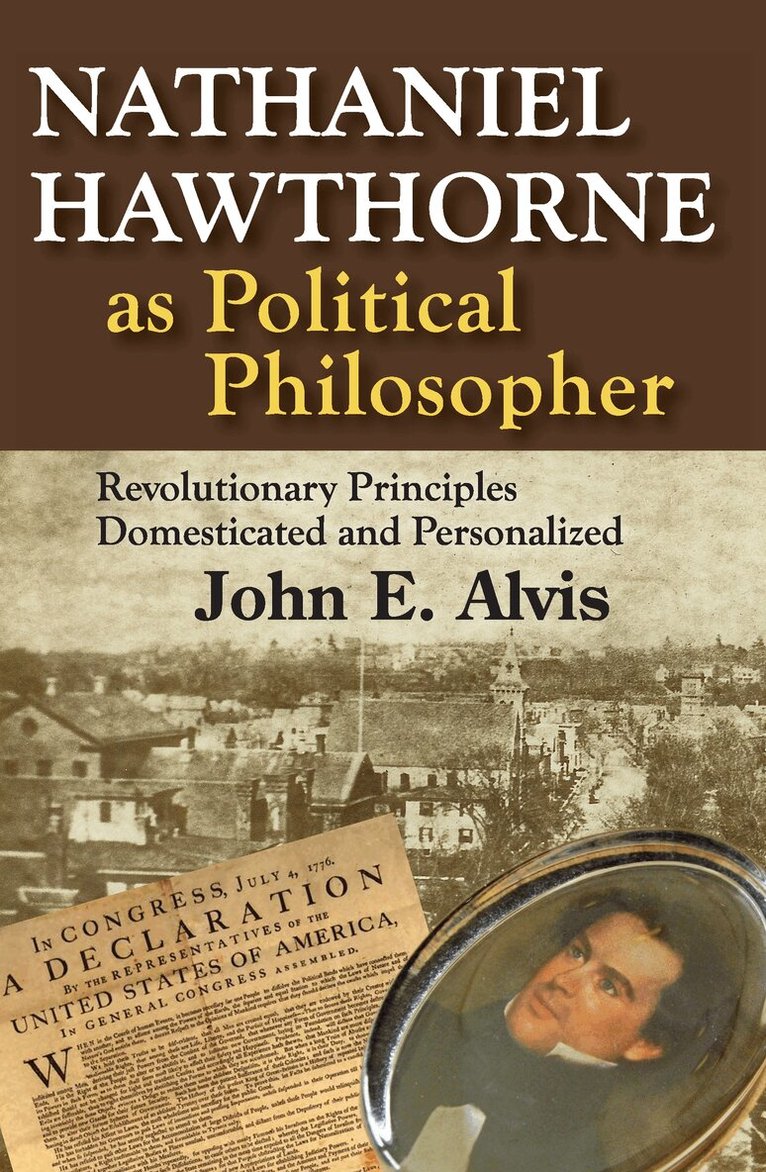
Using the works of Nathaniel Hawthorne as a case study, John E. Alvis shows that a novelist can be a political philosopher. He demonstrates that much of Hawthorne's works are rooted in the American political tradition. Once we view his writings in connection with the principles expressed in the Declaration of Independence, we grasp that what Thomas Jefferson and John Adams had stated explicitly, Hawthorne's fiction conveys dramatically. With examples drawn from Hawthorne's shorter works, as well as acknowledged classics, such as The Scarlet Letter, John E. Alvis shows that Hawthorne's characters bear something sacred in their generic humanity, yet are subject to moral judgment. He conveys reciprocity between obligations regulating individual relations and the responsibilities of individuals to their community.From America's founding proclamations in the Declaration of Independence we take a sense of national aspirations for a political order that conforms to "laws of nature and nature's God." From this higher law emerge the principles enumerated in that revolutionary document. Are these principles confined to the political, or do they reach into the experience of citizens to inform conduct? Do they include family, local community, and individual face-to-face relations with neighbors and strangers? Can one make a distinct way of life by fidelity to such standards as higher law, equality, liberty, natural rights, and consent?This study is distinguished from other writings on Hawthorne in its largely positive focus on America. Alvis characterizes Hawthorne as a rational patriot who endorses America's new terms for human association. This fascinating study provides new insights into the mind of one of the greatest American writers.
Nathaniel Hawthorne as Political Philosopher
Revolutionary Principles Domesticated and Personalized
Häftad, Engelska, 2013
787 kr
Skickas inom 10-15 vardagar
Using the works of Nathaniel Hawthorne as a case study, John E. Alvis shows that a novelist can be a political philosopher. He demonstrates that much of Hawthorne's works are rooted in the American political tradition. Once we view his writings in connection with the principles expressed in the Declaration of Independence, we grasp that what Thomas Jefferson and John Adams had stated explicitly, Hawthorne's fiction conveys dramatically. With examples drawn from Hawthorne's shorter works, as well as acknowledged classics, such as The Scarlet Letter, John E. Alvis shows that Hawthorne's characters bear something sacred in their generic humanity, yet are subject to moral judgment. He conveys reciprocity between obligations regulating individual relations and the responsibilities of individuals to their community.From America's founding proclamations in the Declaration of Independence we take a sense of national aspirations for a political order that conforms to "laws of nature and nature's God." From this higher law emerge the principles enumerated in that revolutionary document. Are these principles confined to the political, or do they reach into the experience of citizens to inform conduct? Do they include family, local community, and individual face-to-face relations with neighbors and strangers? Can one make a distinct way of life by fidelity to such standards as higher law, equality, liberty, natural rights, and consent?This study is distinguished from other writings on Hawthorne in its largely positive focus on America. Alvis characterizes Hawthorne as a rational patriot who endorses America's new terms for human association. This fascinating study provides new insights into the mind of one of the greatest American writers.