John E. Exner Jr. - Böcker
Visar alla böcker från författaren John E. Exner Jr.. Handla med fri frakt och snabb leverans.
4 produkter
4 produkter
Del 190 - Rorschach
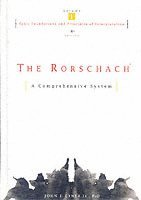
Rorschach, Basic Foundations and Principles of Interpretation
Inbunden, Engelska, 2002
1 794 kr
Skickas inom 7-10 vardagar
The fully revised edition of the premier guidebook to the Rorschach test For the last three decades, Dr. John Exner's Comprehensive System has been the leading approach worldwide to administering and interpreting the Rorschach test. The Rorschach: A Comprehensive System, Volume 1, Fourth Edition retains the thorough, authoritative coverage that has kept this book at the forefront of the field, while combining approaches to both evaluation and interpretation for the first time in a single volume. This new edition provides updated research and information on administering, scoring, and interpreting the Rorschach test, as well as new normative data, coverage of recent controversies and criticisms of the test, and illustrative case studies. New to this edition:* Latest normative data for interpreting the Rorschach* More cases illustrating the techniques for administering, scoring, and interpreting the test* New chapters on interpretation* A chapter on recent controversies surrounding the test The Rorschach: A Comprehensive System remains the most enlightened and influential guide to the test.
Del 182 - Wiley Series on Personality Processes
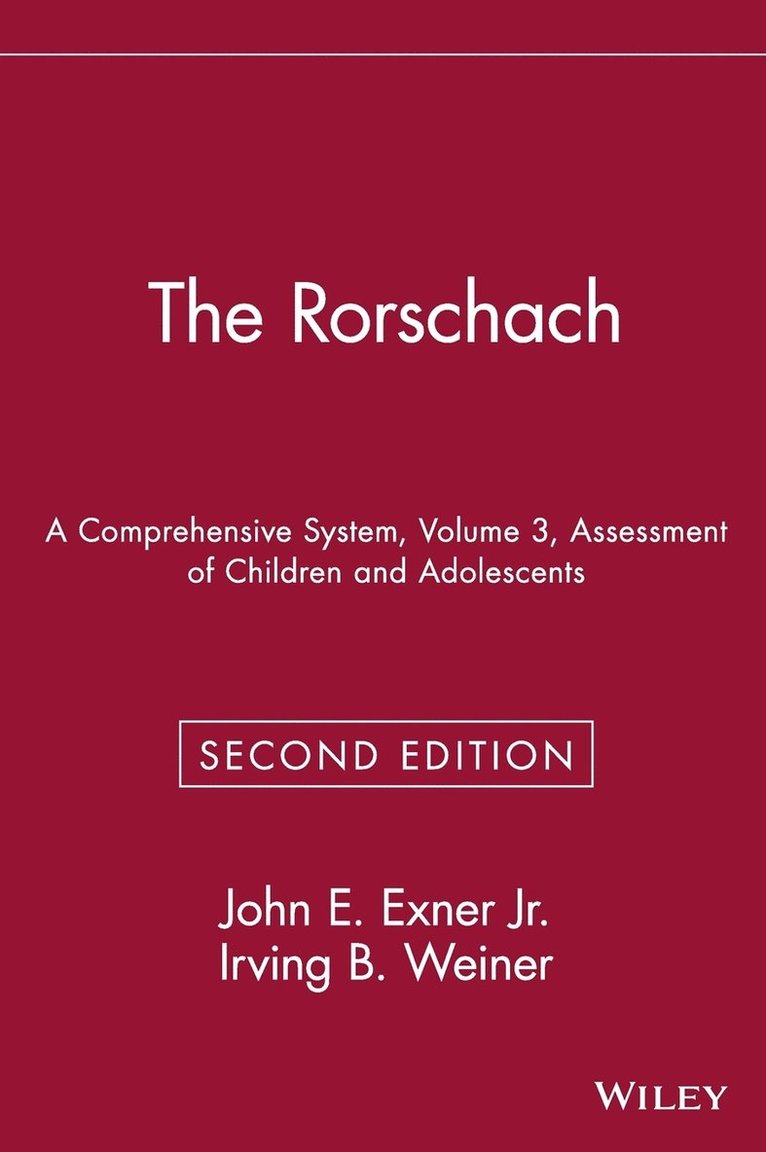
Rorschach, Assessment of Children and Adolescents
Inbunden, Engelska, 1994
2 229 kr
Skickas inom 7-10 vardagar
Volume 3: Assessment of Children and Adolescents provides practical, authoritative guidance in the Rorschach assessment of personality functioning in young people and in the identification of psychological disorders and developmental difficulties. Supported by conceptual formulations and research evidence, this text helps clinical and counseling psychologists deepen their understanding of the Rorschach and sharpen their skill in administering it. The Second Edition includes new material on the issue of projection, revised normative data on young people age 5 to 16, and a demonstration of the recently developed Comprehensive System "search strategy" for interpreting children's and adolescents' records. New to this edition also are sections on interpreting the Schizophrenia Index (SCZI), the Depression Index (DEPI), the Coping Deficit Index (CDI), and the Hypervigilence Index (HVI), and a discussion of bipolar disorder and the dynamic interplay of mania and depression. Subsequent chapters present new formulations of faltering personality development and antisocial behavior and new information on the assessment of learning disabilities and attention deficit hyperactivity disorder (ADHD). A final chapter offers new material on Rorschach-based recommendations in child custody disputes. Throughout the text, explanatory concepts and empirical data are used to link features of normal and abnormal development with response patterns on the Rorschach, which are then linked to concrete criteria for diagnosis and treatment planning. The authors provide fourteen case studies to demonstrate clearly the application of these principles in clinical practice. Based on a system that has, over time, demonstrated both its validity and reliability, this book is an essential resource for all psychologists practicing, teaching, supervising, or researching personality assessment of children and adolescents.
2 015 kr
Skickas inom 10-15 vardagar
Any research that involves the use of the Rorschach or focuses on the nature of the Rorschach must be framed in the context of the basic principles that mark any scientific investigation. However, most texts concerning research design or data analysis do not deal directly with many of the unusual issues that confront investigators who use the Rorschach in their research. The nature of the test and test procedures are somewhat different than for most psychological tests, and, often, these special characteristics become critical when research designs are formulated. Similarly, some of the data of the tests are quite different from the customary distributions yielded by other psychological tests. Thus special care must be exercised when considering the variety of tactics that might might be used in analyzing the test data. This text is unique in that it is specific to the Rorschach. Bringing together experts on Rorschach research, this volume presents in-depth treatments of every facet of methodology -- from design to analysis -- as well as more conceptual issues. It is designed to aid investigators in contending effectively with the many difficult challenges that are often encountered in Rorschach research. This work adds to the information already available to the accomplished researcher as well as provide some enlightenment for the Rorschach research novice. It dispels the notion that rote methodology or analyses can be applied routinely to studies involving the Rorschach. And it helps to improve the quality of investigations in which the test is included, and contribute in some way to the improvement of the overall research yield in the Rorschach community.
738 kr
Skickas inom 10-15 vardagar
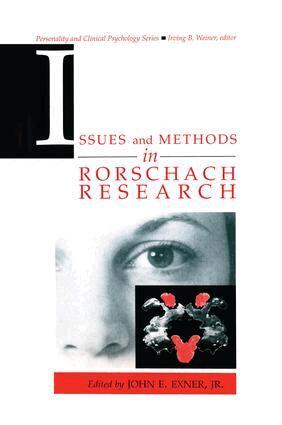
Any research that involves the use of the Rorschach or focuses on the nature of the Rorschach must be framed in the context of the basic principles that mark any scientific investigation. However, most texts concerning research design or data analysis do not deal directly with many of the unusual issues that confront investigators who use the Rorschach in their research. The nature of the test and test procedures are somewhat different than for most psychological tests, and, often, these special characteristics become critical when research designs are formulated. Similarly, some of the data of the tests are quite different from the customary distributions yielded by other psychological tests. Thus special care must be exercised when considering the variety of tactics that might might be used in analyzing the test data. This text is unique in that it is specific to the Rorschach. Bringing together experts on Rorschach research, this volume presents in-depth treatments of every facet of methodology -- from design to analysis -- as well as more conceptual issues. It is designed to aid investigators in contending effectively with the many difficult challenges that are often encountered in Rorschach research. This work adds to the information already available to the accomplished researcher as well as provide some enlightenment for the Rorschach research novice. It dispels the notion that rote methodology or analyses can be applied routinely to studies involving the Rorschach. And it helps to improve the quality of investigations in which the test is included, and contribute in some way to the improvement of the overall research yield in the Rorschach community.