John E. Hobbie - Böcker
Visar alla böcker från författaren John E. Hobbie. Handla med fri frakt och snabb leverans.
4 produkter
4 produkter
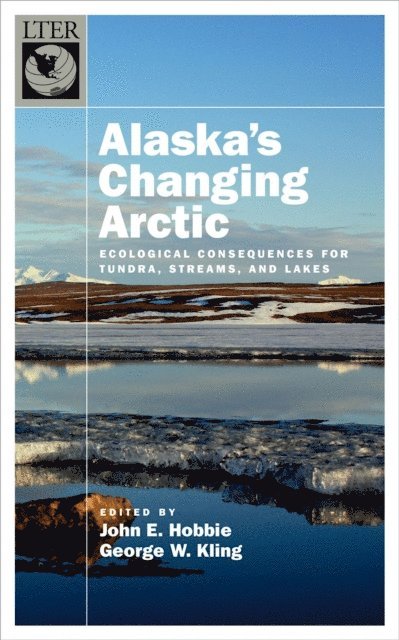
Alaska's Changing Arctic
Ecological Consequences for Tundra, Streams, and Lakes
Inbunden, Engelska, 2014
1 391 kr
Skickas inom 5-8 vardagar
In this latest edition of the Long Term Ecological Research Network series, John Hobbie and George Kling synthesize the findings from the NSF-funded Arctic LTER project based in Toolik Lake, Alaska, a site that has been active since the mid 1970's. The book presents research concerning the core issues of climate-change science, and addresses the treeless regions of arctic Alaska, as well as the adjoining boreal forests. As a whole, the book examines both terrestrial and freshwater-aquatic ecosystems, and their three typical habitats: tundra, streams and lakes.The book provides a history of the Toolik Lake LTER site, and discusses its present condition and future outlook. It features contributions from top ecologists, biologists, and environmental scientists, creating a multidisciplinary survey of the Alaskan arctic ecosystem. Chapter topics include glacial history, climatology, land-water interactions, mercury found in the Alaskan arctic, and the response of lakes to environmental change. The final chapter brings together these findings in order to make predictions regarding the consequences that arctic Alaska faces due to global warming and climate change, and discusses the future of the LTER site in the region. Alaska's Changing Arctic is the definitive scientific survey of the past, present, and future of the ecology of the Alaskan arctic, and the comprehensive source for the findings from the LTER site in the region.
461 kr
Skickas inom 5-8 vardagar
350 kr
Skickas inom 5-8 vardagar
536 kr
Skickas inom 10-15 vardagar
Introduction This book contains papers given at a NATO Advanced Research Institute (A.R.I.) held at Caiscais, Portugal, in November, 1981. The subject of the A.R.I. was marine heterotrophy; this is defined as the process by which the carbon autotrophically fixed into organic compounds by photosynthesis is transformed and respired. Obviously all animals and many microbes are heterotrophs but here we will deal only with the microbes. Also, we restricted the A.R.I. primarily to microbial heterotrophy in the water column even though we recognize that a great deal occurs in sediments. Most of the recent advances have, in fact, been made in the water column because it is easier to work in a fluid, apparently uniform medium. The reason for the A.R.I. was the rapid development of this subject over the past few years. Methods and arguments have flourished so it is now time for a review and for a sorting out. We wish to thank the NATO Marine Science Committee for sharing this view, F. Azam, A.-L. Meyer-Reil, L. Pomeroy, C. Lee, and B. Hargrave for organizational help, and H. Lang and S. Semino for valuable editing aid.