John Ermisch – författare
Visar alla böcker från författaren John Ermisch. Handla med fri frakt och snabb leverans.
8 produkter
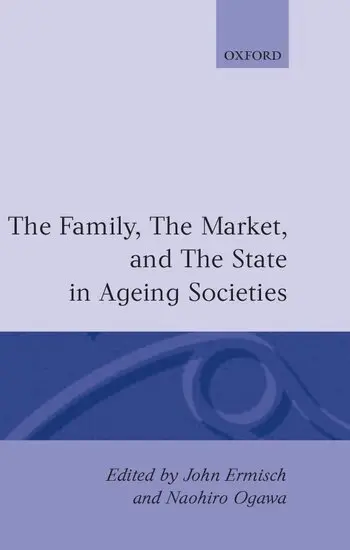
The Family, the Market, and the State in Ageing Societies
Av Ermisch, John Ermisch m. fl.
Inbunden, 1994
968 kr
Lägg i varukorg
Using a mixture of economic and demographic analysis, this book studies the changing patterns of family formation over the last twenty years. A strength of the book is the data and analysis included on Japan and Western countries, which have previously been less researched than the developing …
Changing Relationships
Av Malcolm Brynin, John Ermisch
Häftad, 2012
240 kr
Lägg i varukorg
Some relationships are within the family -- such as between parents and children, grandparents and children and between siblings -- while others are between friends. In some cases, these distinctions are blurred (Are short-term partners family members? Are family members seen as such when relations …
Changing Relationships
Av Malcolm Brynin, John Ermisch
Inbunden, 2008
2510 kr
Lägg i varukorg
Some relationships are within the family -- such as between parents and children, grandparents and children and between siblings -- while others are between friends. In some cases, these distinctions are blurred (Are short-term partners family members? Are family members seen as such when relations …
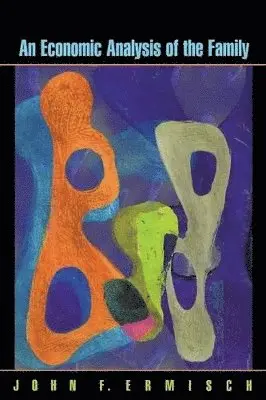
Economic Analysis of the Family
Av John Ermisch
Häftad, 2016
331 kr
Lägg i varukorg
What do economists have to say about behavior within the context of the family? This book improves our understanding of how families and markets interact, why important aspects of families have been changing in recent decades, and how families respond to, and are affected by, public policy. It …
Changing Relationships
Av John Ermisch, Malcolm Brynin
E-bok, 2008
277 kr
Lägg i varukorg
Some relationships are within the family -- such as between parents and children, grandparents and children and between siblings -- while others are between friends. In some cases, these distinctions are blurred (Are short-term partners family members? Are family members seen as such when relations …
Changing Relationships
Av John Ermisch, Malcolm Brynin
E-bok, 2008
271 kr
Lägg i varukorg
Some relationships are within the family -- such as between parents and children, grandparents and children and between siblings -- while others are between friends. In some cases, these distinctions are blurred (Are short-term partners family members? Are family members seen as such when relations …
Economic Analysis of the Family
Av John Ermisch
E-bok, 2016
427 kr
Lägg i varukorg
What do economists have to say about behavior within the context of the family? This book improves our understanding of how families and markets interact, why important aspects of families have been changing in recent decades, and how families respond to, and are affected by, public policy. It …
Understanding Social Change
Av Anthony F. Heath, John Ermisch m. fl.
Inbunden, 2005
1384 kr
Tillfälligt slut
These essays not only describe the major changes in British society in recent years, but seek to understand and explain what is happening. One of the themes running through this book is that, while there have been rapid changes in overall levels, there have been slower changes in relativities, and …