John F. Padgett – författare
Visar alla böcker från författaren John F. Padgett. Handla med fri frakt och snabb leverans.
3 produkter
3 produkter
796 kr
Kommande
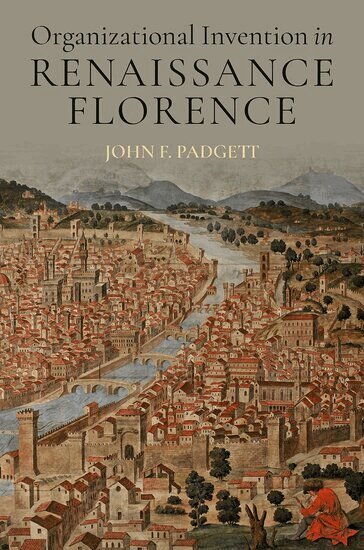
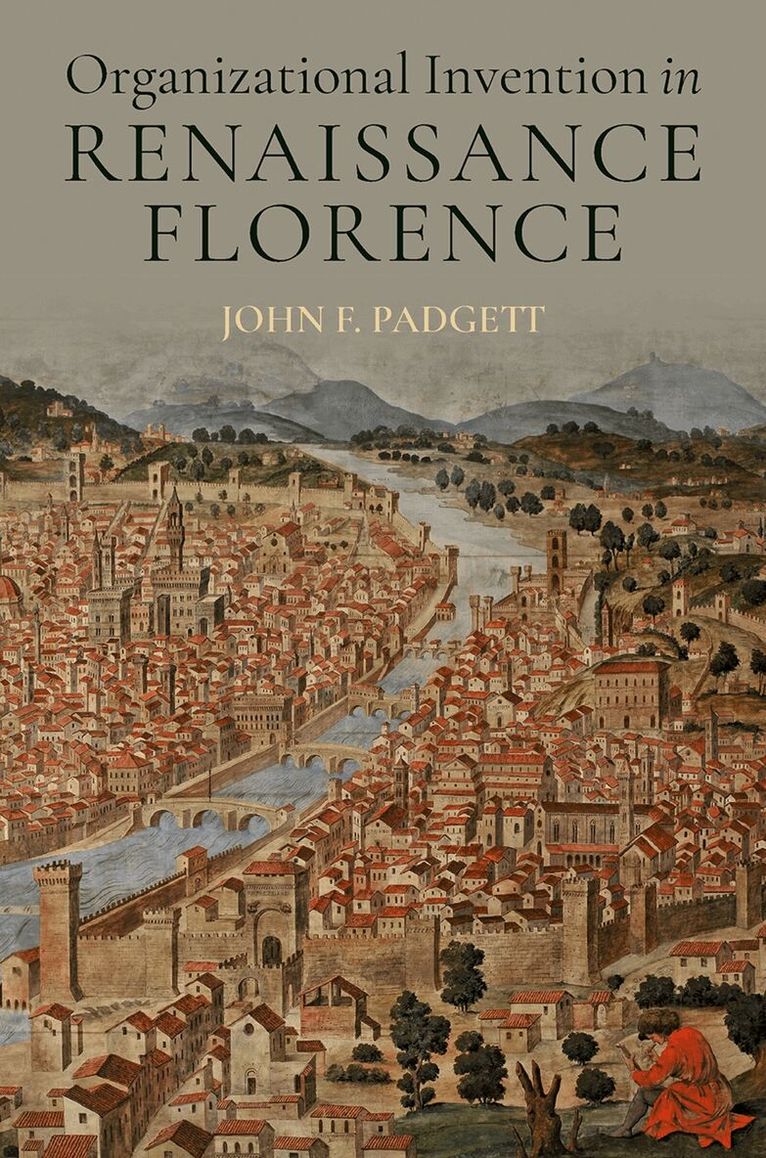
The Renaissance in Florence was not only a time of extraordinary artistic and philosophical creativity; it also marked a pivotal moment in the invention of new organizational forms that reshaped the city's economic, political, and social life. In Organizational Invention in Renaissance Florence, John F. Padgett distills and synthesizes thirty years of research into how Florentine institutions and social networks developed and transformed over two centuries. Drawing on an unparalleled historical dataset encompassing more than 100,000 individuals, Padgett maps the intricate web of relationships that connected Florence's families, businesses, and political actors between 1300 and 1500.The book centers on three major arenas of organizational change. First, Padgett traces the evolution of business structures, particularly within the banking sector, focusing on the development of the diversified partnership-system form of business organization. Second, he examines the shifts to Florentine kinship networks, Florentine kinship networks, outlining the formation of patrilineage and its diffusion from upper classes to middle classes. Finally, he charts the shifting terrain of political networks and the transformation of oligarchic elites. Across all three domains, Padgett demonstrates that organizational change did not occur in isolation. Instead, developments in one arena continually spilled over into others through the dense, cross-cutting social networks that underpinned Florentine society. Elites were rarely confined to a single role: they were merchants, bankers, politicians, and civic leaders simultaneously, moving fluidly among spheres as circumstances shifted. This multivalent identity, he argues, was central to Florence's adaptability and resilience. Organizational Invention in Renaissance Florence ultimately offers a fresh interpretation of the Renaissance, revealing how social networks emerged, transformed, and generated new forms of collective life during a period of intense social, political, and cultural change.
290 kr
Kommande
The Renaissance in Florence was not only a time of extraordinary artistic and philosophical creativity; it also marked a pivotal moment in the invention of new organizational forms that reshaped the city's economic, political, and social life. In Organizational Invention in Renaissance Florence, John F. Padgett distills and synthesizes thirty years of research into how Florentine institutions and social networks developed and transformed over two centuries. Drawing on an unparalleled historical dataset encompassing more than 100,000 individuals, Padgett maps the intricate web of relationships that connected Florence's families, businesses, and political actors between 1300 and 1500.The book centers on three major arenas of organizational change. First, Padgett traces the evolution of business structures, particularly within the banking sector, focusing on the development of the diversified partnership-system form of business organization. Second, he examines the shifts to Florentine kinship networks, Florentine kinship networks, outlining the formation of patrilineage and its diffusion from upper classes to middle classes. Finally, he charts the shifting terrain of political networks and the transformation of oligarchic elites. Across all three domains, Padgett demonstrates that organizational change did not occur in isolation. Instead, developments in one arena continually spilled over into others through the dense, cross-cutting social networks that underpinned Florentine society. Elites were rarely confined to a single role: they were merchants, bankers, politicians, and civic leaders simultaneously, moving fluidly among spheres as circumstances shifted. This multivalent identity, he argues, was central to Florence's adaptability and resilience. Organizational Invention in Renaissance Florence ultimately offers a fresh interpretation of the Renaissance, revealing how social networks emerged, transformed, and generated new forms of collective life during a period of intense social, political, and cultural change.
510 kr
Skickas inom 5-8 vardagar
The social sciences have sophisticated models of choice and equilibrium but little understanding of the emergence of novelty. Where do new alternatives, new organizational forms, and new types of people come from? Combining biochemical insights about the origin of life with innovative and historically oriented social network analyses, John Padgett and Walter Powell develop a theory about the emergence of organizational, market, and biographical novelty from the coevolution of multiple social networks. They demonstrate that novelty arises from spillovers across intertwined networks in different domains. In the short run actors make relations, but in the long run relations make actors. This theory of novelty emerging from intersecting production and biographical flows is developed through formal deductive modeling and through a wide range of original historical case studies. Padgett and Powell build on the biochemical concept of autocatalysis--the chemical definition of life--and then extend this autocatalytic reasoning to social processes of production and communication. Padgett and Powell, along with other colleagues, analyze a very wide range of cases of emergence.They look at the emergence of organizational novelty in early capitalism and state formation; they examine the transformation of communism; and they analyze with detailed network data contemporary science-based capitalism: the biotechnology industry, regional high-tech clusters, and the open source community.