John Fabian Witt – författare
Visar alla böcker från författaren . Handla med fri frakt och snabb leverans.
11 produkter
11 produkter
Inbunden, Engelska, 2019
533 kr
Skickas inom 5-8 vardagar
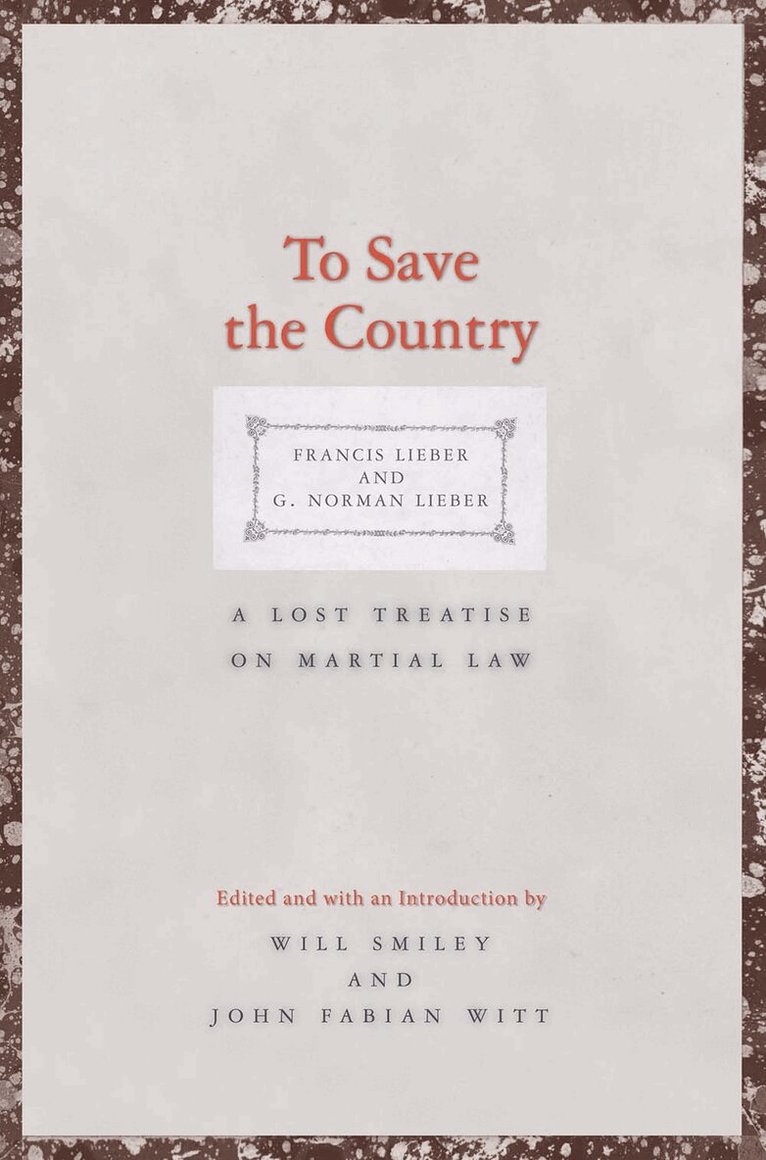
A Civil War-era treatise addressing the power of governments in moments of emergencyThe last work of Abraham Lincoln’s law of war expert Francis Lieber was long considered lost—until Will Smiley and John Fabian Witt discovered it in the National Archives. Lieber’s manuscript on emergency powers and martial law addresses important contemporary debates in law and political philosophy and stands as a significant historical discovery. As a key legal advisor to the Lincoln White House, Columbia College professor Francis Lieber was one of the architects and defenders of Lincoln’s most famous uses of emergency powers during the Civil War. Lieber’s work laid the foundation for rules now accepted worldwide. In the years after the war, Lieber and his son turned their attention to the question of emergency powers. The Liebers’ treatise addresses a vital question, as prominent since 9/11 as it was in Lieber’s lifetime: how much power should the government have in a crisis? The Liebers present a theory that aims to preserve legal restraint, while giving the executive necessary freedom of action. Smiley and Witt have written a lucid introduction that explains how this manuscript is a key discovery in two ways: both as a historical document and as an important contribution to the current debate over emergency powers in constitutional democracies.
Inbunden, Engelska, 2021
187 kr
Skickas inom 5-8 vardagar
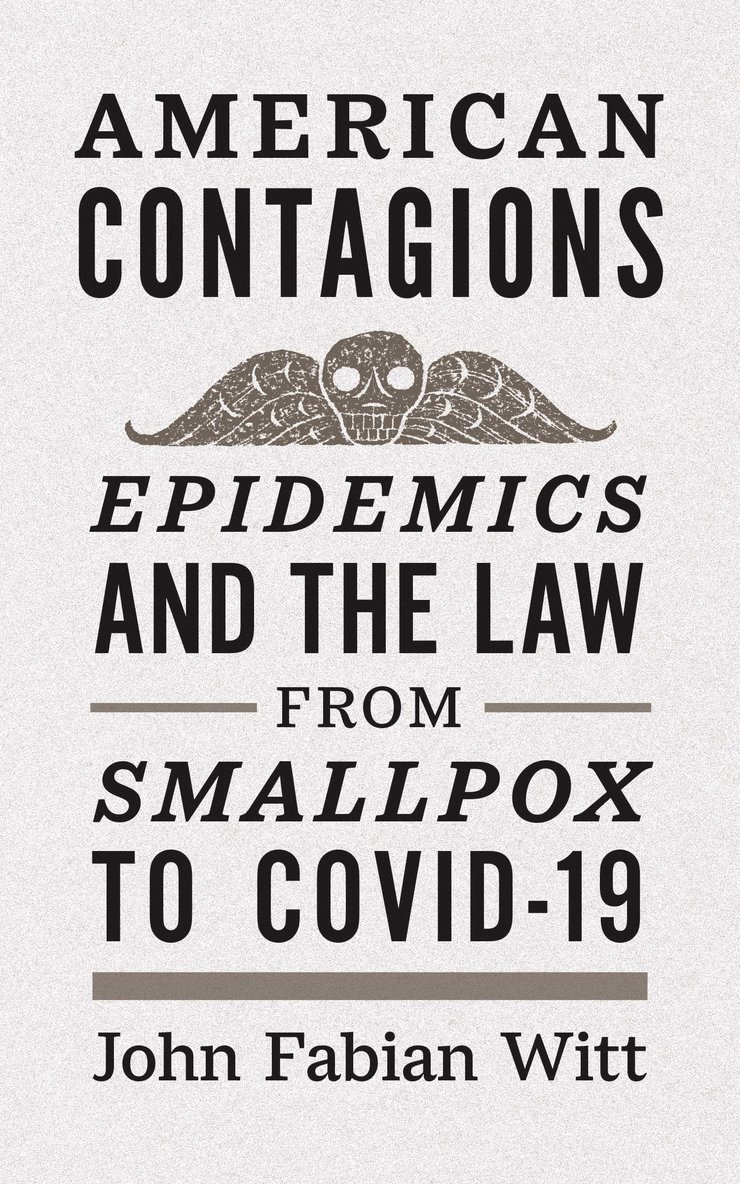
A concise history of how American law has shaped—and been shaped by—the experience of contagion, "taking us from the smallpox outbreaks of the colonies to COVID-19. . . . The conclusion [Witt] arrives at is devastating." (Jennifer Szalai, New York Times)"One wishes that, six months ago, every member of Congress and the Trump administration had been forced to read and reckon with the history Witt neatly summarizes. But now in the aftermath of a close, bitterly fought election, let’s hope that this book will help America chart its way forward."—Jill Filipovic, Washington PostFrom yellow fever to smallpox to polio to AIDS to COVID-19, epidemics have prompted Americans to make choices and answer questions about their basic values and their laws. In five concise chapters, historian John Fabian Witt traces the legal history of epidemics, showing how infectious disease has both shaped, and been shaped by, the law. Arguing that throughout American history legal approaches to public health have been liberal for some communities and authoritarian for others, Witt shows us how history’s answers to the major questions brought up by previous epidemics help shape our answers today: What is the relationship between individual liberty and the common good? What is the role of the federal government, and what is the role of the states? Will long-standing traditions of government and law give way to the social imperatives of an epidemic? Will we let the inequities of our mixed tradition continue?
E-bok
Engelska, 2020204 kr
Läs direkt efter köp
A concise history of how American law has shaped—and been shaped by—the experience of contagion"Contrarians and the civic-minded alike will find Witt''s legal survey a fascinating resource"—Kirkus, starred review"Professor Witt''s book is an original and thoughtful contribution to the interdisciplinary study of disease and American law. Although he covers the broad sweep of the American experience of epidemics from yellow fever to COVID-19, he is especially timely in his exploration of the legal background to the current disaster of the American response to the coronavirus. A thought-provoking, readable, and important work."—Frank Snowden, author of Epidemics and SocietyFrom yellow fever to smallpox to polio to AIDS to COVID-19, epidemics have prompted Americans to make choices and answer questions about their basic values and their laws. In five concise chapters, historian John Fabian Witt traces the legal history of epidemics, showing how infectious disease has both shaped, and been shaped by, the law. Arguing that throughout American history legal approaches to public health have been liberal for some communities and authoritarian for others, Witt shows us how history''s answers to the major questions brought up by previous epidemics help shape our answers today: What is the relationship between individual liberty and the common good? What is the role of the federal government, and what is the role of the states? Will long-standing traditions of government and law give way to the social imperatives of an epidemic? Will we let the inequities of our mixed tradition continue?
Häftad, Engelska, 2022
157 kr
Skickas
A concise history of how American law has shaped—and been shaped by—the experience of contagion
Häftad, Engelska, 2006
323 kr
Skickas inom 10-15 vardagar
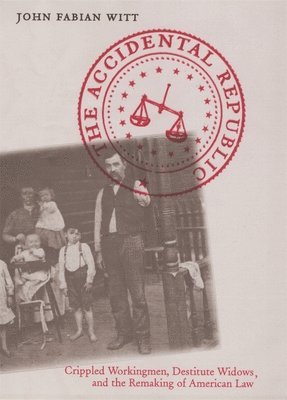
In the five decades after the Civil War, the United States witnessed a profusion of legal institutions designed to cope with the nation’s exceptionally acute industrial accident crisis. Jurists elaborated the common law of torts. Workingmen’s organizations founded a widespread system of cooperative insurance. Leading employers instituted welfare-capitalist accident relief funds. And social reformers advocated compulsory insurance such as workmen’s compensation.John Fabian Witt argues that experiments in accident law at the turn of the twentieth century arose out of competing views of the loose network of ideas and institutions that historians call the ideology of free labor. These experiments a century ago shaped twentieth- and twenty-first-century American accident law; they laid the foundations of the American administrative state; and they occasioned a still hotly contested legal transformation from the principles of free labor to the categories of insurance and risk. In this eclectic moment at the beginnings of the modern state, Witt describes American accident law as a contingent set of institutions that might plausibly have developed along a number of historical paths. In turn, he suggests, the making of American accident law is the story of the equally contingent remaking of our accidental republic.
Inbunden, Engelska, 2007
419 kr
Skickas inom 10-15 vardagar
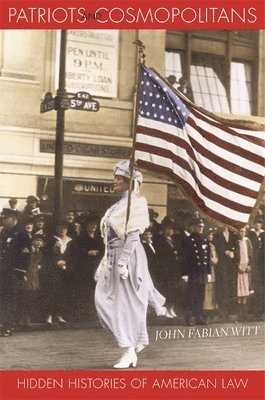
Ranging widely from the founding era to Reconstruction, from the making of the modern state to its post-New Deal limits, John Fabian Witt illuminates the legal and constitutional foundations of American nationhood through the little-known stories of five patriots and critics. He shows how law and constitutionalism have powerfully shaped and been shaped by the experience of nationhood at key moments in American history. Founding Father James Wilson's star-crossed life is testament to the capacity of American nationhood to capture the imagination of those who have lived within its orbit. For South Carolina freedman Elias Hill, the nineteenth-century saga of black citizenship in the United States gave way to a quest for a black nationhood of his own on the West African coast. Greenwich Village radical Crystal Eastman became one of the most articulate critics of American nationhood, advocating world federation and other forms of supranational government and establishing the modern American civil liberties movement. By contrast, the self-conscious patriotism of Dean Roscoe Pound of Harvard Law School and trial lawyer Melvin Belli aimed to stave off what Pound and Belli saw as the dangerous growth of a foreign administrative state. In their own way, each of these individuals came up against the power of American national institutions to shape and constrain the directions of legal change. Yet their engagements with American nationhood remade the institutions and ideals of the United States even as the national tradition shaped and constrained the course of their lives.
E-bok
Engelska, 2012202 kr
Läs direkt efter köp
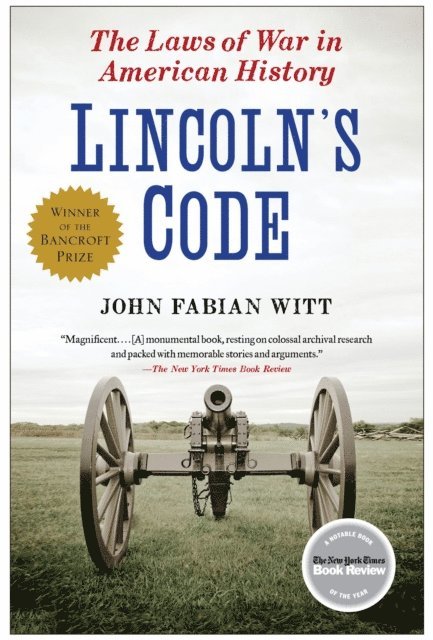
Pulitzer Prize FinalistBancroft Prize WinnerABA Silver Gavel Award WinnerA New York Times Notable Book of the YearIn the closing days of 1862, just three weeks before Emancipation, the administration of Abraham Lincoln commissioned a code setting forth the laws of war for US armies. It announced standards of conduct in wartime—concerning torture, prisoners of war, civilians, spies, and slaves—that shaped the course of the Civil War. By the twentieth century, Lincoln’s code would be incorporated into the Geneva Conventions and form the basis of a new international law of war. In this deeply original book, John Fabian Witt tells the fascinating history of the laws of war and its eminent cast of characters—Washington, Jefferson, Franklin, Madison, and Lincoln—as they crafted the articles that would change the course of world history. Witt’s engrossing exploration of the dilemmas at the heart of the laws of war is a prehistory of our own era. Lincoln’s Code reveals that the heated controversies of twenty-first-century warfare have roots going back to the beginnings of American history. It is a compelling story of ideals under pressure and a landmark contribution to our understanding of the American experience.
Häftad, Engelska, 2013
359 kr
Inbunden, Engelska, 2025
408 kr
Skickas inom 3-6 vardagar
Häftad, Engelska, 2026
260 kr
Kommande
Ljudbok
Engelska, 2025507 kr
Lyssna direkt efter köp
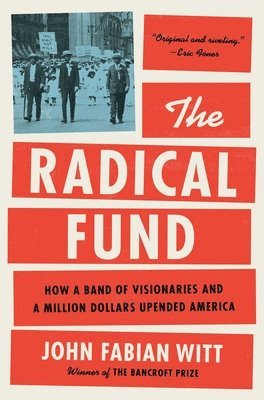
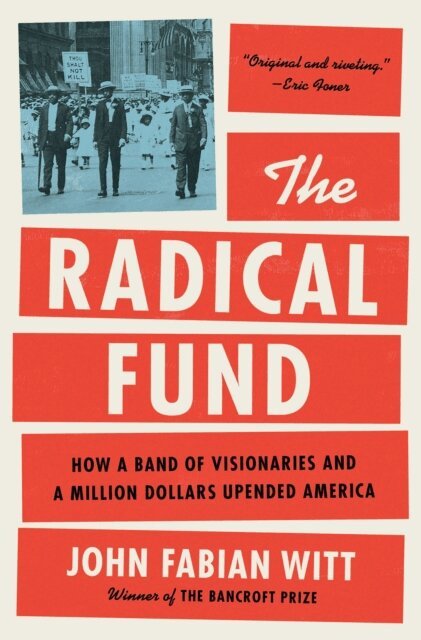
As recommended on The Ezra Klein Show From Pulitzer Prize finalist John Fabian Witt comes the ';engrossing' (The New York Times) secret history of an epic experiment to remake American democracy. Before the dark money of the Koch Brothers, before the billions of the Ford Foundation, there was the Garland Fund.In 1922, a young idealist named Charles Garland rejected a million-dollar inheritance. In a world of shocking wealth disparities, shameless racism, and political repression, Garland opted instead to invest in a future where radical ideaslike working-class power, free speech, and equalitymight flourish. Over the next two decades, the Garland Fund would nurture a new generation of wildly ambitious progressive projects. The men and women of the Fund were rich and poor, white and Black. They cooperated and bickered; they formed rivalries, fell in and out of love, and made mistakes. Yet shared beliefs linked them throughout. They believed that American capitalism was broken. They believed that American democracy (if it had ever existed) stole from those who had the least. And they believed that American institutions needed to be radically remade for the modern age. By the time they spent the last of the Fund's resources, their outsider ideas had become mass movements battling to transform a nation. A ';fascinating' testament to how ';radical philanthropy can foster important and necessary changes in American life' (The Wall Street Journal), The Radical Fund is a hopeful book for our anxious, angry ageand an empowering roadmap for how people with heretical ideas can bring about audacious change.