John G. Gunnell – författare
Visar alla böcker från författaren John G. Gunnell. Handla med fri frakt och snabb leverans.
7 produkter
7 produkter
304 kr
Skickas inom 5-8 vardagar
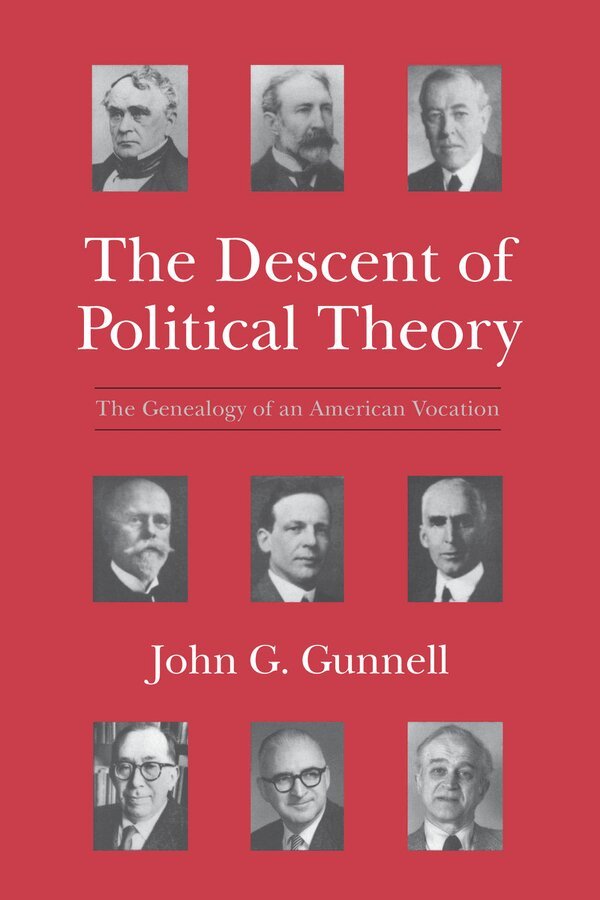
This work reveals the origins and development of political theory as it is presently understood - and misunderstood. Tracing the evolution of the field from the 19th century to the present, John G. Gunnell shows how controversies, like those over liberalism or the relationship of theory to practice, are actually the unresolved legacy of a forgotten past. Gunnell reconstructs the evolution of the field by locating it within the development of American social science. During the behavioural revolution of the 1950s, political theory was relegated to the margins of an increasingly empirical political science. Gunnell demonstrates that the estrangement of political theory is rooted in a much older quarrel: the authority of knowledge versus political authority, academic versus public discourse.
352 kr
Skickas inom 5-8 vardagar
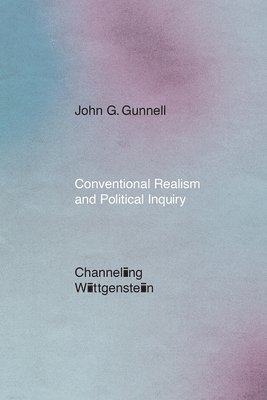
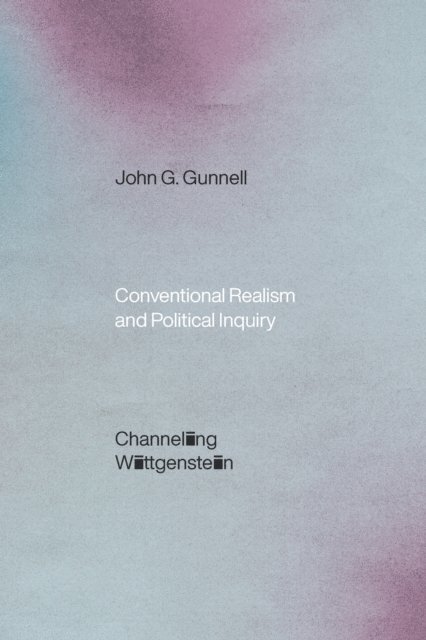
When social scientists and social theorists turn to the work of philosophers for intellectual and practical authority, they typically assume that truth, reality, and meaning are to be found outside rather than within our conventional discursive practices.John G. Gunnell argues for conventional realism as a theory of social phenomena and an approach to the study of politics. Drawing on Wittgenstein's critique of "mentalism" and traditional realism, Gunnell argues that everything we designate as "real" is rendered conventionally, which entails a rejection of the widely accepted distinction between what is natural and what is conventional. The terms "reality" and "world" have no meaning outside the contexts of specific claims and assumptions about what exists and how it behaves. And rather than a mysterious source and repository of prelinguistic meaning, the "mind" is simply our linguistic capacities. Taking readers through contemporary forms of mentalism and realism in both philosophy and American political science and theory, Gunnell also analyzes the philosophical challenges to these positions mounted by Wittgenstein and those who can be construed has his successors.
529 kr
Skickas inom 5-8 vardagar
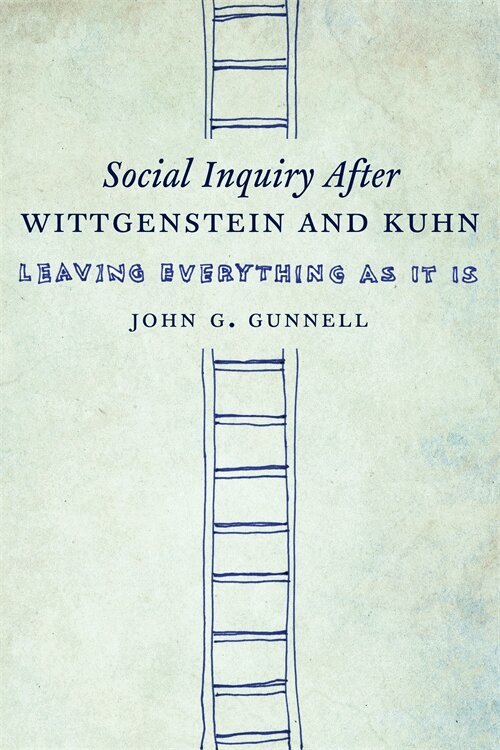
A distinctive feature of Ludwig Wittgenstein's work after 1930 was his turn to a conception of philosophy as a form of social inquiry, John G. Gunnell argues, and Thomas Kuhn's approach to the philosophy of science exemplified this conception. In this book, Gunnell shows how these philosophers address foundational issues in the social and human sciences, particularly the vision of social inquiry as an interpretive endeavor and the distinctive cognitive and practical relationship between social inquiry and its subject matter. Gunnell speaks directly to philosophers and practitioners of the social and human sciences. He tackles the demarcation between natural and social science; the nature of social phenomena; the concept and method of interpretation; the relationship between language and thought; the problem of knowledge of other minds; and the character of descriptive and normative judgments about practices that are the object of inquiry. Though Wittgenstein and Kuhn are often criticized as initiating a modern descent into relativism, this book shows that the true effect of their work was to undermine the basic assumptions of contemporary social and human science practice.It also problematized the authority of philosophy and other forms of social inquiry to specify the criteria for judging such matters as truth and justice. When Wittgenstein stated that "philosophy leaves everything as it is," he did not mean that philosophy would be left as it was or that philosophy would have no impact on what it studied, but rather that the activity of inquiry did not, simply by virtue of its performance, transform the object of inquiry.
385 kr
Tillfälligt slut
A critical introduction to the study of the history of political theory, concentrating on political theory itself, the investigation and teaching of that theory, as well as the relationship between them. Originally published by Winthrop Publishers in 1979.
682 kr
Skickas inom 10-15 vardagar
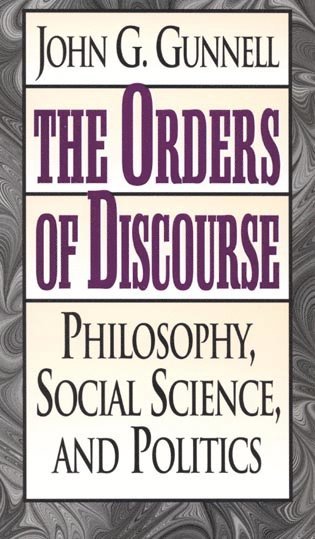
In this insightful book, distinguished political scientist John G. Gunnell explores the relationship between social science and philosophy, and the range of problems that have attended this relationship. Gunnell argues that social science has turned to philosophy, especially to areas such as the philosophy of science and other sites of philosophical foundationalism, in search of cognitive identity and the grounds for normative and empirical judgment. Gunnell's emphasis is on political and social theory and the theoretical constitution of social phenomena. The Orders of Discourse will be of interest to political theorists, political philosophers, and social scientists.
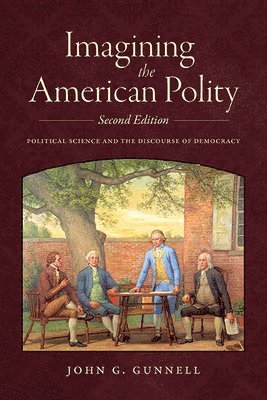
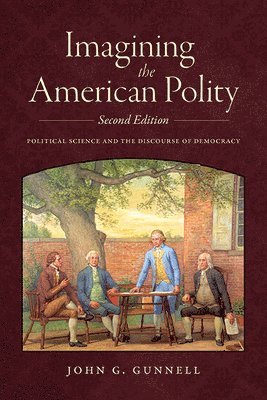
Imagining the American Polity
Political Science and the Discourse of Democracy
Inbunden, Engelska, 2024
1 252 kr
Skickas inom 5-8 vardagar
Traces the history of the concept of democracy in the United States.Americans have long prided themselves on living in a country that serves as a beacon of democracy to the world, but from the time of the founding they have also engaged in debates over what the criteria for democracy are as they seek to validate their faith in the United States as a democratic regime. In this book John G. Gunnell shows how the academic discipline of political science has contributed in a major way to this ongoing dialogue, thereby playing a significant role in political education and the formulation of popular conceptions of American democracy. Gunnell traces the dynamics of conceptual change and continuity as American political science evolved from a focus in the nineteenth century on the idea of the state, through the emergence of a pluralist theory of democracy in the 1920s and its transfiguration into liberalism in the mid- 1930s, up to the rearticulation of pluralist theory in the 1950s and its resurgence, yet again, in the 1990s. Along the way he explores how political scientists have grappled with a fundamental question about popular sovereignty: Does democracy require a people and a national democratic community, or can the requisites of democracy be achieved through fortuitous social configurations coupled with the design of certain institutional mechanisms?
452 kr
Skickas inom 5-8 vardagar
Traces the history of the concept of democracy in the United States.Americans have long prided themselves on living in a country that serves as a beacon of democracy to the world, but from the time of the founding they have also engaged in debates over what the criteria for democracy are as they seek to validate their faith in the United States as a democratic regime. In this book John G. Gunnell shows how the academic discipline of political science has contributed in a major way to this ongoing dialogue, thereby playing a significant role in political education and the formulation of popular conceptions of American democracy. Gunnell traces the dynamics of conceptual change and continuity as American political science evolved from a focus in the nineteenth century on the idea of the state, through the emergence of a pluralist theory of democracy in the 1920s and its transfiguration into liberalism in the mid- 1930s, up to the rearticulation of pluralist theory in the 1950s and its resurgence, yet again, in the 1990s. Along the way he explores how political scientists have grappled with a fundamental question about popular sovereignty: Does democracy require a people and a national democratic community, or can the requisites of democracy be achieved through fortuitous social configurations coupled with the design of certain institutional mechanisms?