110 kr
John G. Stackhouse Jr. – författare
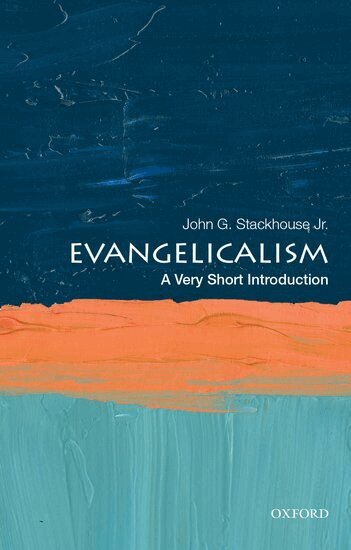
- Häftad, Engelska, 2023Evangelicalism has rapidly become one of the most significant religious movements in the modern world. An umbrella term that encompasses many Protestant denominations that share core tenets of Christianity, evangelicalism is foremost defined by its disciples' consideration of the Bible as the ultimate moral and historical authority, the desire to evangelize or spread the faith, and the value of religious conversion known as being “born again.”As the Evangelical movement has grown rapidly, so has its influence on the political stage. Evangelicals affect elections up and down the Americas and across Africa, provoke governments throughout Asia, fill up some of the largest church buildings, and possess the largest congregations of any religion in the world. Yet evangelicals are wildly diverse- from Canadian Baptists to Nigerian Anglicans, from South Sea Methodists to Korean Presbyterians, and from house churches in Beijing to megachurches in Saõ Paulo.This Very Short Introduction tells the evangelical story from the preacher-led revivals of the eighteenth century, through the frontier camp meetings of the nineteenth, to the mass urban rallies of the twentieth, and the global megachurches of the twenty-first. More than just a sketch of where evangelicals have come from, this volume aims to clearly examine the heart of evangelical phenomenon. Is there such a (single) thing as evangelicalism? What is its basic character? Where are the evangelicals going? And what in the world do they want?
- E-bokEngelska, 1998
332 kr
Läs direkt efter köp
In a world riddled with disappointment, malice, and tragedy, what rationale do we have for believing in a benevolent God? If God is all-powerful and all-loving, why is there so much evil in the world? John Stackhouse takes a historically informed approach to this dilemma, examining what philosophers and theologians have said on the subject and offering reassuring answers for thoughtful readers. Stackhouse explores how great thinkers have grappled with the problem of evil--from the Buddha, Confucius, Augustine, and David Hume to Martin Luther, C. S. Lewis, and Alvin Plantinga. Without brushing aside the serious contradictions posed by a God who allows incurable diseases, natural disasters, and senseless crimes to bring misery into our lives, Stackhouse asks if a world completely without evil is what we truly want. Would a life without suffering be a meaningful life? Could free will exist if we were able to choose only good? Stackhouse examines what the best minds have had to say on these questions and boldly affirms that the benefits of evil, in fact, outweigh the costs. Finally, he points to Christian revelation--which promises the transformation of suffering into joy--as the best guide to God''s - Häftad, Engelska, 2018
317 kr
Skickas inom 5-8 vardagar
Many Christians find that today's increasingly secular world is not in line with their beliefs. And rather than turn away from society, they are faced with the options of trying to impose their beliefs on others or suppressing their faith. Either option provokes a stream of difficult questions about what it means to be a good Christian, and how a Christian life should be led. In Why You're Here John Stackhouse proposes another path for these people, one that might reconcile Christian beliefs with a world that is often perceived as being openly hostile to those beliefs. Moreover, Stackhouse offers a pragmatic theology that promotes effective action for the challenges of real life.This compact volume offers an accessible, concrete program for faithful Christian living in today's world. Written in engaging and lucid prose, Stackhouse speaks directly to these everyday Christians who are searching for straightforward advice on some of their most complex quandaries about the challenges inherent in staying true to the Bible's teachings. Why You're Here is a thoroughly readable and resolutely practical book designed to help people understand who they are in the sight of God, and therefore what they are to do according to God's calling on their lives here and now. - E-bokPDF, Engelska, 2020
166 kr
Läs direkt efter köp
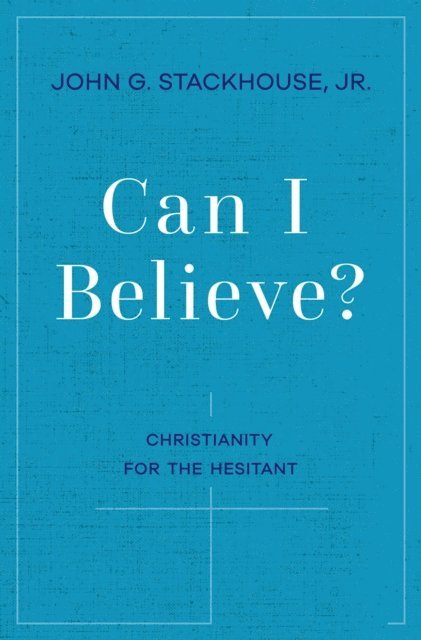
Maybe Christianity is actually true. Maybe it is what believers say it is. But at least two problems make the thoughtful person hesitate. First, there are so many other options. How could one possibly make one''s way through them to anything like a rational and confident conclusion? Second, why do so many people choose to be Christian in the face of so many reasons not to be Christian? Yes, many people grow up in Christian homes and in societies, but many more do not. Yet Christianity has become the most popular religion in the world. Why? This book begins by taking on the initial challenge as it outlines a process: how to think about religion in a responsible way, rather than settling for such soft vagaries as "faith" and "feeling". It then clears away a number of misunderstandings from the basic story of the Christian religion, misunderstandings that combine to domesticate this startling narrative and thus to repel reasonable people who might otherwise be intrigued. The second half of the book then looks at Christian commitment positively and negatively. Why do two billion find this religion to be persuasive, thus making it the most popular "explanation of everything" in human history? At the same time, how does Christianity respond to the fact that so many people find it utterly implausible, especially because so many Christians insist that theirs is the only way to God and because of the problem of evil that seems to undercut everything Christianity asserts? Grounded in scholarship but never ponderous, Can I Believe? refuses to dodge the hard questions as it welcomes the intelligent inquirer to give Christianity at least one good look. - E-bokEngelska, 2020
166 kr
Läs direkt efter köp
Maybe Christianity is actually true. Maybe it is what believers say it is. But at least two problems make the thoughtful person hesitate. First, there are so many other options. How could one possibly make one''s way through them to anything like a rational and confident conclusion? Second, why do so many people choose to be Christian in the face of so many reasons not to be Christian? Yes, many people grow up in Christian homes and in societies, but many more do not. Yet Christianity has become the most popular religion in the world. Why? This book begins by taking on the initial challenge as it outlines a process: how to think about religion in a responsible way, rather than settling for such soft vagaries as "faith" and "feeling". It then clears away a number of misunderstandings from the basic story of the Christian religion, misunderstandings that combine to domesticate this startling narrative and thus to repel reasonable people who might otherwise be intrigued. The second half of the book then looks at Christian commitment positively and negatively. Why do two billion find this religion to be persuasive, thus making it the most popular "explanation of everything" in human history? At the same time, how does Christianity respond to the fact that so many people find it utterly implausible, especially because so many Christians insist that theirs is the only way to God and because of the problem of evil that seems to undercut everything Christianity asserts? Grounded in scholarship but never ponderous, Can I Believe? refuses to dodge the hard questions as it welcomes the intelligent inquirer to give Christianity at least one good look. - E-bokPDF, Engelska, 1998
373 kr
Läs direkt efter köp
In a world riddled with disappointment, malice, and tragedy, what rationale do we have for believing in a benevolent God? If God is all-powerful and all-loving, why is there so much evil in the world? John Stackhouse takes a historically informed approach to this dilemma, examining what philosophers and theologians have said on the subject and offering reassuring answers for thoughtful readers. Stackhouse explores how great thinkers have grappled with the problem of evil--from the Buddha, Confucius, Augustine, and David Hume to Martin Luther, C. S. Lewis, and Alvin Plantinga. Without brushing aside the serious contradictions posed by a God who allows incurable diseases, natural disasters, and senseless crimes to bring misery into our lives, Stackhouse asks if a world completely without evil is what we truly want. Would a life without suffering be a meaningful life? Could free will exist if we were able to choose only good? Stackhouse examines what the best minds have had to say on these questions and boldly affirms that the benefits of evil, in fact, outweigh the costs. Finally, he points to Christian revelation--which promises the transformation of suffering into joy--as the best guide to God''s - E-bokPDF, Engelska, 2002
176 kr
Läs direkt efter köp
Is it still possible, in an age of religious and cultural pluralism, to engage in Christian apologetics? How can one urge one''s faith on others when such a gesture is typically regarded with suspicion, if not outright resentment? In Humble Apologetics John G. Stackhouse brings his wide experience as a historian, philosopher, journalist, and theologian to these important questions and offers surprising--and reassuring--answers. Stackhouse begins by acknowledging the real impediments to Christian testimony in North America today and to other faiths in modern societies around the world. He shows how pluralism, postmodernism, skepticism, and a host of other factors create a cultural milieu resistant to the Christian message. And he shows how the arrogance or dogmatism of apologists themselves can alienate rather than attract potential converts. Indeed, Stackhouse argues that the crucial experience of conversion cannot be compelled; all the apologist can do is lead another to the point where an actual encounter with Jesus can take place. Finally, he shows how displaying an attitude of humility, instead of merely trying to win religious arguments, will help believers offer their neighbors the gift of Christ''s love. Drawing on the author''s personal experience and written with an engaging directness and an unassuming nature, Humble Apologetics provides sound guidance on how to share Christian faith in a postmodern world. - E-bokEngelska, 2014
551 kr
Läs direkt efter köp
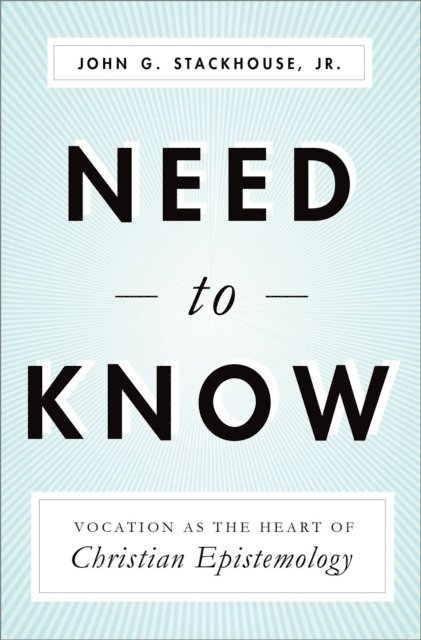
How should a Christian think? If a serious Christian wants to think seriously about a serious subject--from considering how to vote in the next election to choosing a career; from deciding among scientific theories to selecting a mate; from weighing competing marketing proposals to discerning the best fitness plan--what does he or she do? This basic question is at the heart of a complex discourse: epistemology. A bold new statement of Christian epistemology, Need to Know presents a comprehensive, coherent, and clear model of responsible Christian thinking. Grounded in the best of the Christian theological tradition while being attentive to a surprising range of thinkers in the history of philosophy, natural science, social science, and culture, the book offers a scheme for drawing together experience, tradition, scholarship, art, and the Bible into a practical yet theoretically profound system of thinking about thinking.John Stackhouse''s fundamental idea is as simple as it is startling: Since God calls human beings to do certain things in the world, God can be relied upon to supply the knowledge necessary for human beings to do those things. The classic Christian concept of vocation, then, supplies both the impetus and the assurance that faithful Christians can trust God to guide their thinking--on a "need to know" basis. - E-bokPDF, Engelska, 2008
363 kr
Läs direkt efter köp
What should be the Christian''s attitude toward society? When so much of our contemporary culture is at odds with Christian beliefs and mores, it may seem that serious Christians now have only two choices: transform society completely according to Christian values or retreat into the cloister of sectarian fellowship.In Making the Best of It, John Stackhouse explores the history of the Christian encounter with society, the biblical record, and various theological models of cultural engagement to offer a more balanced and fruitful alternative to these extremes. He argues that, rather than trying to root up the weeds in the cultural field, or trying to shun them, Christians should practice persistence in gardening God''s world and building toward the New Jerusalem. Examining the lives and works of C. S. Lewis, Reinhold Niebuhr, and Dietrich Bonhoeffer for example and direction, Stackhouse suggests that our mission is to make the most of life in the world in cooperation with God''s own mission of redeeming the world he loves. This model takes seriously the pattern of God''s activity in the Bible, and in subsequent history, of working through earthly means--through individuals, communities, and institutions that are deeply flawed but nonetheless capable of accomplishing God''s purposes. Christians must find a way to live in this world and at the same time do work that honors God and God''s plan for us.In an era of increasing religious and cultural tensions, both internationally and domestically, the model that Stackhouse develops discourages the "all or nothing" attitudes that afflict so much of contemporary Christianity. Instead, he offers a fresh, and refreshingly nuanced, take on the question of what it means to be a Christian in the world today. - E-bokPDF, Engelska, 2014
551 kr
Läs direkt efter köp
How should a Christian think? If a serious Christian wants to think seriously about a serious subject--from considering how to vote in the next election to choosing a career; from deciding among scientific theories to selecting a mate; from weighing competing marketing proposals to discerning the best fitness plan--what does he or she do? This basic question is at the heart of a complex discourse: epistemology. A bold new statement of Christian epistemology, Need to Know presents a comprehensive, coherent, and clear model of responsible Christian thinking. Grounded in the best of the Christian theological tradition while being attentive to a surprising range of thinkers in the history of philosophy, natural science, social science, and culture, the book offers a scheme for drawing together experience, tradition, scholarship, art, and the Bible into a practical yet theoretically profound system of thinking about thinking.John Stackhouse''s fundamental idea is as simple as it is startling: Since God calls human beings to do certain things in the world, God can be relied upon to supply the knowledge necessary for human beings to do those things. The classic Christian concept of vocation, then, supplies both the impetus and the assurance that faithful Christians can trust God to guide their thinking--on a "need to know" basis. - E-bokEngelska, 2002
196 kr
Läs direkt efter köp
Is it still possible, in an age of religious and cultural pluralism, to engage in Christian apologetics? How can one urge one''s faith on others when such a gesture is typically regarded with suspicion, if not outright resentment? In Humble Apologetics John G. Stackhouse brings his wide experience as a historian, philosopher, journalist, and theologian to these important questions and offers surprising--and reassuring--answers. Stackhouse begins by acknowledging the real impediments to Christian testimony in North America today and to other faiths in modern societies around the world. He shows how pluralism, postmodernism, skepticism, and a host of other factors create a cultural milieu resistant to the Christian message. And he shows how the arrogance or dogmatism of apologists themselves can alienate rather than attract potential converts. Indeed, Stackhouse argues that the crucial experience of conversion cannot be compelled; all the apologist can do is lead another to the point where an actual encounter with Jesus can take place. Finally, he shows how displaying an attitude of humility, instead of merely trying to win religious arguments, will help believers offer their neighbors the gift of Christ''s love. Drawing on the author''s personal experience and written with an engaging directness and an unassuming nature, Humble Apologetics provides sound guidance on how to share Christian faith in a postmodern world. - E-bokEngelska, 2008
363 kr
Läs direkt efter köp
What should be the Christian''s attitude toward society? When so much of our contemporary culture is at odds with Christian beliefs and mores, it may seem that serious Christians now have only two choices: transform society completely according to Christian values or retreat into the cloister of sectarian fellowship.In Making the Best of It, John Stackhouse explores the history of the Christian encounter with society, the biblical record, and various theological models of cultural engagement to offer a more balanced and fruitful alternative to these extremes. He argues that, rather than trying to root up the weeds in the cultural field, or trying to shun them, Christians should practice persistence in gardening God''s world and building toward the New Jerusalem. Examining the lives and works of C. S. Lewis, Reinhold Niebuhr, and Dietrich Bonhoeffer for example and direction, Stackhouse suggests that our mission is to make the most of life in the world in cooperation with God''s own mission of redeeming the world he loves. This model takes seriously the pattern of God''s activity in the Bible, and in subsequent history, of working through earthly means--through individuals, communities, and institutions that are deeply flawed but nonetheless capable of accomplishing God''s purposes. Christians must find a way to live in this world and at the same time do work that honors God and God''s plan for us.In an era of increasing religious and cultural tensions, both internationally and domestically, the model that Stackhouse develops discourages the "all or nothing" attitudes that afflict so much of contemporary Christianity. Instead, he offers a fresh, and refreshingly nuanced, take on the question of what it means to be a Christian in the world today. - Häftad, Engelska, 2011
138 kr
Skickas inom 5-8 vardagar
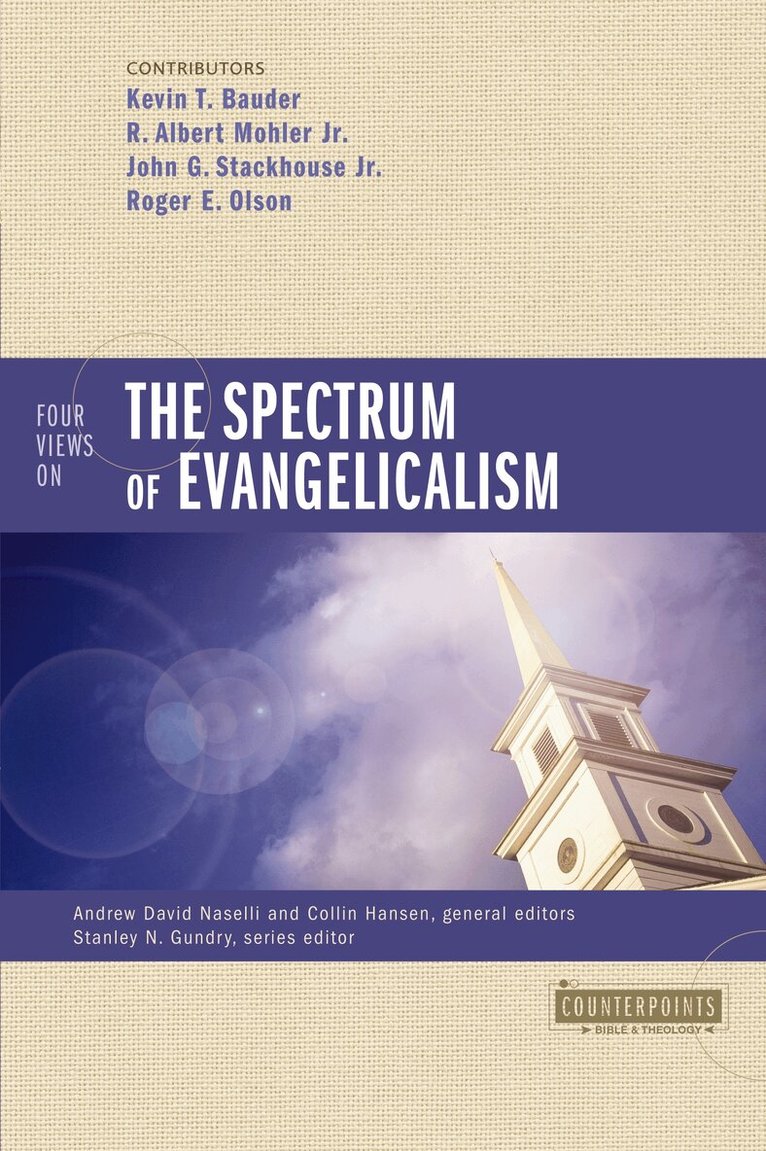
Understand the history, core values, and divisions as they've developed within the Evangelical Christian movement.Four Views on the Spectrum of Evangelicalismcompares and contrasts four distinct positions on the current fundamentalist-evangelical spectrum. Each contributor offers their case for one of four primary views:Fundamentalism – defended by Kevin T. Bauder Conservative/confessional evangelicalism – defended by R. Albert Mohler Jr.Generic evangelicalism – defended by John G. Stackhouse Jr.Postconservative evangelicalism – defended by Roger E. OlsonEach author explains and defends his position, which is critiqued by the other three authors. The Counterpoints series presents a comparison and critique of scholarly views on topics important to Christians that are both fair-minded and respectful of the biblical text. Each volume is a one-stop reference that allows readers to evaluate the different positions on a specific issue and form their own, educated opinion. - Häftad, Engelska, 1993
433 kr
Skickas inom 5-8 vardagar
Canadians usually associate evangelical Protestantism with television evangelists and the new religious right in American politics. In this first portrait of Canadian evangelicalism in the twentieth century, John Stackhouse argues that Canadian is far from being either an echo of an American phenomenon or a residue of the British heritage, but instead is distinctly Canadian. He also points out the Canadian evangelicalism has been become a powerful force in contemporary Canadian religion. Stackhouse disputes the church-sect typology of previous studies and also challenges the accepted wisdom that flamboyant preachers like the fundamentalist T.T. Shields and preacher-turned-politician William Aberhart represent evangelicalism in Canada. On the contrary, he says, the true character of the tradition is more accurately found in Bible schools like the internationally known Prairie Bible Institute and the Ontario Bible College, seminaries such as Regent College and Ontario Theological Seminary, liberal arts institutions like Trinity Western University, student ministries such as the Inter-Varsity Christian Fellowship, and cooperative organizations typified by the Evangelical Fellowship of Canada.This book complements current studies of Canadian evangelicalism in earlier periods and is informed by recent scholarship in Canadian, American, and British religion. It brings fresh insights to a field that is drawing increasing interest. - E-bokPDF, Engelska, 1993
554 kr
Läs direkt efter köp
Canadians usually associate evangelical Protestantism with television evangelists and the new religious right in American politics. In this first portrait of Canadian evangelicalism in the twentieth century, John Stackhouse argues that Canadian is far from being either an echo of an American phenomenon or a residue of the British heritage, but instead is distinctly Canadian. He also points out the Canadian evangelicalism has been become a powerful force in contemporary Canadian religion.
Stackhouse disputes the church-sect typology of previous studies and also challenges the accepted wisdom that flamboyant preachers like the fundamentalist T.T. Shields and preacher-turned-politician William Aberhart represent evangelicalism in Canada. On the contrary, he says, the true character of the tradition is more accurately found in Bible schools like the internationally known Prairie Bible Institute and the Ontario Bible College, seminaries such as Regent College and Ontario Theological Seminary, liberal arts institutions like Trinity Western University, student ministries such as the Inter-Varsity Christian Fellowship, and cooperative organizations typified by the Evangelical Fellowship of Canada.
This book complements current studies of Canadian evangelicalism in earlier periods and is informed by recent scholarship in Canadian, American, and British religion. It brings fresh insights to a field that is drawing increasing interest.
- Häftad, Engelska, 2019
251 kr
Skickas inom 5-8 vardagar
- Inbunden, Engelska, 2019
431 kr
Skickas inom 5-8 vardagar
- E-bokPDF, Engelska, 2019
390 kr
Läs direkt efter köp
Since the birth of evangelicalism in the eighteenth century, it has defined itself as a movement keenly interested in salvation. What, however, has the evangelical understanding of salvation been? What is it today? What should it be? What Does It Mean to Be Saved? marshals leading evangelical scholars to probe these questions with the goal of encouraging a more holistic understanding of salvation. Each chapter introduces a distinctive point of view on an aspect of redemption. Issues addressed in the volume include individual and corporate salvation, salvation with regard to women, the poor, the oppressed, and the natural world. - Häftad, Engelska, 1998
262 kr
Skickas inom 5-8 vardagar
- Häftad, Engelska, 2005
161 kr
Skickas inom 5-8 vardagar
- Häftad, Engelska, 2024
138 kr
Skickas inom 5-8 vardagar
- E-bokEngelska, 2025
116 kr
Läs direkt efter köp