John Gilliom - Böcker
Visar alla böcker från författaren John Gilliom. Handla med fri frakt och snabb leverans.
5 produkter
5 produkter
723 kr
Skickas inom 7-10 vardagar
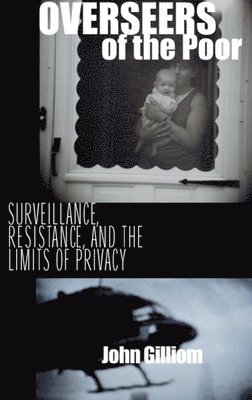
In "Overseers of the Poor", John Gilliom confronts the everyday politics of surveillance by exploring the worlds and words of those who know it best - the watched. Arguing that the current public conversation about surveillance and privacy rights is rife with political and conceptual failings, Gilliom goes beyond the critics and analysts to add fresh voices, insights and perspectives. This powerful book lets us in on the conversations of low-income mothers from Appalachian Ohio as they talk about the welfare bureaucracy and its remarkably advanced surveillance system. In their struggle to care for their families, these women are monitored and assessed through a vast network of supercomputers, caseworkers, fraud control agents, and even grocers and neighbours. In-depth interviews show that these women focus less on the right to privacy than on a critique of surveillance that lays bare the personal and political conflicts with which they live. And, while they have little interest in conventional forms of politics, we see widespread patterns of everyday resistance as they subvert the surveillance regime when they feel it prevents them from being good parents.Ultimately, "Overseers of the Poor" demonstrates the need to reconceive not just our understanding of the surveillance-privacy debate but also the broader realms of language, participation and the politics of rights. We all know that our lives are being watched more than ever before. As we struggle to understand and confront this new order, Gilliom argues, we need to spend less time talking about privacy rights, legislatures and courts of law and more time talking about power, domination and the ongoing struggle of everyday people.
209 kr
Skickas inom 7-10 vardagar
In Overseers of the Poor, John Gilliom confronts the everyday politics of surveillance by exploring the worlds and words of those who know it best-the watched. Arguing that the current public conversation about surveillance and privacy rights is rife with political and conceptual failings, Gilliom goes beyond the critics and analysts to add fresh voices, insights, and perspectives. This powerful book lets us in on the conversations of low-income mothers from Appalachian Ohio as they talk about the welfare bureaucracy and its remarkably advanced surveillance system. In their struggle to care for their families, these women are monitored and assessed through a vast network of supercomputers, caseworkers, fraud control agents, and even grocers and neighbors. In-depth interviews show that these women focus less on the right to privacy than on a critique of surveillance that lays bare the personal and political conflicts with which they live. And, while they have little interest in conventional forms of politics, we see widespread patterns of everyday resistance as they subvert the surveillance regime when they feel it prevents them from being good parents. Ultimately, Overseers of the Poor demonstrates the need to reconceive not just our understanding of the surveillance-privacy debate but also the broader realms of language, participation, and the politics of rights.We all know that our lives are being watched more than ever before. As we struggle to understand and confront this new order, Gilliom argues, we need to spend less time talking about privacy rights, legislatures, and courts of law and more time talking about power, domination, and the ongoing struggles of everyday people.
786 kr
Skickas inom 7-10 vardagar
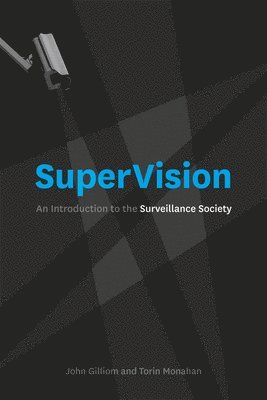
We live in a surveillance society. Anyone who uses a credit card, cell phone, or even search engines to navigate the Web is being monitored and assessed - and often in ways that are imperceptible to us. The first general introduction to the growing field of surveillance studies, "SuperVision" uses examples drawn from everyday technologies to show how surveillance is used, who is using it, and how it affects our world. Beginning with a look at the activities and technologies that connect most people to the surveillance matrix, from Facebook to identification cards to GPS devices in our cars, John Gilliom and Torin Monahan invite readers to critically explore surveillance as it relates to issues of law, power, freedom, and inequality. Even if you avoid using credit cards and stay off Facebook, they show, going to work or school inevitably embeds you in surveillance relationships. Finally, they discuss the more obvious forms of surveillance, including the security systems used at airports and on city streets, which both epitomize contemporary surveillance and make impossibly grand promises of safety and security.Gilliom and Monahan are among the foremost experts on surveillance and society, and, with "SuperVision", they offer an immensely accessible and engaging guide, giving readers the tools to understand and to question how deeply surveillance has been woven into the fabric of our everyday lives.
227 kr
Skickas inom 7-10 vardagar
We live in a surveillance society. Anyone who uses a credit card, cell phone, or even search engines to navigate the Web is being monitored and assessed - and often in ways that are imperceptible to us. The first general introduction to the growing field of surveillance studies, "SuperVision" uses examples drawn from everyday technologies to show how surveillance is used, who is using it, and how it affects our world. Beginning with a look at the activities and technologies that connect most people to the surveillance matrix, from Facebook to identification cards to GPS devices in our cars, John Gilliom and Torin Monahan invite readers to critically explore surveillance as it relates to issues of law, power, freedom, and inequality. Even if you avoid using credit cards and stay off Facebook, they show, going to work or school inevitably embeds you in surveillance relationships. Finally, they discuss the more obvious forms of surveillance, including the security systems used at airports and on city streets, which both epitomize contemporary surveillance and make impossibly grand promises of safety and security.Gilliom and Monahan are among the foremost experts on surveillance and society, and, with "SuperVision", they offer an immensely accessible and engaging guide, giving readers the tools to understand and to question how deeply surveillance has been woven into the fabric of our everyday lives.
Surveillance, Privacy, and the Law
Employee Drug Testing and the Politics of Social Control
Häftad, Engelska, 1996
279 kr
Skickas inom 7-10 vardagar
Employee drug testing is an invasive and controversial new social control policy that burst into the American work place during the war on drugs of the 1980s. Workers, judges, and politicians divided over whether it was an unnecessary and unconstitutional program of surveillance or an effective and appropriate new weapon in the anti-drug arsenal. When the dust had settled, the new technique was widely used and had been strongly approved by the United States Supreme Court. This raises the fundamental question: Why was the momentum behind testing so strong and the opposition to testing so ineffective? Drawing on theories of ideological hegemony and legal mobilization, John Gilliom begins the search for answers with an examination of how the imagery of a national drug crisis served as the legitimating context for the introduction of testing. Surveillance, Privacy, and the Law then moves beyond the specific history of testing and frames the new policy within a broader transformation of social control policy seen by students of political economy, society, and culture. The book cites survey research among skilled workers and analyzes court opinions to highlight the sharply polarized opinions in the workplaces and courthouses of America. Although federal court decisions show massive and impassioned disagreement among judges, the new conservative Supreme Court comes down squarely behind testing. Its ruling embraces surveillance technology, rejects arguments against testing, and undermines future opposition to policies of general surveillance. Surveillance, Privacy, and the Law portrays the apparent triumph of testing policies as a victory for the conservative law-and-order movement and a stark loss for the values of privacy and autonomy. As one episode in a broader move toward a surveillance society, the battle over employee drug testing raises disturbing questions about future struggles over revolutionary new means of surveillance and control. John Gilliom is Professor of Political Science, Ohio University.