John Gordon Davies – författare
Visar alla böcker från författaren . Handla med fri frakt och snabb leverans.
3 produkter
3 produkter
Häftad, Engelska, 2004
387 kr
Skickas inom 5-8 vardagar
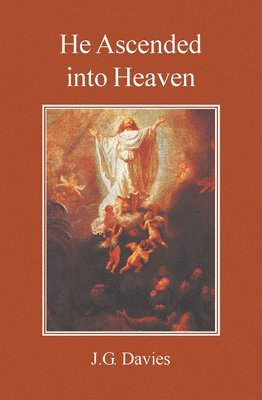
A key theological work in the doctrine of the Ascension that deals with the origin and significance of the Apostles’ Creed.This Bampton Lecture series of 1958 provides an illuminating exposition on the Ascension, which as J.G. Davies asserts, has been a greatly neglected article of the creed.Davies thoroughly examines the Biblical material before following the history of the doctrine and its development from the period of the ante-Nicean Church, through the Carolingian Renaissance to the reforming monastic movements of the eleventh and twelfth centuries. He also gives a systematic commentary on the Ascension doctrine as it may reasonably be held and taught today.This is an important theological work in the doctrine of the Ascension that deals with the origin and significance of the Apostles Creed.
Häftad, Engelska, 2003
291 kr
Skickas inom 5-8 vardagar
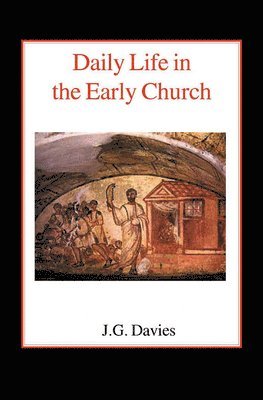
Applying the methods of social history to the early Church, this book illuminates the lives of the first believers through composite biographical portraits.What did the early Christians wear? What did they eat? What did they talk about over the dinner table? What recreations did they enjoy? These are among the questions answered in this study, which reveals the social background to the first five hundred years of the Church's development, through six vividly recounted, biographical portraits. Applying the methods of the social historian to the early Church, the author describes the daily life of the first believers, personifying the general facts and depicting them in these composite portraits of specific individuals, who are taken as representatives of different strands of early Christian life. Clement, a philosopher and teacher in Alexandria at the end of the 2nd century; Paul of Samosata, A.D. 268, who taught heretically in Antioch; Virginia, A.D. 304, whose last day on earth is set against the background of Diocletian's persecutions; Diogenes, a sexton of Rome John Chrysotom, A.D. 400, a great Bishop of the Church; John Cassian, a friend of Chrysotom and resident of Marseilles. The author uses contemporary documents and authorities to construct the biographies, which animate and illuminate the early development of the Church. By conducting the reader through the daily routines of these individuals, the past is recreated as a living reality.
Inbunden, Engelska, 2002
704 kr
Skickas inom 5-8 vardagar
Applying the methods of social history to the early Church, this book illuminates the lives of the first believers through composite biographical portraits.What did the early Christians wear? What did they eat? What did they talk about over the dinner table? What recreations did they enjoy? These are among the questions answered in this study, which reveals the social background to the first five hundred years of the Church's development, through six vividly recounted, biographical portraits. Applying the methods of the social historian to the early Church, the author describes the daily life of the first believers, personifying the general facts and depicting them in these composite portraits of specific individuals, who are taken as representatives of different strands of early Christian life. Clement, a philosopher and teacher in Alexandria at the end of the 2nd century; Paul of Samosata, A.D. 268, who taught heretically in Antioch; Virginia, A.D. 304, whose last day on earth is set against the background of Diocletian's persecutions; Diogenes, a sexton of Rome John Chrysotom, A.D. 400, a great Bishop of the Church; John Cassian, a friend of Chrysotom and resident of Marseilles. The author uses contemporary documents and authorities to construct the biographies, which animate and illuminate the early development of the Church. By conducting the reader through the daily routines of these individuals, the past is recreated as a living reality.