John Gowdy – författare
Visar alla böcker från författaren John Gowdy. Handla med fri frakt och snabb leverans.
5 produkter
5 produkter
E-bok
Engelska, 2020672 kr
Läs direkt efter köp
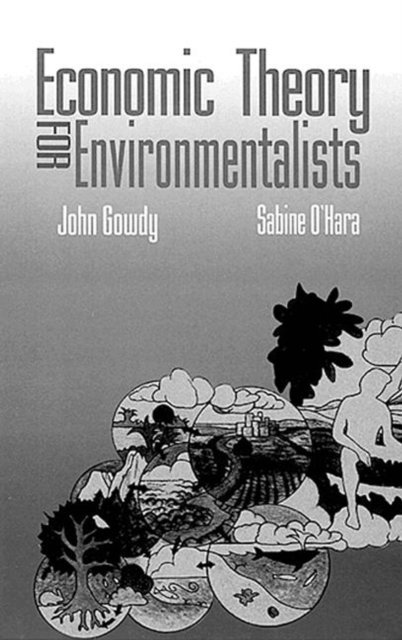
Economic Theory for Environmentalists is a much-needed and heralded new book that examines the implications of neoclassical economic theory and how it relates to the environment and environmental activity. It addresses the ongoing conflict between market forces and environmental integrity and explains how neoclassical economic theory views the relationship between economic activity and the natural world. Each chapter outlines the concepts of economic theory and the relevance of its environmental and policy implications. It focuses on both micro and macro-economics. Policy tools such as price and income elasticities, consumer surplus and methods for measuring the economic value of environmental resources are discussed. A case study which examines a range of policy options is presented. Examples are also given throughout the text to illustrate regional and international policy questions. Presented in a simple and easy to understand manner, this valuable book is suited for anyone dealing with environmental, economic, or policy issues.
Inbunden, Engelska, 1994
1 680 kr
Skickas inom 10-15 vardagar
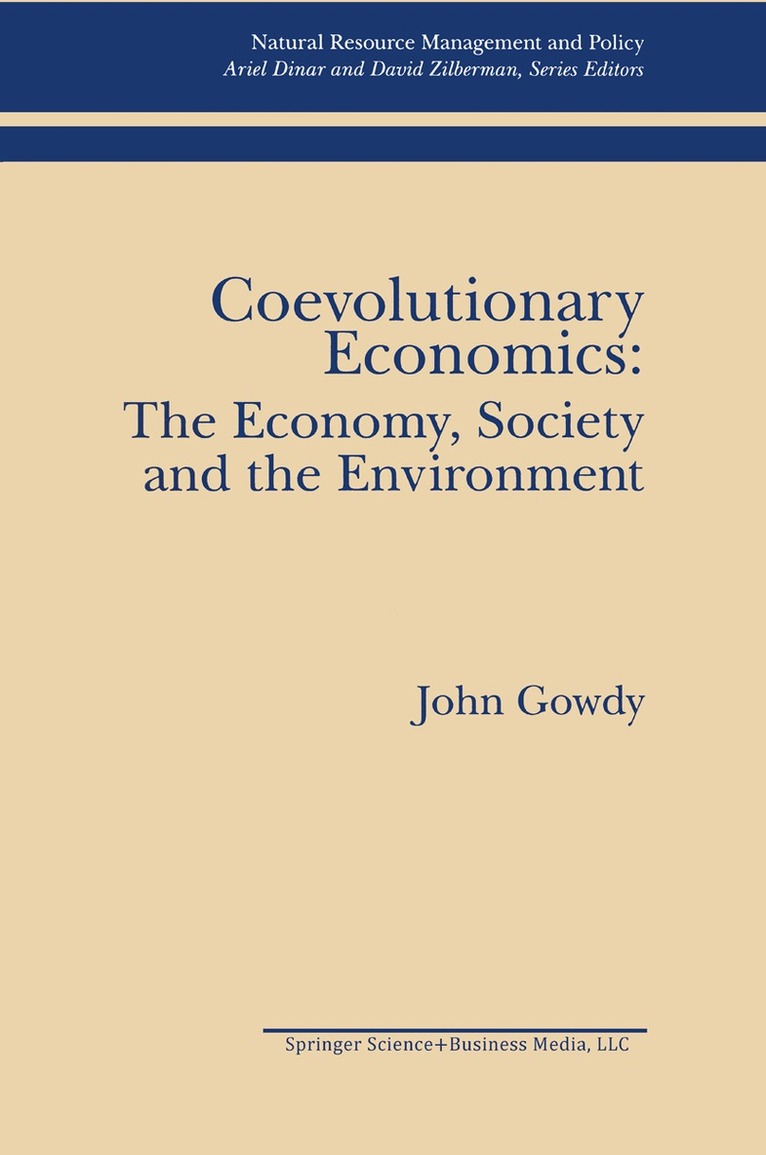
The subject of this volume is the human economy and its co-evolutionary relationship with the natural world. This relationship is examined in three broad types of societies; hunter-gatherers, agriculturalists, and modern market economies. A growing body of scientific evidence has made it clear that the current human impact on the environment is far above the level that can be maintained without causing profound changes in the biophysical world to which we belong. The new fields of ecological economics and evolutionary economics can help us understand the relationship between the economy, society and the environment and may help us to formulate effective policies to manage these changes.
E-bok
PDF, Engelska, 2020672 kr
Läs direkt efter köp
Economic Theory for Environmentalists is a much-needed and heralded new book that examines the implications of neoclassical economic theory and how it relates to the environment and environmental activity. It addresses the ongoing conflict between market forces and environmental integrity and explains how neoclassical economic theory views the relationship between economic activity and the natural world. Each chapter outlines the concepts of economic theory and the relevance of its environmental and policy implications. It focuses on both micro and macro-economics. Policy tools such as price and income elasticities, consumer surplus and methods for measuring the economic value of environmental resources are discussed. A case study which examines a range of policy options is presented. Examples are also given throughout the text to illustrate regional and international policy questions. Presented in a simple and easy to understand manner, this valuable book is suited for anyone dealing with environmental, economic, or policy issues.
Del 5 - Natural Resource Management and Policy
Coevolutionary Economics: The Economy, Society and the Environment
Häftad, Engelska, 2010
1 680 kr
Skickas inom 10-15 vardagar
The subject of this volume is the human economy and its coevolutionary relationship with the natural world. This relationship is examined in three broad types of societies; hunter--gatherers, agriculturalists, and modern market economies. A growing body of scientific evidence has made it clear that the current human impact on the environment is far above the level that can be maintained without causing profound changes in the biophysical world to which we belong. The new fields of ecological economics and evolutionary economics can help us understand the relationship between the economy, society and the environment and may help us to formulate effective policies to manage these changes.
E-bok
PDF, Engelska, 20131 995 kr
Läs direkt efter köp
The subject of this volume is the human economy and its coevolutionary relationship with the natural world. This relationship is examined in three broad types of societies; hunter--gatherers, agriculturalists, and modern market economies. A growing body of scientific evidence has made it clear that the current human impact on the environment is far above the level that can be maintained without causing profound changes in the biophysical world to which we belong. The new fields of ecological economics and evolutionary economics can help us understand the relationship between the economy, society and the environment and may help us to formulate effective policies to manage these changes.