John Grim - Böcker
Visar alla böcker från författaren John Grim. Handla med fri frakt och snabb leverans.
8 produkter
8 produkter
1 026 kr
Skickas inom 7-10 vardagar
Thomas Berry (1914–2009) was one of the twentieth century’s most prescient and profound thinkers. As a cultural historian, he sought a broader perspective on humanity’s relationship to the earth in order to respond to the ecological and social challenges of our times. This first biography of Berry illuminates his remarkable vision and its continuing relevance for achieving transformative social change and environmental renewal.Berry began his studies in Western history and religions and then expanded to include Asian and indigenous religions, which he taught at Fordham University, Barnard College, and Columbia University. Drawing on his explorations of history, he came to see the evolutionary process as a story that could help restore the continuity of humans with the natural world. Berry urged humans to recognize their place on a planet with complex ecosystems in a vast, evolving universe. He sought to replace the modern alienation from nature with a sense of intimacy and responsibility. Berry called for new forms of ecological education, law, and spirituality, as well as the creation of resilient agricultural systems, bioregions, and ecocities. At a time of growing environmental crisis, this biography shows the ongoing significance of Berry’s conception of human interdependence with the earth as part of the unfolding journey of the universe.
262 kr
Skickas inom 7-10 vardagar
Thomas Berry (1914–2009) was one of the twentieth century’s most prescient and profound thinkers. As a cultural historian, he sought a broader perspective on humanity’s relationship to the earth in order to respond to the ecological and social challenges of our times. This first biography of Berry illuminates his remarkable vision and its continuing relevance for achieving transformative social change and environmental renewal.Berry began his studies in Western history and religions and then expanded to include Asian and indigenous religions, which he taught at Fordham University, Barnard College, and Columbia University. Drawing on his explorations of history, he came to see the evolutionary process as a story that could help restore the continuity of humans with the natural world. Berry urged humans to recognize their place on a planet with complex ecosystems in a vast, evolving universe. He sought to replace the modern alienation from nature with a sense of intimacy and responsibility. Berry called for new forms of ecological education, law, and spirituality, as well as the creation of resilient agricultural systems, bioregions, and ecocities. At a time of growing environmental crisis, this biography shows the ongoing significance of Berry’s conception of human interdependence with the earth as part of the unfolding journey of the universe.
730 kr
Skickas inom 10-15 vardagar
The moral values and interpretive systems of religions are crucially involved in how people imagine the challenges of sustainability and how societies mobilize to enhance ecosystem resilience and human well-being.The Routledge Handbook of Religion and Ecology provides the most comprehensive and authoritative overview of the field. It encourages both appreciative and critical angles regarding religious traditions, communities, attitude, and practices. It presents contrasting ways of thinking about "religion" and about "ecology" and about ways of connecting the two terms. Written by a team of leading international experts, the Handbook discusses dynamics of change within religious traditions as well as their roles in responding to global challenges such as climate change, water, conservation, food and population. It explores the interpretations of indigenous traditions regarding modern environmental problems drawing on such concepts as lifeway and indigenous knowledge. This volume uniquely intersects the field of religion and ecology with new directions within the humanities and the sciences. This interdisciplinary volume is an essential reference for scholars and students across the social sciences and humanities and for all those looking to understand the significance of religion in environmental studies and policy.
3 556 kr
Skickas inom 10-15 vardagar
The moral values and interpretive systems of religions are crucially involved in how people imagine the challenges of sustainability and how societies mobilize to enhance ecosystem resilience and human well-being.The Routledge Handbook of Religion and Ecology provides the most comprehensive and authoritative overview of the field. It encourages both appreciative and critical angles regarding religious traditions, communities, attitude, and practices. It presents contrasting ways of thinking about "religion" and about "ecology" and about ways of connecting the two terms. Written by a team of leading international experts, the Handbook discusses dynamics of change within religious traditions as well as their roles in responding to global challenges such as climate change, water, conservation, food and population. It explores the interpretations of indigenous traditions regarding modern environmental problems drawing on such concepts as lifeway and indigenous knowledge. This volume uniquely intersects the field of religion and ecology with new directions within the humanities and the sciences. This interdisciplinary volume is an essential reference for scholars and students across the social sciences and humanities and for all those looking to understand the significance of religion in environmental studies and policy.
267 kr
Skickas inom 3-6 vardagar
347 kr
Skickas inom 11-20 vardagar
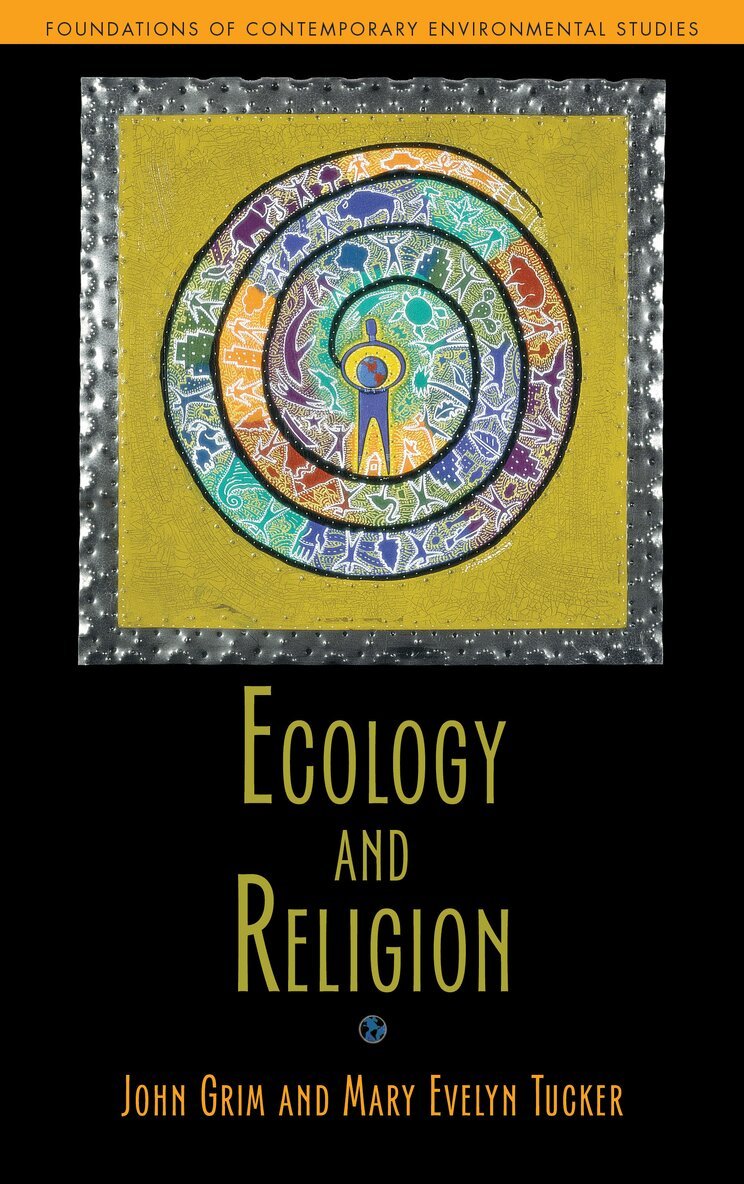
From the "Psalms" in the Bible to the sacred rivers in Hinduism, the natural world has been integral to the world's religions. John Grim and Mary Tucker argue that today's growing environmental challenges make the relationship ever more vital. In this concise primer, they illustrate religion's role in sustaining people and the planet. The authors explore the history of religious traditions and the environment, illustrating how religious teachings and practices both promoted and at times subverted sustainability. Subsequent chapters examine the emergence of religious ecology, as views of nature changed in religious traditions and the ecological sciences. Yet the authors argue that religion and ecology are not the province of institutions or disciplines alone. They describe four fundamental aspects of religious life: orienting, grounding, nurturing, and transforming. Readers then see how these phenomena are experienced in a Native American religion, Orthodox Christianity, Confucianism, and Hinduism. Ultimately, Grim and Tucker argue that the engagement of religious communities is necessary if humanity is to sustain itself and the planet.They recount exemplary stories of groups and individuals who are inspired by their religion to work towards a healthy community of life.
394 kr
Skickas inom 5-8 vardagar
583 kr
Skickas inom 5-8 vardagar