John H. Andrews - Böcker
Visar alla böcker från författaren John H. Andrews. Handla med fri frakt och snabb leverans.
4 produkter
4 produkter
1 059 kr
Skickas inom 10-15 vardagar
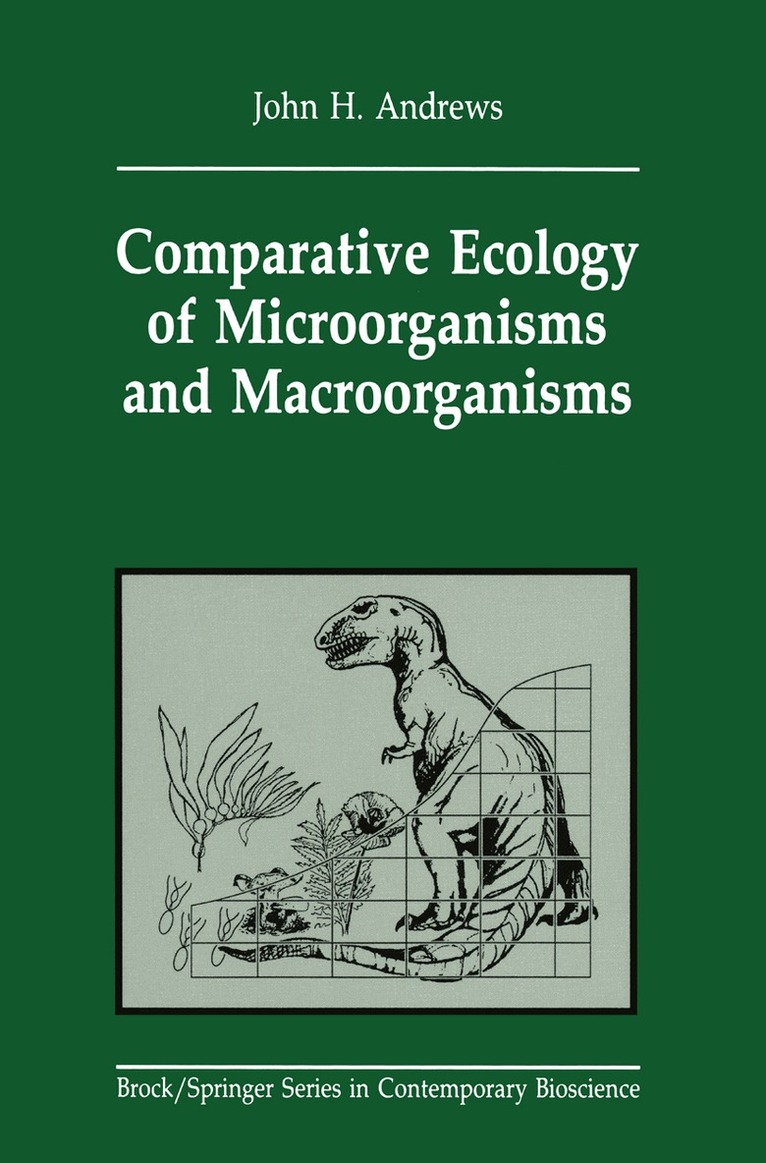
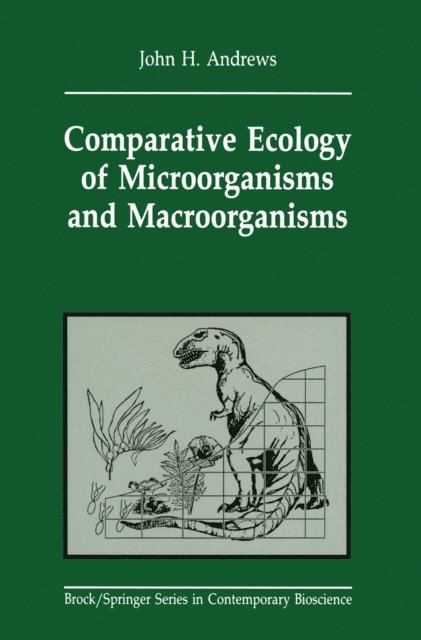
The most important feature of the modern synthetic theory of evolution is its foundation upon a great variety of biological disciplines. -G. L. STEBBINS, 1968, p. 17 This book is written with the goal of presenting ecologically significant anal ogies between the biology of microorganisms and macroorganisms. I consider such parallels to be important for two reasons. First, they serve to emphasize that however diverse life may be, there are common themes at the ecological level (not to mention other levels). Second, research done with either microbes or macroorganisms has implications which transcend a particular field of study. Although both points may appear obvious, the fact remains that at tempts to forge a conceptual synthesiS are astonishingly meager. While unify ing concepts may not necessarily be strictly correct, they enable one to draw analogies across disciplines. New starting points are discovered as a conse quence, and new ways of looking at things emerge. The macroscopic organisms ('macroorganisms') include most represen tatives of the plant and animal kingdoms. I interpret the term 'microorganism' (microbe) literally to mean the small or microscopic forms of life, and I include in this category the bacteria, the protists (excluding the macroscopic green, brown, and red algae), and the fungi. Certain higher organisms, such as many of the nematodes, fall logically within this realm, but are not discussed at any length.
1 059 kr
Skickas inom 10-15 vardagar
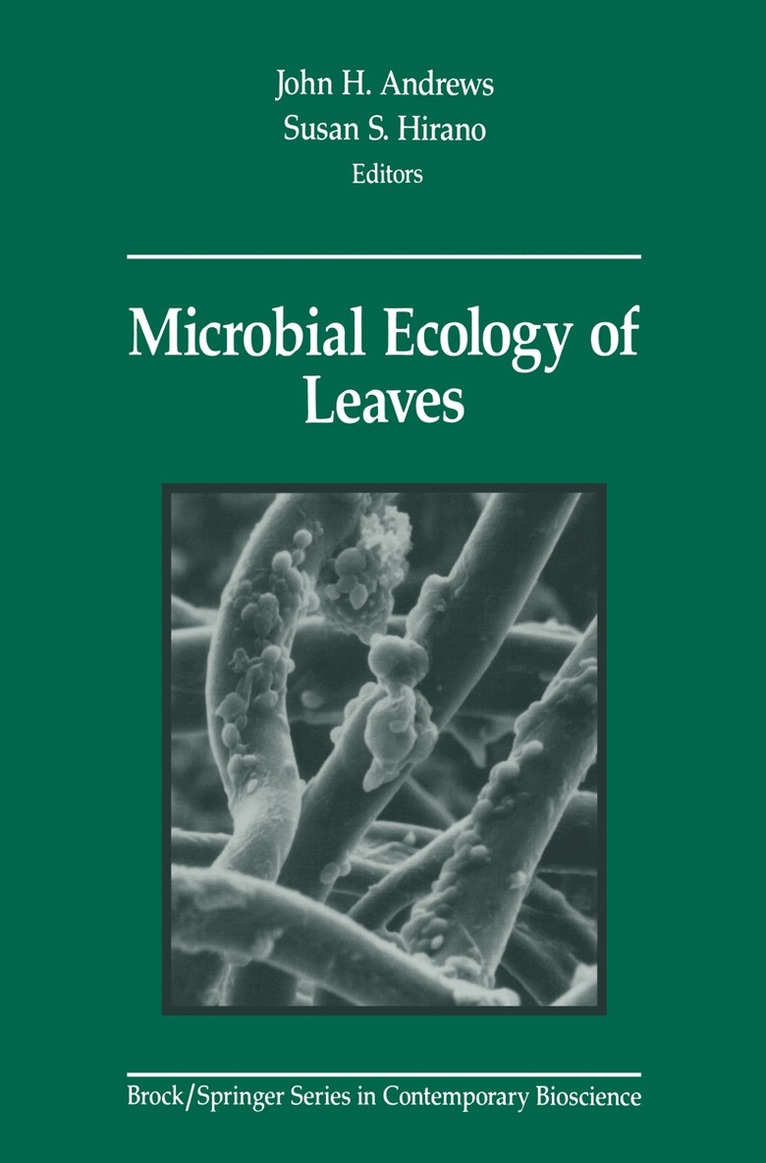
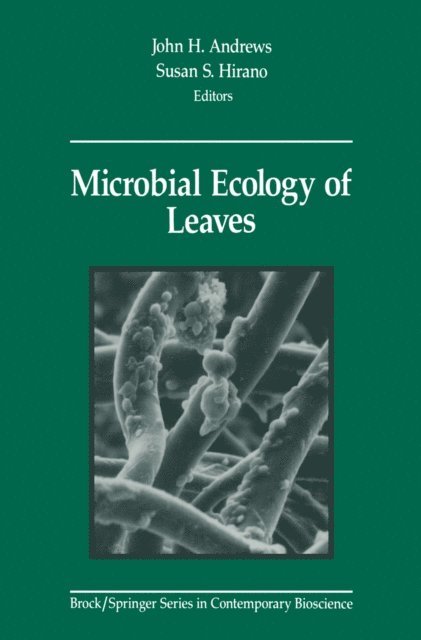
This book is based on symposium addresses given at the 5th International Symposium on the Microbiology of the Phyllosphere, held in Madison, Wisconsin, from 31 July to 3 August 1990. The conference brought together about 100 scientists with diverse interests pertinent to the study of leaves and microbes, including bacteriology, mycology, medical microbiology, ecology, plant pathology, physiology, anatomy, molecular biology, statis- tics, aerobiology, and meteorology. What has been learned since the first conference of the series was convened in 1979 at Newcastle-upon-Tyne, England, by T. F. Preece and C. H. Dickinson? Introductory remarks by N. J. Fokkema (Chapter 1) provide the pers- pective of a plant pathologist about how the discipline has evolved and where we stand now more than 30 years after the pioneering Dutch scien- tist J. Ruinen described the phyllosphere as an "ecologically neglected mili* eu. " The first major section of the book, Part 2, "The Habitat," is comprised of five chapters and considers leaf-microbe relationships in an aerial and an aquatic setting. B. E.Juniper (Chapter 2) sets the stage by reviewing the physical and chemical features of leaves that may influence microbial growth. Aerial movement of microbes to and from leaves is considered by D. E. Pedgley (Chapter 3). The aquatic analog to air as a medium is assessed by R. Goulder and J. H. Baker (Chapter 4). Leaf surface features that influ- ence fungal infection are discussed by E. A. Allen, H. C. Hoch, J. R.
901 kr
Skickas inom 10-15 vardagar
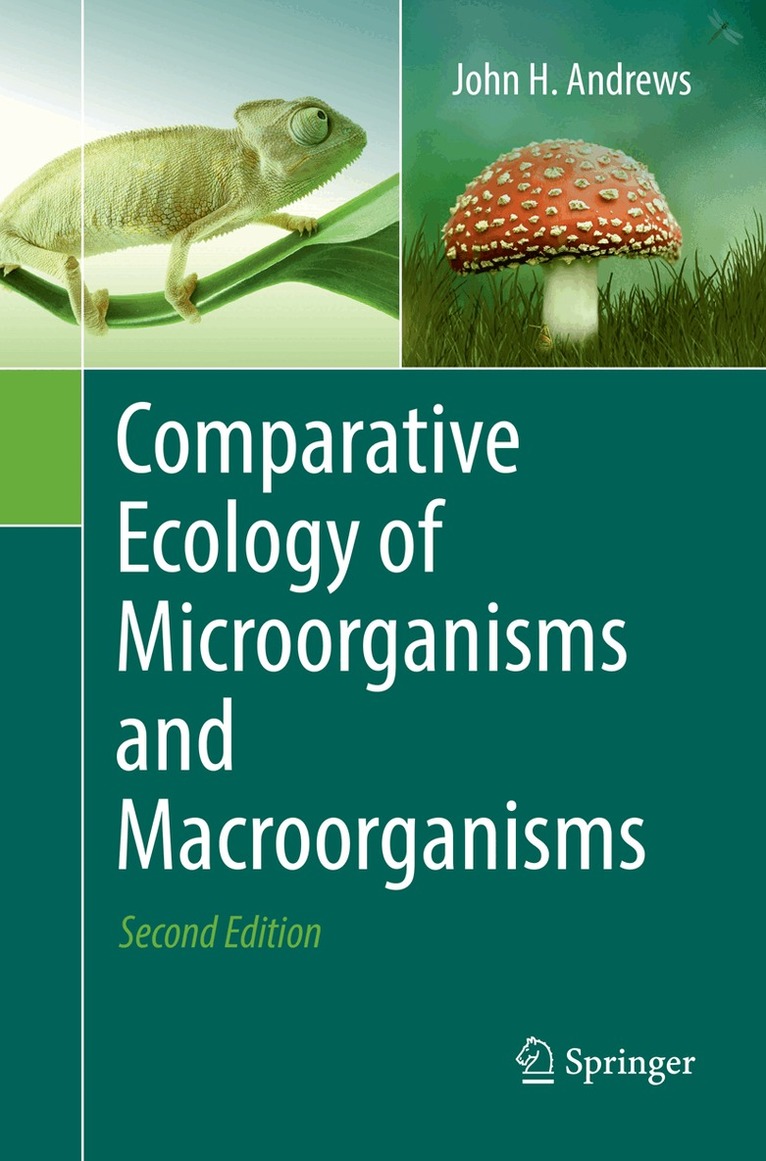
This second edition textbook offers an expanded conceptual synthesis of microbial ecology with plant and animal ecology. Drawing on examples from the biology of microorganisms and macroorganisms, this textbook provides a much-needed interdisciplinary approach to ecology. The focus is the individual organism and comparisons are made along six axes: genetic variation, nutritional mode, size, growth, life cycle, and influence of the environment. When it was published in 1991, the first edition of Comparative Ecology of Microorganisms and Macroorganisms was unique in its attempt to clearly compare fundamental ecology across the gamut of size. The explosion of molecular biology and the application of its techniques to microbiology and organismal biology have particularly demonstrated the need for interdisciplinary understanding. This updated and expanded edition remains unique. It treats the same topics at greater depth and includes an exhaustive compilation of boththe most recent relevant literature in microbial ecology and plant/animal ecology, as well as the early research papers that shaped the concepts and theories discussed. Among the completely updated topics in the book are phylogenetic systematics, search algorithms and optimal foraging theory, comparative metabolism, the origins of life and evolution of multicellularity, and the evolution of life cycles.From Reviews of the First Edition: "John Andrews has succeeded admirably in building a bridge that is accessible to all ecologists." -Ecology "I recommend this book to all ecologists. It is a thoughtful attempt to integrate ideas from, and develop common themes for, two fields of ecology that should not have become fragmented." -American Scientist "Such a synthesis is long past due, and it is shameful that ecologists (both big and little) have been so parochial." -The Quarterly Review of Biology
901 kr
Skickas inom 10-15 vardagar
This second edition textbook offers an expanded conceptual synthesis of microbial ecology with plant and animal ecology. When it was published in 1991, the first edition of Comparative Ecology of Microorganisms and Macroorganisms was unique in its attempt to clearly compare fundamental ecology across the gamut of size.