John H. Exton - Böcker
Visar alla böcker från författaren John H. Exton. Handla med fri frakt och snabb leverans.
3 produkter
3 produkter
956 kr
Skickas inom 5-8 vardagar
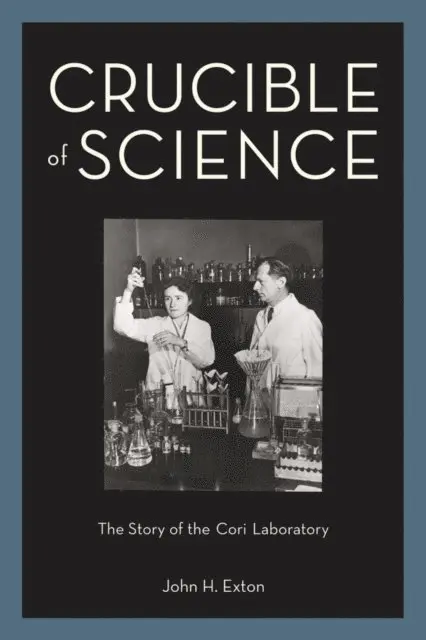
"Crucible of Science" is the story of a unique laboratory at Washington University in St. Louis, and of Carl and Gerty Cori, the biochemists who established it. Carl and Gerty met and married at medical school in Prague in the 1920s. After graduation, they immigrated to the U.S. to escape deteriorating conditions in Europe. Carl soon received an offer from Washington University to become Pharmacology Chair, and the couple settled in St. Louis. Not only did both Coris go on to win the Nobel Prize, the laboratory they established at the University has since produced some of the most outstanding scientists the U.S. has ever seen. Six laboratory scientists also won Nobel Prizes; few, if any, laboratories can claim such an impressive record. The Coris themselves were instrumental in establishing the then new science of Biochemistry in the U.S. They applied chemical approaches to elucidating the transformations of compounds such as glucose in animal tissues and defined the enzyme BIOL15GENRthat carried out those transformations. Both scientists were extremely rigorous in designing their experiments and interpreting the results, a habit that ensured their findings were above question. This book examines the careers of both Coris and the other eminent scientists who trained in their laboratory. It notes the Coris' acceptance of women, Jews, and scientists from all over the world, unique during this time period. It analyzes those reasons why the laboratory was so successful in attracting the best trainees and producing premier scientists. Intended for scientists, science historians, and anyone interested in the history of science, "Crucible of Science" is a unique presentation of remarkable careers and personalities, examined within the context of the Coris' laboratory.
1 589 kr
Skickas inom 10-15 vardagar
Lipids traditionally have been viewed as serving two functions: to form cellular membranes and to serve as energy stores. During the last two decades, a new role for lipids has taken center stage: lipids can act as signalling molecules. This book deals with a variety of lipids that have been shown to be messengers. Leading scientists explore all known lipid classes except steroid hormones. Researchers and educators in biochemistry as well as in molecular and cellular biology will appreciate this volume.
1 589 kr
Skickas inom 10-15 vardagar
Lipids traditionally have been viewed as serving two functions: to form cellular membranes and to serve as energy stores. During the last two decades, a new role for lipids has taken center stage: lipids can act as signalling molecules. Leading scientists explore all known lipid classes except steroid hormones.