John H. Gill – författare
Visar alla böcker från författaren John H. Gill. Handla med fri frakt och snabb leverans.
8 produkter
8 produkter
242 kr
Skickas
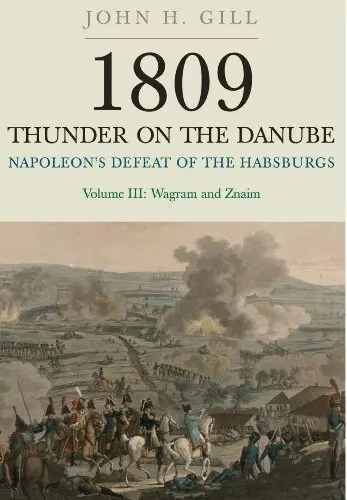
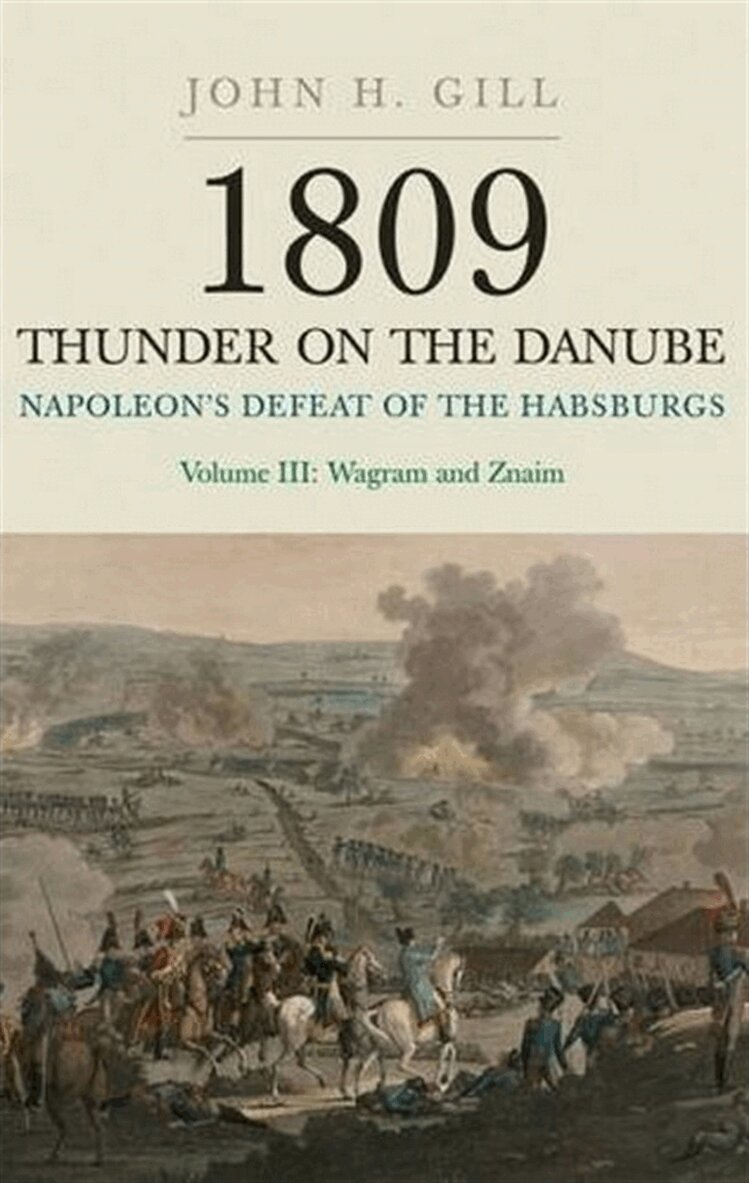
With this third volume John Gill brings to a close his magisterial study of the war between Napoleonic France and Habsburg Austria. The account begins with both armies recuperating on the banks of the Danube. As they rest, important action was taking place elsewhere: Eugene won a crucial victory over Johann on the anniversary of Marengo, Prince Poniatowski's Poles outflanked another Austrian archduke along the Vistula, and Marmont drove an Austrian force out of Dalmatia to join Napoleon at Vienna. These campaigns set the stage for the titanic Battle of Wagram. Second only in scale to the slaughter at Leipzig in 1813, Wagram saw more than 320,000 men and 900 guns locked in two days of fury that ended with an Austrian retreat. The defeat, however, was not complete: Napoleon had to force another engagement before Charles would accept a ceasefire. The battle at Znaim, its true importance often not acknowledged, brought an extended armistice that ended with a peace treaty signed in Vienna. Gill uses an impressive array of sources in an engaging narrative covering both the politics of emperors and the privations and hardship common soldiers suffered in battle.Enriched with unique illustrations, forty maps, and extraordinary order-of-battle detail, this work concludes an unrivalled English-language study of Napoleon's last victory.
316 kr
Skickas
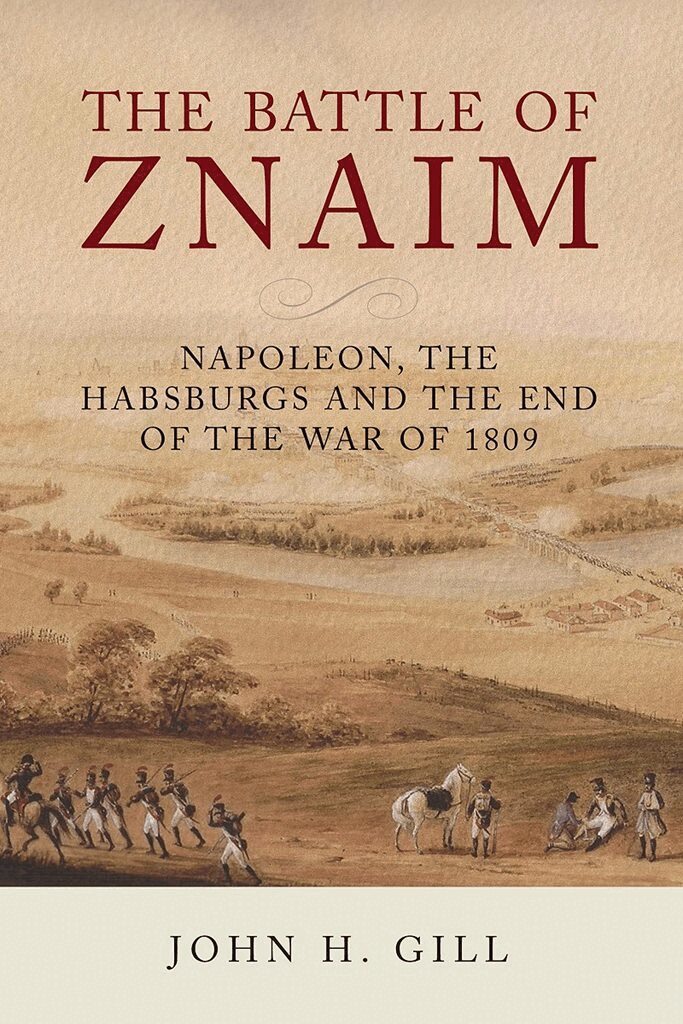
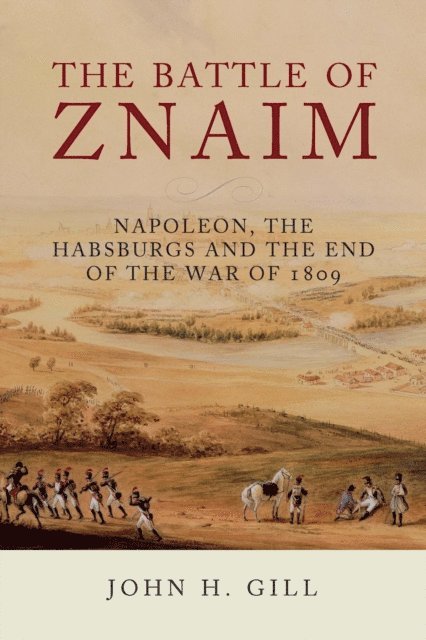
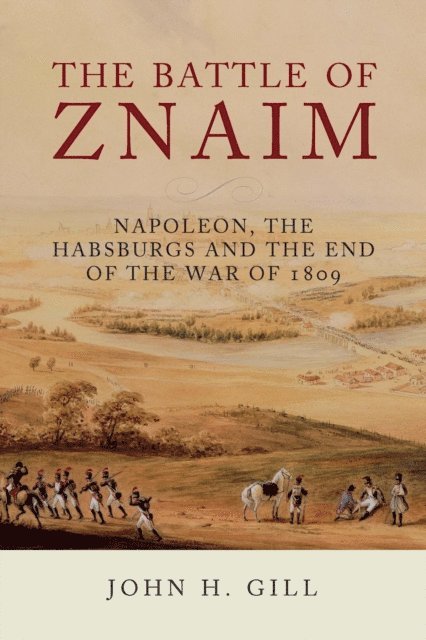
The little known Battle of Znaim (10th-11th July 1809) was the last battle to be fought on the main front of the Franco-Austrian War. Cut short to make way for an armistice it effectively ended hostilities between France and Austria and is now uniquely considered to be an episode both of conflict and simultaneously of diplomacy.The battle began as a result of the Austrian decision to stage a rearguard action near Znaim, prompting the Bavarians to unsuccessfully storm a nearby town. Battle ensued with the village changing hands a number of times over the course of the two days.Jack Gill delves deep into the respective tactics of both sides as the two armies continually changed positions and strategies. His account dissects and investigates the dual aspects of the Battle of Znaim and explains the diplomatic decisions that resulted in the peace treaty which was signed at Schonbrunn Palace on 14th October 1809\.Gill's book is an unrivalled analysis of the Battle of Znaim. Accessible, highly detailed and expertly crafted, it sheds new light on this fascinating moment in Napoleonic history.
213 kr
Skickas
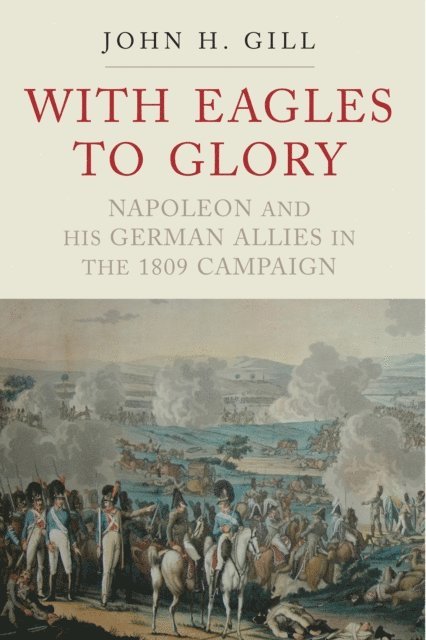
When Napoleon's Grand Armee went to war against the might of the Habsburg empire in 1809, its forces included more than 100,000 allied German troops. From his earliest imperial campaigns, these troops provided played a key role as Napoleon swept from victory to victory and in 1809 their fighting abilities were crucial to the campaign. With Napoleon's French troops depleted and debilitated after the long struggle in the Spanish War, the German troops for the first time played a major combat role in the centre of the battle line.Aiming at a union of German states under French protection to replace the decrepit Holy Roman Empire, Napoleon sought to expand French influence in central Germany at the expense of the Austrian and Prussian monarchies, ensuring Frances own security. The campaign Napoleon waged in 1809 was his career watershed. He suffered his first reverse at Aspern. Victory was achieved at Wagram was not the knock-out blow he had envisaged.In this epic work, John Gill presents an unprecedented and comprehensive study of this year of glory for the German soldiers fighting for Napoleon, When combat opened they were in the thick of the action, fighting within French divisions and often without any French support at all. They demonstrated tremendous skill, courage and loyalty.
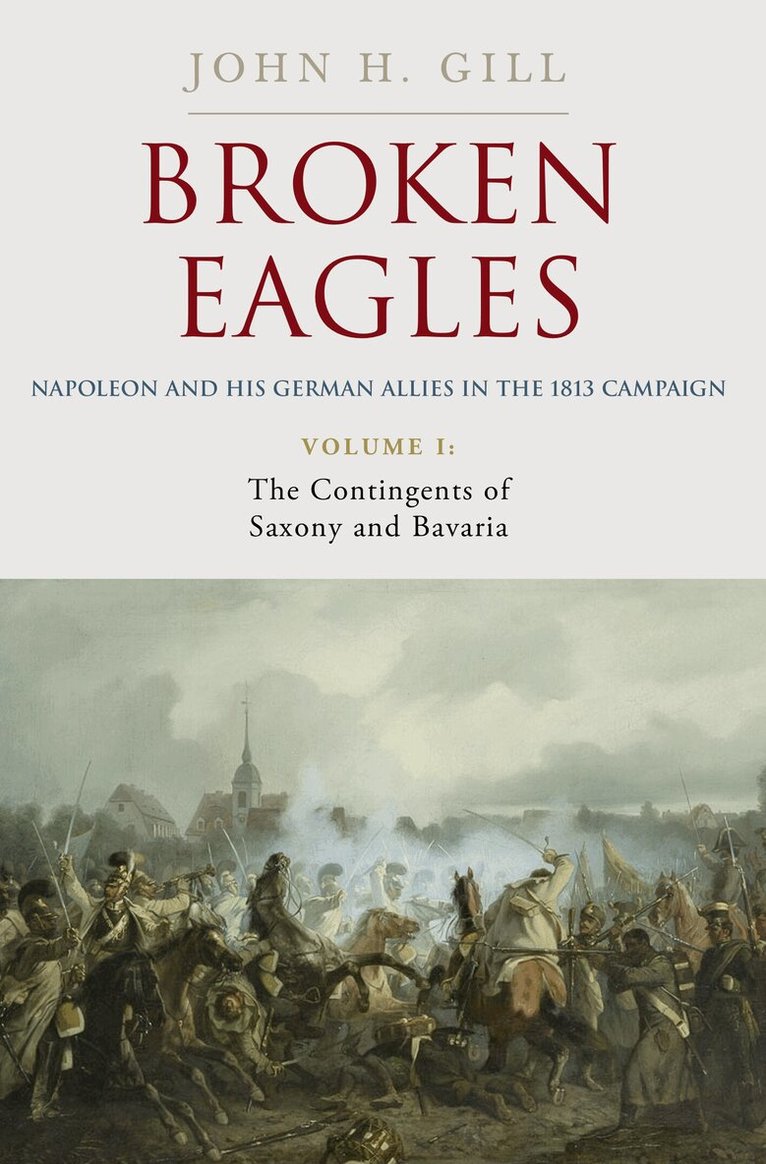
Broken Eagles – Napoleon and his German Allies in the 1813 Campaign
VOLUME I: Campaigns Overview, Bavaria, Saxony
Inbunden, Engelska, 2025
423 kr
Skickas inom 3-6 vardagar
Traditional accounts of the campaigns of 1813 concentrate on the major powers: Napoleon’s France versus Russia, joined successively by Prussia, Sweden and Austria, and how, as in the French catastrophe of 1812, early successes were transformed into ruinous defeat. However, the smaller German states in Napoleon’s alliance system, the Confederation of the Rhine, or Rheinbund, also played an important part.Despite its significance, there are few books, especially in English, that explore the Rheinbund’s creation, evolution and demise. This groundbreaking new work seeks to redress this. Based on years of research in archives across Germany and France, as well as battlefield visits, this unprecedented study provides the first comprehensive analysis of the confederation’s military campaigns of 1813 – culminating in Napoleon’s defeat and the collapse of his German alliance.Presented in two parts, this first volume opens with an overview of the Rheinbund as an institution, a summary of its brief history and an overview of the campaigns, battles and sieges of 1813. It then proceeds to a detailed examination of the activities of the armies of Saxony and Bavaria in this critical year. The second volume continues with an analysis of the forces of Württemberg, Baden and Hesse-Darmstadt, Westphalia and the multitude of smaller states that comprised the Rheinbund. Supplemented by more than 100 maps, charts and orders of battle, this is an essential reference work for any Napoleonic scholar and all those with an interest in the historical development of Germany.
203 kr
Skickas
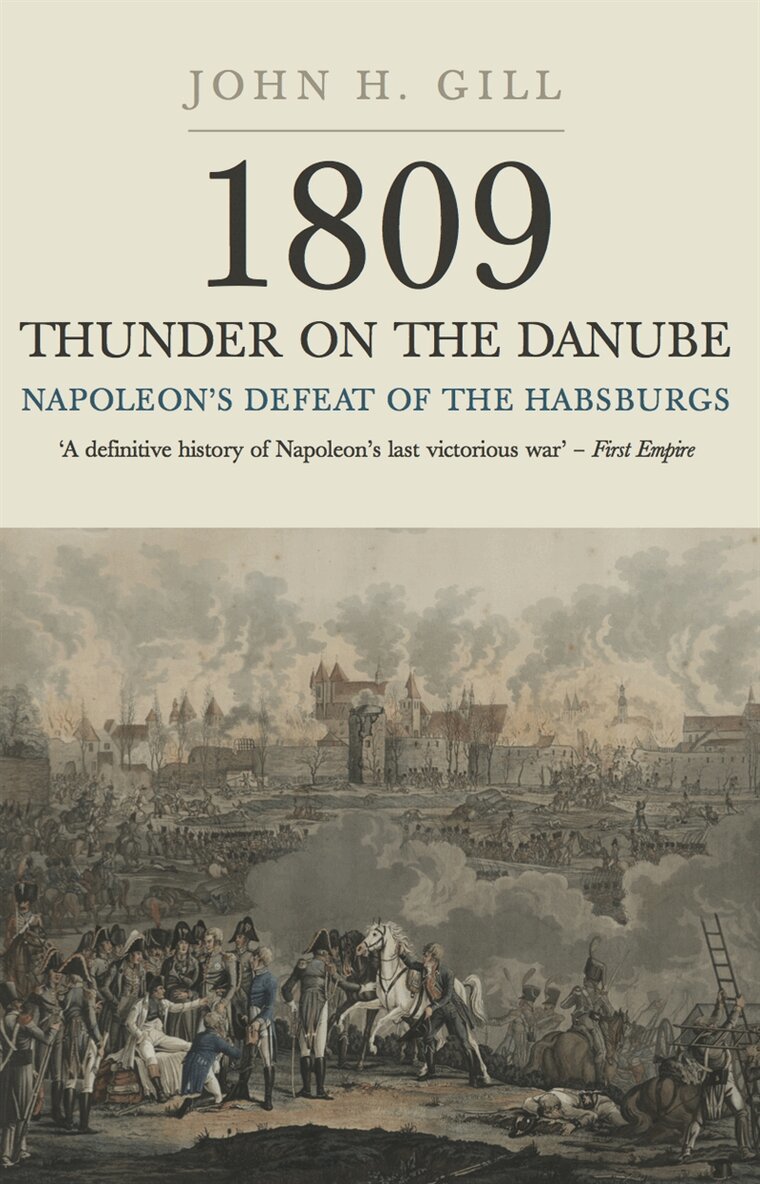
The Franco-Austrian War of 1809 was Napoleon's last victorious war. He would win many battles in his future campaigns, but never again would one of Europe's great powers lie broken at his feet. In this respect 1809 represents a high point of the First Empire yet at the same time Napoleon's armies were declining in quality and he was beginning to display the corrosive flaws that contributed to his downfall five years later. In this volume Gill tackles the political background to the war and the opening battles of Abensberg, Eggmuhl and Regensberg. He explores the motivations that prompted Austria to launch an offensive against France while Napoleon and many of his veterans were distracted in Spain. Though surprised by the timing of the Austrian attack on the 10th April, the French Emperor completely reversed a dire strategic situation with stunning blows that he called his 'most brilliant and most skilful manoeuvres'. Following a breathless pursuit down the Danube valley, Napoleon occupied the palaces of the Habsburgs for the second time in four years.Basing his work on years of primary research and battlefield visits, Gill provides a thorough analysis replete with spectacular combat, diplomatic intrigue and the illustrious cast of characters that populated this extraordinary age. The concluding volumes will take the war to its conclusion, including Napoleon's first unequivocal repulse at the Battle of Espern-Essling, the titanic Battle of Wagram and the neglected struggle at Znaim that led to armistice.
182 kr
Tillfälligt slut
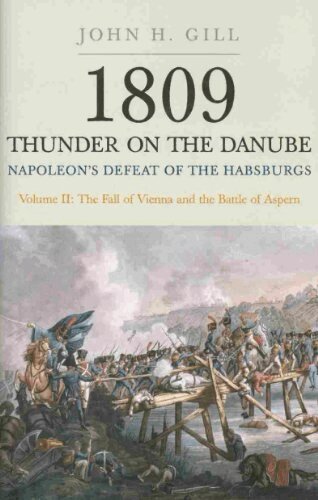
In the second volume of this epic work, John H. Gill traces Napoleon's progress as he sought to complete his victory over the Habsburgs. The war had erupted on April 10th with Austria's invasion of Germany and Italy. After just two weeks, Napoleon had battered the Habsburg Archduke Charles in a series of bruising defeats. This volume begins with Napoleon astride the Danube at Regensburg. He faced a critical strategic choice - whether to pursue the injured Austrian main army into Bohemia or march directly for Vienna, the seat of Habsburg power. After electing to target Vienna, his troops defeated the Austrians in the brutal Battle of Ebelsberg, allowing him to enter the city on May 13th. However on the far side of the Danube, he then suffered a dramatic loss at the gruelling, two-day Battle of Aspern. While his Danube forces recovered from this setback, the Emperor cleared trouble from his strategic flanks. Gill describes in vivid detail the hopeful Habsburg invasion of Italy, led by the 27-year-old Archduke Johann, and the fierce French counter-offensive under Napoleon's stepson, Eugene de Beauharnais (also aged 27).In a series of encounters across Italy, de Beauharnais rebounded from initial defeat to advance triumphantly into Austrian territory, shattering and scattering Johann's army. In the wake of Aspern, while the Austrians vacillated, Napoleon gathered every man, horse and gun around Vienna, setting the stage for the gigantic spectacle of the Battle of Wagram, the final chapter in the story of the 1809 war.
111 kr
Skickas
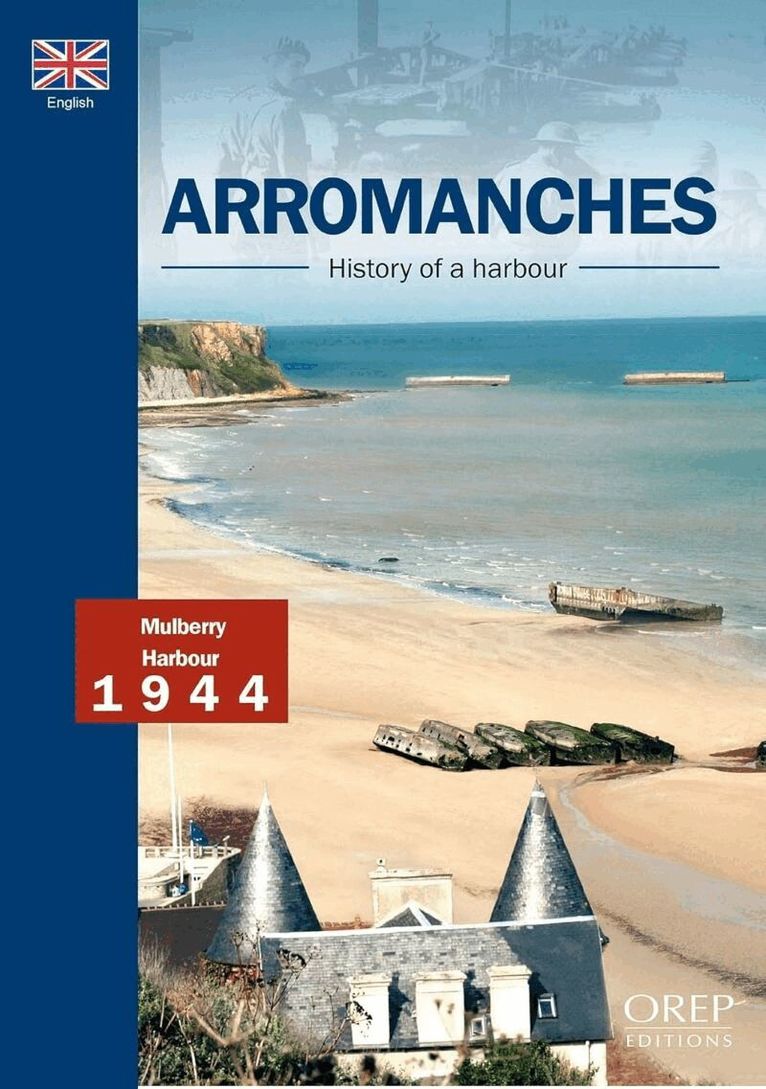
Why use an artificial port ? How they were made and assembled, risks and chances, questions and answers to determine and explain this titanesque enterprise to produce prefabricated ports.
440 kr
Tillfälligt slut
The Provence that is visited so much every year for its sun, its rocky inlets, and its summer fragrances holds another treasure: its ancient past. As a land of passage, great peoples also settled there: firstly, the Ligures and the Celts, then the Romans, and at the dawn of the Middle Ages, Provence was finally incorporated into the kingdom of the Visigoths. This volume provides a history of Provence’s prehistoric sites, from proto-history to the German Migrations. Written by archaeologists for the general reader, it offers a complete guide to discovering the incredibly rich heritage of this region of France, from the Italian border to the River Rhone, enabling everyone to discover the art and ancient architecture of Provence. This is a French language title. Cette Provence tant visitée chaque année, pour son soleil, ses calanques, ses odeurs d’été, détient un autre trésor : son passé antique ! Terre de passage et de voyage, de grands peuples s’y sont aussi fixés. D'abord territoire des Ligures et des Celtes. Ces peuples d’artisans, d'agriculteurs et d'éleveurs ont accueilli à bras ouverts les Grecs, venus de l’autre côté de la mer. Ces derniers ont importé la vigne et l'olivier, mais ont également propagé leur savoir-faire et leurs connaissances. Après plusieurs siècles d'échanges, mais aussi de conflits meurtriers, la Romanité s'immisce dans cette vaste étendue de terre. Elle devient alors la porte des Gaules, mais également une Provincia, que nous appellerons plus tard, la Provence. La période romaine marque une période de faste. À l'aube du Moyen Âge, la Provence est finalement intégrée au royaume des Wisigoths. Ce patrimoine antique provençal, parfois méconnu des visiteurs estivaux, est d'une richesse incroyable. Nous vous proposons un regard complet, des sites archéologiques de Provence, depuis la protohistoire jusqu'aux Migrations germaniques. Guide complet pour découvrir ce pays de France, depuis la frontière italienne, jusqu'au Rhône, ce livre, pensé et réalisé par des archéologues, se veut volontairement grand public. Il permet à tous de découvrir l'histoire, l’art et l'architecture antique en Provence.