John H. Miller – författare
Visar alla böcker från författaren John H. Miller. Handla med fri frakt och snabb leverans.
10 produkter
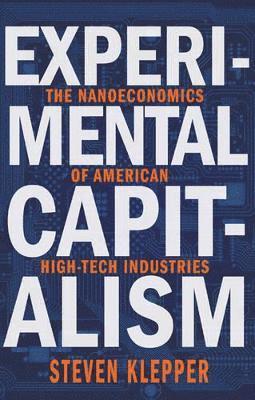
Experimental Capitalism
The Nanoeconomics of American High-Tech Industries
Av Steven Klepper, Serguey Braguinsky m. fl.
Inbunden, 2015
476 kr
Lägg i varukorg
For much of the twentieth century, American corporations led the world in terms of technological progress. Why did certain industries have such great success? Experimental Capitalism examines six key industries--automobiles, pneumatic tires, television receivers, semiconductors, lasers, and …
Ex Machina
Coevolving Machines and the Origins of the Social Universe
Inbunden, 2023
309 kr
Lägg i varukorg
Complex Adaptive Systems
An Introduction to Computational Models of Social Life
Häftad, 2007
5,0 utav 5 stjärnor. Totalt antal röster: (1)
436 kr
Lägg i varukorg
This book provides the first clear, comprehensive, and accessible account of complex adaptive social systems, by two of the field's leading authorities. Such systems--whether political parties, stock markets, or ant colonies--present some of the most intriguing theoretical and practical challenges …
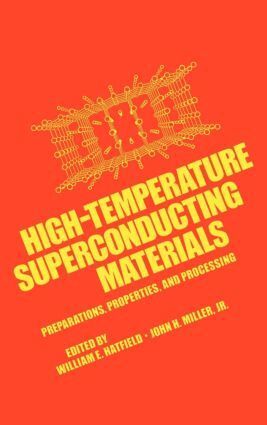
High-Temperature Superconducting Materials
Preparations, Properties, and Processing
Av William E. Hatfield, John H. Miller
Inbunden, 1988
4580 kr
Lägg i varukorg
This book is a collection of proceedings of a symposium organized by the North Carolina Section of the American Chemical Society on the preparations, properties, and processing of high-temperature superconducting materials. The proceedings include papers of new results presented at the symposium.
High-Temperature Superconducting Materials
Preparations, Properties, and Processing
Av John H. Miller, William E. Hatfield
E-bok, 2020
5367 kr
Lägg i varukorg
This book is a collection of proceedings of a symposium organized by the North Carolina Section of the American Chemical Society on the preparations, properties, and processing of high-temperature superconducting materials. The proceedings include papers of new results presented at the symposium.
High-Temperature Superconducting Materials
Preparations, Properties, and Processing
Av John H. Miller, William E. Hatfield
E-bok, 2020
5367 kr
Lägg i varukorg
This book is a collection of proceedings of a symposium organized by the North Carolina Section of the American Chemical Society on the preparations, properties, and processing of high-temperature superconducting materials. The proceedings include papers of new results presented at the symposium.
Complex Adaptive Systems
An Introduction to Computational Models of Social Life
Av Scott E. Page, John H. Miller
E-bok, 2009
586 kr
Lägg i varukorg
This book provides the first clear, comprehensive, and accessible account of complex adaptive social systems, by two of the field''s leading authorities. Such systems--whether political parties, stock markets, or ant colonies--present some of the most intriguing theoretical and practical challenges …
Experimental Capitalism
The Nanoeconomics of American High-Tech Industries
Av Steven Klepper, John H. Miller m. fl.
E-bok, 2015
661 kr
Lägg i varukorg
How American industries rose to dominate the economic landscape in the twentieth century For much of the twentieth century, American corporations led the world in terms of technological progress. Why did certain industries have such great success? Experimental Capitalism examines six key …
American Political and Cultural Perspectives on Japan
From Perry to Obama
Häftad, 2015
631 kr
Lägg i varukorg
American Political and Cultural Perspectives on Japan: From Perry to Obama is an historical survey of how Americans have viewed Japan during the past 160 years. It encompasses the diplomatic, political, economic, social, and cultural dimensions of the relationship, with an emphasis on changing …