John Hatcher – författare
Visar alla böcker från författaren John Hatcher. Handla med fri frakt och snabb leverans.
22 produkter
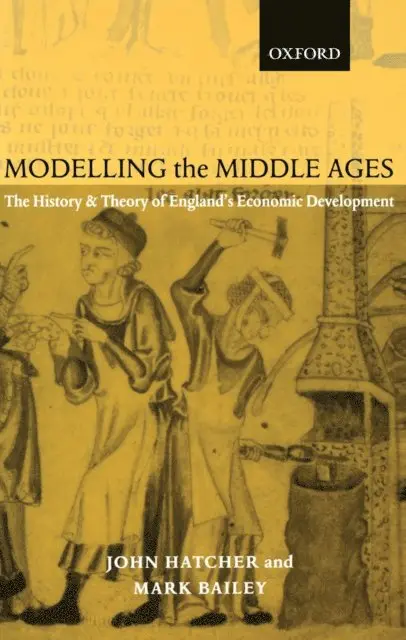
Modelling the Middle Ages
The History and Theory of England''s Economic Development
E-bok, 2001
723 kr
Lägg i varukorg
Most of what has been written on the economy of the middle ages is deeply influenced by abstract concepts and theories. The most powerful and popular of these guiding beliefs are derived from intellectual foundations laid down in the eighteenth and nineteenth centuries by Adam Smith, Johan von …
The History of the British Coal Industry: Volume 1: Before 1700
Towards the Age of Coal
Av John Hatcher
Inbunden, 1993
5160 kr
Lägg i varukorg
This is the eagerly awaited first volume of the definitive History of the British Coal Industry. Well before 1700 Britain had become heavily dependent upon coal for its fuel, and coalmining had taken its place among the nation's staple industries. John Hatcher traces the production and trade of …
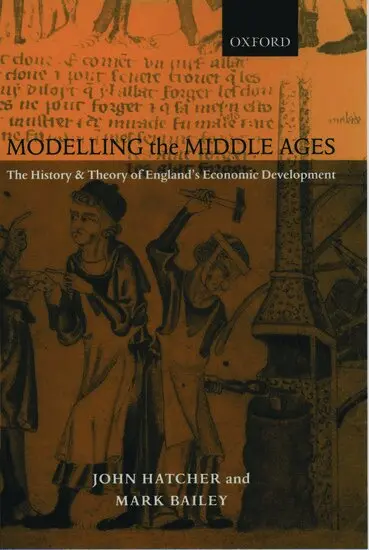
Modelling the Middle Ages
The History and Theory of England's Economic Development
Inbunden, 2001
2234 kr
Lägg i varukorg
Most of what has been written on the economy of the middle ages is deeply influenced by abstract concepts and theories. The most powerful and popular of these guiding beliefs are derived from intellectual foundations laid down in the eighteenth and nineteenth centuries by Adam Smith, Johan von …
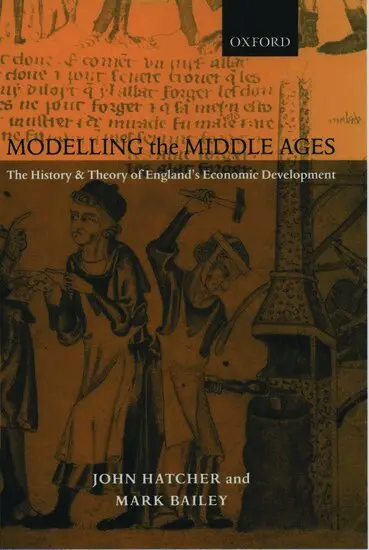
Modelling the Middle Ages
The History and Theory of England's Economic Development
Häftad, 2001
1375 kr
Lägg i varukorg
Most of what has been written on the economy of the middle ages is deeply influenced by abstract concepts and theories. The most powerful and popular of these guiding beliefs are derived from intellectual foundations laid down in the eighteenth and nineteenth centuries by Adam Smith, Johan von …
Black Death
An Intimate History
Av John Hatcher
E-bok, 2010
45 kr
Lägg i varukorg
How the people of a typical English village lived and died in the worst epidemic in history. The Black Death remains the greatest disaster to befall humanity, killing about half the population of the planet in the 14th century. John Hatcher recreates everyday medieval life in a parish in Suffolk, …
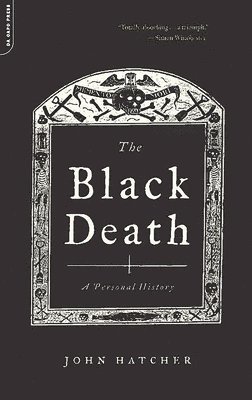
Black Death
A Personal History
Av John Hatcher
Häftad, 2009
198 kr
Lägg i varukorg
In this fresh approach to the history of the Black Death, John Hatcher, a world-renowned scholar of the Middle Ages, recreates everyday life in a mid-fourteenth century rural English village. By focusing on the experiences of ordinary villagers as they lived,and died,during the Black Death (1345-50 …
Rural Economy and Society in the Duchy of Cornwall 1300-1500
Av John Hatcher
Häftad, 2008
623 kr
Lägg i varukorg
This study is centred on the Cornish manorial estates of the Duchy of Cornwall in the later Middle Ages, and has been compiled from a very full and hitherto neglected series of records, the completeness of which is perhaps unique for a lay estate. Most aspects of the history of the estates have …
Progress and Problems in Medieval England
Essays in Honour of Edward Miller
Av Richard Britnell, John Hatcher
Häftad, 2002
938 kr
Lägg i varukorg
The contributors to this collection of essays in honour of the distinguished medieval historian Edward Miller pay tribute by writing on the society and economy of England between the eleventh and sixteenth centuries. They address many of the most important themes of an era that witnessed profound …
Progress and Problems in Medieval England
Essays in Honour of Edward Miller
Av Richard Britnell, John Hatcher
Inbunden, 1996
1844 kr
Lägg i varukorg
The contributors to this collection of essays in honour of the distinguished medieval historian Edward Miller pay tribute by writing on the society and economy of England between the eleventh and sixteenth centuries. They address many of the most important themes of an era that witnessed profound …
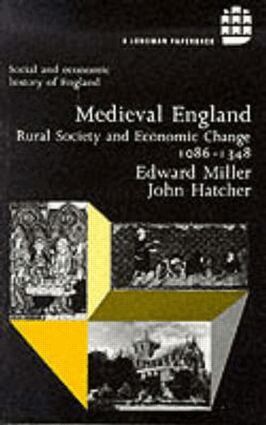
Medieval England
Rural Society and Economic Change 1086-1348
Av Edward Miller, John Hatcher
Häftad, 1978
1279 kr
Lägg i varukorg
This is the first volume of a two-volume study of medieval England covering the period between the Norman Conquest and the Black Death. The book opens with a summary portrait of the English economy and society in the reign of William I. It goes on to examine in detail the population increase from …
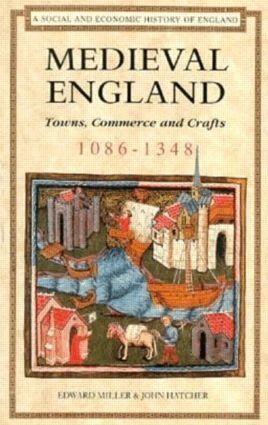
Medieval England
Towns, Commerce and Crafts, 1086-1348
Av Edward Miller, John Hatcher
Häftad, 1995
1055 kr
Lägg i varukorg
The only survey of the urban, commercial and industrial history of the period between the Norman conquest and the Black Death.
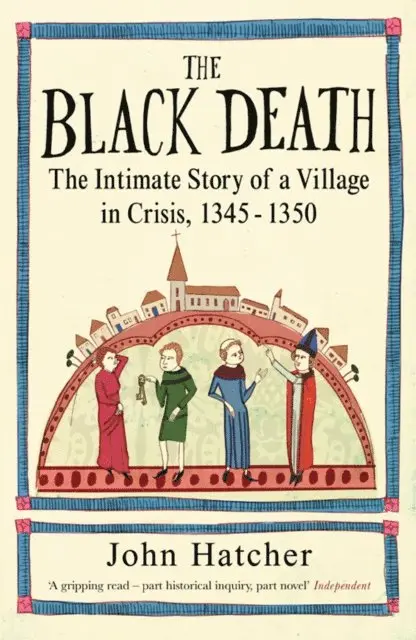
Black Death
The Intimate Story of a Village in Crisis 1345-50
Av John Hatcher
Häftad, 2009
151 kr
Lägg i varukorg
How the people of a typical English village lived and died in the worst epidemic in history.The Black Death remains the greatest disaster to befall humanity, killing about half the population of the planet in the 14th century. John Hatcher recreates everyday medieval life in a parish in Suffolk, …
Medieval England
Towns, Commerce and Crafts, 1086-1348
Av Edward Miller, John Hatcher
Inbunden, 2017
2581 kr
Lägg i varukorg
The only survey of the urban, commercial and industrial history of the period between the Norman conquest and the Black Death.
Medieval England
Rural Society and Economic Change 1086-1348
Av Edward Miller, John Hatcher
Inbunden, 2016
2581 kr
Lägg i varukorg
This is the first volume of a two-volume study of medieval England covering the period between the Norman Conquest and the Black Death. The book opens with a summary portrait of the English economy and society in the reign of William I. It goes on to examine in detail the population increase from …
Medieval England
Towns, Commerce and Crafts, 1086-1348
Av John Hatcher, Edward Miller
E-bok, 2014
1248 kr
Lägg i varukorg
The only survey of the urban, commercial and industrial history of the period between the Norman conquest and the Black Death.
Medieval England
Towns, Commerce and Crafts, 1086-1348
Av John Hatcher, Edward Miller
E-bok, 2014
1221 kr
Lägg i varukorg
The only survey of the urban, commercial and industrial history of the period between the Norman conquest and the Black Death.
Medieval England
Rural Society and Economic Change 1086-1348
Av John Hatcher, Edward Miller
E-bok, 2014
1516 kr
Lägg i varukorg
This is the first volume of a two-volume study of medieval England covering the period between the Norman Conquest and the Black Death. The book opens with a summary portrait of the English economy and society in the reign of William I. It goes on to examine in detail the population increase from …
Medieval England
Rural Society and Economic Change 1086-1348
Av John Hatcher, Edward Miller
E-bok, 2014
1483 kr
Lägg i varukorg
This is the first volume of a two-volume study of medieval England covering the period between the Norman Conquest and the Black Death. The book opens with a summary portrait of the English economy and society in the reign of William I. It goes on to examine in detail the population increase from …
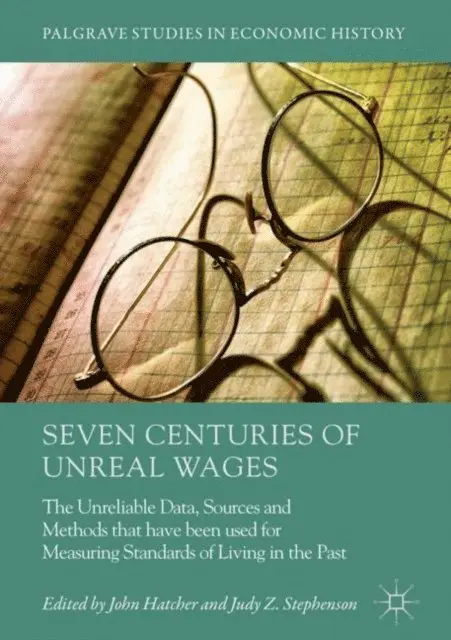
Seven Centuries of Unreal Wages
The Unreliable Data, Sources and Methods that have been used for Measuring Standards of Living in the Past
Av John Hatcher, Judy Z Stephenson
Häftad, 2020
1902 kr
Lägg i varukorg
The quality of life experienced by people in the past is one of the most important areas of historical enquiry, and the standard of living of populations is one of the leading measures of the economic performance of nations. Yet how accurate is the information on which these judgments are based? …
Seven Centuries of Unreal Wages
The Unreliable Data, Sources and Methods that have been used for Measuring Standards of Living in the Past
Av John Hatcher, Judy Z. Stephenson
Inbunden, 2019
1902 kr
Lägg i varukorg
The quality of life experienced by people in the past is one of the most important areas of historical enquiry, and the standard of living of populations is one of the leading measures of the economic performance of nations. Yet how accurate is the information on which these judgments are based? …
Seven Centuries of Unreal Wages
The Unreliable Data, Sources and Methods that have been used for Measuring Standards of Living in the Past
Av Judy Z. Stephenson, John Hatcher
E-bok, 2019
2455 kr
Lägg i varukorg
The quality of life experienced by people in the past is one of the most important areas of historical enquiry, and the standard of living of populations is one of the leading measures of the economic performance of nations. Yet how accurate is the information on which these judgments are based? …