John J. W. Rogers – författare
Visar alla böcker från författaren John J. W. Rogers. Handla med fri frakt och snabb leverans.
4 produkter
4 produkter
E-bok
Engelska, 2004962 kr
Läs direkt efter köp
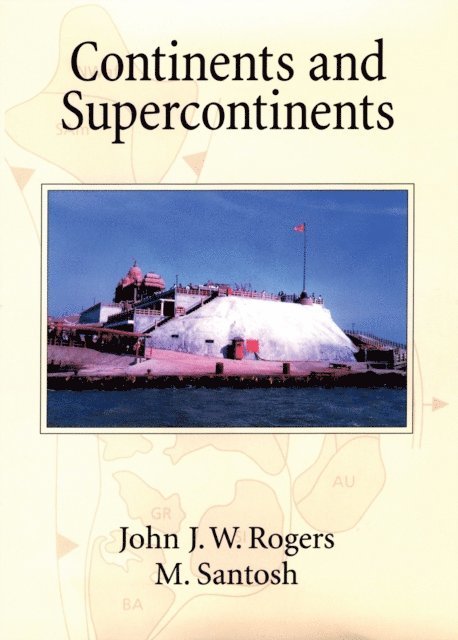
To this day, there is a great amount of controversy about where, when and how the so-called supercontinents--Pangea, Godwana, Rodinia, and Columbia--were made and broken. Continents and Supercontinents frames that controversy by giving all the necessary background on how continental crust is formed, modified, and destroyed, and what forces move plates. It also discusses how these processes affect the composition of seawater, climate, and the evolution of life. Rogers and Santosh begin with a survey of plate tectonics, and go on to describe the composition, production, and destruction of continental and oceanic crust, and show that cratons or assemblies of cratons became the first true continents, approximately one billion years after the earliest continental crust evolved. The middle part of the book concentrates on supercontinents, beginning with a discussion of types of orogenic belts, distinguishing those that formed by closure of an ocean basin within the belt and those that formed by intracontinental deformation caused by stresses generated elsewhere. This information permits discrimination between models of supercontinent formation by accretion of numerous small terranes and by reorganization of large old continental blocks. This background leads to a description of the assembly and fragmentation of supercontinents throughout earth history. The record is most difficult to interpret for the oldest supercontinent, Columbia, and also controversial for Rodinia, the next youngest supercontinent. The configurations and pattern of breakup of Gondwana and Pangea are well known, but some aspects of their assembly are unclear. The book also briefly describes the histories of continents after the breakup of Pangea, and discusses how changes in the composition of seawater, climate, and life may have been affected by the sizes and locations of continents and supercontinents.
Inbunden, Engelska, 2004
925 kr
Skickas inom 5-8 vardagar
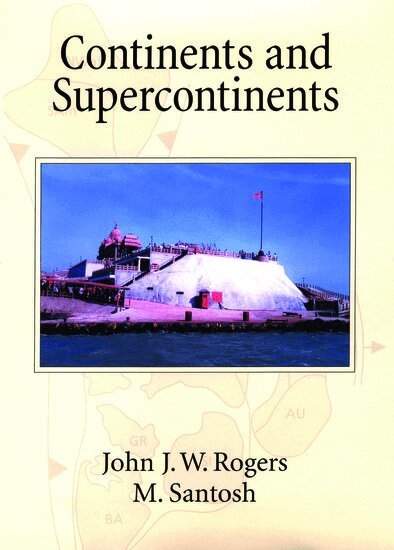
To this day, there is a great amount of controversy about where, when and how the so-called supercontinents--Pangea, Godwana, Rodinia, and Columbia--were made and broken. Continents and Supercontinents frames that controversy by giving all the necessary background on how continental crust is formed, modified, and destroyed, and what forces move plates. It also discusses how these processes affect the composition of seawater, climate, and the evolution of life.Rogers and Santosh begin with a survey of plate tectonics, and go on to describe the composition, production, and destruction of continental and oceanic crust, and show that cratons orassemblies of cratons became the first true continents, approximately one billion years after the earliest continental crust evolved. The middle part of the book concentrates on supercontinents, beginning with a discussion of types of orogenic belts, distinguishing those that formed by closure of an ocean basin within the belt and those that formed by intracontinental deformation caused by stresses generated elsewhere. This information permits discrimination between models of supercontinentformation by accretion of numerous small terranes and by reorganization of large old continental blocks.This background leads to a description of the assembly and fragmentation ofsupercontinents throughout earth history. The record is most difficult to interpret for the oldest supercontinent, Columbia, and also controversial for Rodinia, the next youngest supercontinent. The configurations and pattern of breakup of Gondwana and Pangea are well known, but some aspects of their assembly are unclear. The book also briefly describes the histories of continents after the breakup of Pangea, and discusses how changes in the composition of seawater, climate, and life may havebeen affected by the sizes and locations of continents and supercontinents.
E-bok
PDF, Engelska, 2004962 kr
Läs direkt efter köp
To this day, there is a great amount of controversy about where, when and how the so-called supercontinents--Pangea, Godwana, Rodinia, and Columbia--were made and broken. Continents and Supercontinents frames that controversy by giving all the necessary background on how continental crust is formed, modified, and destroyed, and what forces move plates. It also discusses how these processes affect the composition of seawater, climate, and the evolution of life. Rogers and Santosh begin with a survey of plate tectonics, and go on to describe the composition, production, and destruction of continental and oceanic crust, and show that cratons or assemblies of cratons became the first true continents, approximately one billion years after the earliest continental crust evolved. The middle part of the book concentrates on supercontinents, beginning with a discussion of types of orogenic belts, distinguishing those that formed by closure of an ocean basin within the belt and those that formed by intracontinental deformation caused by stresses generated elsewhere. This information permits discrimination between models of supercontinent formation by accretion of numerous small terranes and by reorganization of large old continental blocks. This background leads to a description of the assembly and fragmentation of supercontinents throughout earth history. The record is most difficult to interpret for the oldest supercontinent, Columbia, and also controversial for Rodinia, the next youngest supercontinent. The configurations and pattern of breakup of Gondwana and Pangea are well known, but some aspects of their assembly are unclear. The book also briefly describes the histories of continents after the breakup of Pangea, and discusses how changes in the composition of seawater, climate, and life may have been affected by the sizes and locations of continents and supercontinents.
Häftad, Engelska, 1993
513 kr
Skickas inom 7-10 vardagar
First published in 1993, this book surveys both the history of the Earth and the nature of the processes that controlled its history. It integrates information from many fields to provide a comprehensive summary of an interdisciplinary topic. Fundamental processes such as convection, thermal evolution of the Earth, evolution of the crust, mantle, orogeny, and rifting are explained. Historical topics such as the origin of life, paleontologic extinction events, differences between the Archean and younger time periods, deposition of Precambrian sediments, and evolution of the atmosphere and oceans are discussed. The book then focuses on the development of modern ocean basins, the history of Phanerozoic orogenic belts, and the nature of cratonic sedimentary cover sequences. The book can be used as a reference to give an overview of earth history for readers in other research areas, and as a broad introduction to this vast subject for all interested in earth science.