John Jorgensen – författare
Visar alla böcker från författaren John Jorgensen. Handla med fri frakt och snabb leverans.
3 produkter
3 produkter
Häftad, Engelska, 2019
331 kr
Skickas inom 5-8 vardagar
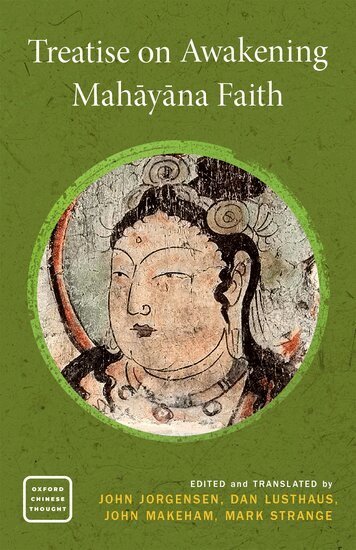
Dasheng qixin lun, or Treatise on Awakening Mahāyāna Faith has been one of the most important texts of East Asian Buddhism since it first appeared in sixth-century China. It outlines the initial steps a Mahāyāna Buddhist needs to take to reach enlightenment, beginning with the conviction that the Mahāyāna path is correct and worth pursuing. The Treatise addresses many of the doctrines central to various Buddhist teachings in China between the fifth and seventh centuries, attempting to reconcile seemingly contradictory ideas in Buddhist texts introduced from India. It provided a model for later schools to harmonize teachings and sustain the idea that, despite different approaches, there was only one doctrine, or Dharma. It profoundly shaped the doctrines and practices of the major schools of Chinese Buddhism: Chan, Tiantai, Huayan, and to a lesser extent Pure Land.It quickly became a shared resource for East Asian philosophers and students of Buddhist thought. Drawing on the historical and intellectual contexts of Treatise's composition and paying sustained attention to its interpretation in early commentaries, this new annotated translation of the classic, makes its ideas available to English readers like never before. The introduction orients readers to the main topics taken up in the Treatise and gives a comprehensive historical and intellectual grounding to the text. This volume marks a major advance in studies of the Treatise, bringing to light new interpretations and themes of the text.
Inbunden, Engelska, 2015
556 kr
Skickas inom 5-8 vardagar
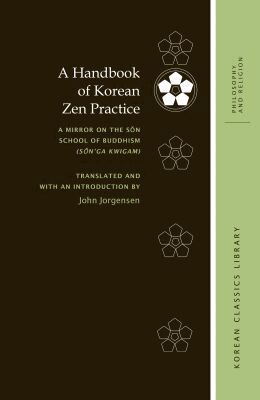
S?n (Japanese Zen) has been the dominant form of Buddhism in Korea from medieval times to the present. A Handbook of Korean Zen Practice: A Mirror on the S?nSchool of Buddhism (S?n’ga kwigam) was the most popular guide for S?n practice and life ever published in Korea and helped restore Buddhism to popularity afterits lowest point in Korean history. It was compiled before 1569 by S?san Hyuj?ng (1520–1604), later famed as the leader of a monk army that helped defend Koreaagainst a massive Japanese invasion in 1592. In addition to succinct quotations from sutras, the text also contained quotations from selected Chinese and Korean works together with Hyuj?ng’s explanations. Because of its brevity and organization, the work proved popular and was reprinted many times in Korea and Japan before 1909.A Handbook of Korean Zen Practice commences with the ineffability of the enlightened state, and after a tour through doctrine and practice it returns to its starting point. Th e doctrinal rationale for practice that leads to enlightenment is based on the Mahayana Awakening of Faith, but the practice Hyuj?ng enjoins readers to undertake is very different: a method of meditation derived from the kongan (Japanese koan) called hwadu (Chinese huatou), or “point of the story,” the story being the kongan. This method was developed by Dahui Zonggao (1089–1163) and was imported into Korea by Chinul (1158–1210). Th e most famous hwadu is the mu (no) answer by Zhaozhou to the question, “Does a dog have a buddha-nature?” Hyuj?ng warns of pitfalls in this practice, such as the delusion that one is alreadyenlightened. A proper understanding of doctrine is required before practicing hwadu. Practice also requires faith and an experienced teacher. Hyuj?ng outlines thespecifics of practice, such as rules of conduct and chanting and mindfulness of the Buddha, and stresses the requirements for living the life of a monk. At the end of the text he returns to the hwadu, the need for a teacher, and hence the importance of lineage. He sketches out the distinctive methods of practice of the chief S?n (Chinese Chan) lineages. His fi nal warning is not to be attached to the text.The version of the text translated here is the earliest and the longest extant. It was “translated” into Korean from Chinese by one of Hyuj?ng’s students to aid Korean readers. The present volume contains a brief history of hwadu practice and theory, a life of Hyuj?ng, and a summary of the text, plus a detailed, annotated translation. It should be of interest to practitioners of meditation and students of East Asian Buddhism and Korean history.
Inbunden, Engelska, 1997
7 856 kr
Tillfälligt slut