John Jost – författare
Visar alla böcker från författaren John Jost. Handla med fri frakt och snabb leverans.
3 produkter
3 produkter
Inbunden, Engelska, 2012
1 861 kr
Skickas inom 5-8 vardagar
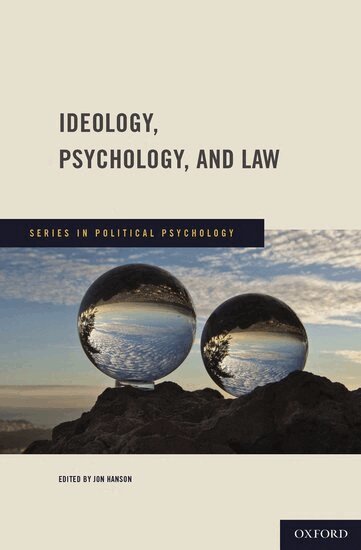
Formally, the law is based solely on reasoned analysis, devoid of ideological biases or unconscious influences. Judges claim to act as umpires applying the rules, not making them. They frame their decisions as straightforward applications of an established set of legal doctrines, principles, and mandates to a given set of facts. As most legal scholars understand, however, the impression that the legal system projects is largely an illusion. As far back as 1881, Oliver Wendell Holmes, Jr. made a similar claim, writing that "the felt necessities of the time, the prevalent moral and political theories, intuitions of public policy, avowed or unconscious, even the prejudices which judges share with their fellow-men, have a good deal more to do than the syllogism in determining the rules by which men should be governed." More than a century later, we are now much closer to understanding the mechanisms responsible for the gap between the formal face of the law and the actual forces shaping it. Over the last decade or so, political scientists and legal academics have begun studying the linkages between ideologies, on one hand, and legal principles and policy outcomes on the other. During that same period, mind scientists have turned to understanding the psychological sources of ideology. This book is the first to bring many of the world's experts on those topics together to examine the sometimes unsettling interactions between psychology, ideology, and law, and to better understand what, beyond and beneath the logic, animates the law.
E-bok
PDF, Engelska, 2011534 kr
Läs direkt efter köp
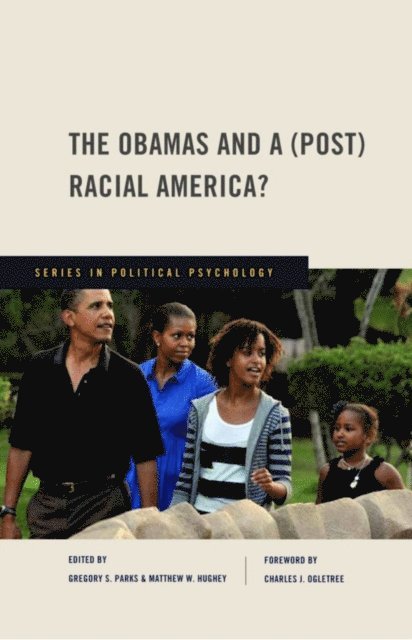
The United States has taken a long and winding road to racial equality, especially as it pertains to relations between blacks and whites. When Barack Hussein Obama was elected as the forty-fourth President of the United States and first black person to occupy the highest office in the land, many wondered whether that road had finally come to an end. Do we now live in a post-racial nation? This volume contends that despite the election of the first black President and rise of a black American family as possibly the most recognized family the world over, race is still a very salient issue-particularly in the United States. But the prominence of the Obamas on the world stage and the positive image they project may hasten the day when America is indeed post-racial, even at the implicit level.
E-bok
PDF, Engelska, 20111 620 kr
Läs direkt efter köp
Formally, the law is based solely on reasoned analysis, devoid of ideological biases or unconscious influences. Judges claim to act as umpires applying the rules, not making them. They frame their decisions as straightforward applications of an established set of legal doctrines, principles, and mandates to a given set of facts. As most legal scholars understand, however, the impression that the legal system projects is largely an illusion. As far back as 1881, Oliver Wendell Holmes, Jr. made a similar claim, writing that "the felt necessities of the time, the prevalent moral and political theories, intuitions of public policy, avowed or unconscious, even the prejudices which judges share with their fellow-men, have a good deal more to do than the syllogism in determining the rules by which men should be governed." More than a century later, we are now much closer to understanding the mechanisms responsible for the gap between the formal face of the law and the actual forces shaping it. Over the last decade or so, political scientists and legal academics have begun studying the linkages between ideologies, on one hand, and legal principles and policy outcomes on the other. During that same period, mind scientists have turned to understanding the psychological sources of ideology. This book is the first to bring many of the world''s experts on those topics together to examine the sometimes unsettling interactions between psychology, ideology, and law, and to better understand what, beyond and beneath the logic, animates the law.