John K-J. Li – författare
Visar alla böcker från författaren John K-J. Li. Handla med fri frakt och snabb leverans.
12 produkter
12 produkter
Inbunden, Engelska, 1997
1 123 kr
Skickas inom 10-15 vardagar
The study of cardiovascular function is vital to contemporary biomedical research. However, integration between cellular and subcellular research and organ-level studies is often lacking, as is integration of clinical and basic investigation. This book examines cardiovascular system function from the perspectives of assessment and analysis, with a focus on evaluating function at different anatomical levels using a combination of analytical, experimental, and clinical measurements.
Inbunden, Engelska, 1995
397 kr
Skickas inom 10-15 vardagar
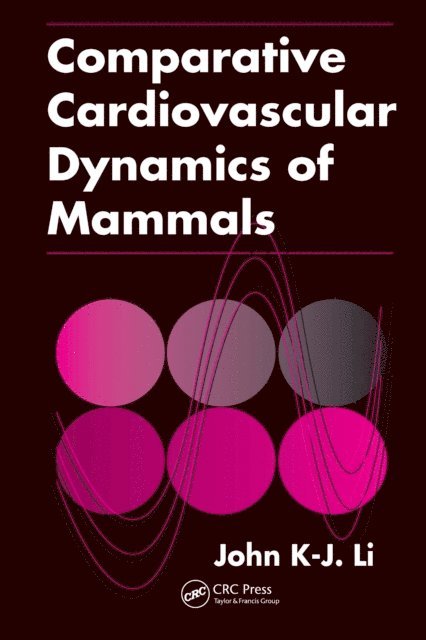
Comparative Cardiovascular Dynamics of Mammals offers never-before-published data on the structure and function of the circulatory systems of the different mammalian species. This text explores classic allometry, dimensional analysis, and modern hemodynamics to establish similarity principles that provide a necessary and important step in understanding the natural common design and functional features of the cardiovascular systems of different mammals.Fluid and blood vessel mechanics, pulse transmission characteristics, cardiac energetics and mechanics, as well as heart-arterial system interaction are included in this essential reference. The sensitivity of parameters and similarity of principles in the diagnosis of cardiovascular diseases are also addressed. This book also describes the natural processes involved in the functional development of the mammalian cardiovascular system.By using modern methods to present recent findings on the similarities and differences of the mammalian cardiovascular system, the author provides an easily understood approach to this dynamic field of study.
Inbunden, Engelska, 2000
1 681 kr
Skickas inom 10-15 vardagar
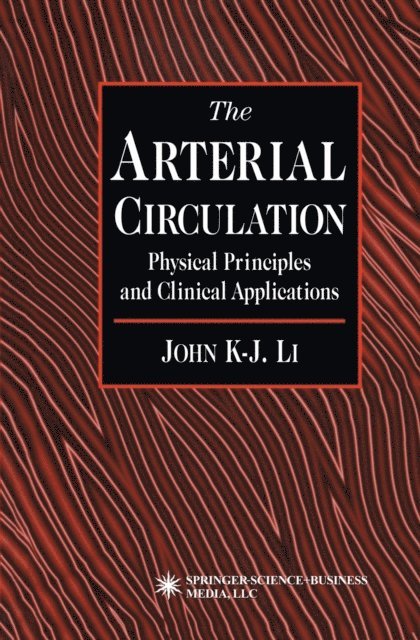
John Li applies powerful new developments in biorheological analysis, experimental validation, and clinical assessment to the fluid dynamics of arterial circulation, laying the foundation for effective experimental and clinical applications. Using quantitative methods extensively, Dr. Li illuminates the physiology and rheology of arteries, the fundamental theories and modeling of the arterial system, blood pressure and flow and their transmission in arteries, and the coupling and interaction of the arterial system and the heart. On the clinical level he examines the alteration of structure and function of arteries in such disease conditions as hypertension, myocardial ischemia, arterial and aortic valve stenoses, and aging. Innovative in its quantitative analysis, computer modeling, and practical clinical applications, The Arterial Circulation: Physical Principles and Clinical Applications will immediately become the standard reference in the field for all those investigating the structure and function of arteries, and how arterial circulation can be accurately and quantitatively assessed in clinical situations.
E-bok
Engelska, 2024451 kr
Läs direkt efter köp
Comparative Cardiovascular Dynamics of Mammals offers never-before-published data on the structure and function of the circulatory systems of the different mammalian species. This text explores classic allometry, dimensional analysis, and modern hemodynamics to establish similarity principles that provide a necessary and important step in understanding the natural common design and functional features of the cardiovascular systems of different mammals.Fluid and blood vessel mechanics, pulse transmission characteristics, cardiac energetics and mechanics, as well as heart-arterial system interaction are included in this essential reference. The sensitivity of parameters and similarity of principles in the diagnosis of cardiovascular diseases are also addressed. This book also describes the natural processes involved in the functional development of the mammalian cardiovascular system.By using modern methods to present recent findings on the similarities and differences of the mammalian cardiovascular system, the author provides an easily understood approach to this dynamic field of study.
E-bok
PDF, Engelska, 2024451 kr
Läs direkt efter köp
Comparative Cardiovascular Dynamics of Mammals offers never-before-published data on the structure and function of the circulatory systems of the different mammalian species. This text explores classic allometry, dimensional analysis, and modern hemodynamics to establish similarity principles that provide a necessary and important step in understanding the natural common design and functional features of the cardiovascular systems of different mammals.Fluid and blood vessel mechanics, pulse transmission characteristics, cardiac energetics and mechanics, as well as heart-arterial system interaction are included in this essential reference. The sensitivity of parameters and similarity of principles in the diagnosis of cardiovascular diseases are also addressed. This book also describes the natural processes involved in the functional development of the mammalian cardiovascular system.By using modern methods to present recent findings on the similarities and differences of the mammalian cardiovascular system, the author provides an easily understood approach to this dynamic field of study.
E-bok
PDF, Engelska, 20121 408 kr
Läs direkt efter köp
The objective of this book is to provide the researcher and clinician with the recent developments in the analysis and assessment of cardiovascular func tion. The chapters are organized into sections that correspond with the various anatomical levels of the cardiovascular system. To a large extent, recent focus on the cardiovascular system function has been directed at the molecular level to the near exclusion of the tissue and organ function. While this may be useful in developing new therapeutic drugs, it does not aid the cardiologist or surgeon, who routinely deal with patient symptoms. This book integrates the micro-level and organ-level function so that new infor mation may be assimilated into the cardiovascular system as a whole. Within each section, the chapters have been arranged to progress from recent theoretical developments, to experimental research, and finally to clinical applications. This approach facilitates the timely transfer of infor mation from basic research to the clinic. The strength of the analytical approach will be evident to the reader. The theoretical analysis offers guidance to experimental design and, in some cases, offers solutions where measurements are as yet unattainable. In moving from newly attained knowledge to clinical practice, this book emphasizes the noninvasive meth in the future as technological advances ods. Such methods are desirable occur and the trend towards early preventive diagnosis is sought. What follows are highlights of new developments covered in each section of the book.
Häftad, Engelska, 2012
1 124 kr
Skickas inom 10-15 vardagar
The objective of this book is to provide the researcher and clinician with the recent developments in the analysis and assessment of cardiovascular func tion. The chapters are organized into sections that correspond with the various anatomical levels of the cardiovascular system. To a large extent, recent focus on the cardiovascular system function has been directed at the molecular level to the near exclusion of the tissue and organ function. While this may be useful in developing new therapeutic drugs, it does not aid the cardiologist or surgeon, who routinely deal with patient symptoms. This book integrates the micro-level and organ-level function so that new infor mation may be assimilated into the cardiovascular system as a whole. Within each section, the chapters have been arranged to progress from recent theoretical developments, to experimental research, and finally to clinical applications. This approach facilitates the timely transfer of infor mation from basic research to the clinic. The strength of the analytical approach will be evident to the reader. The theoretical analysis offers guidance to experimental design and, in some cases, offers solutions where measurements are as yet unattainable. In moving from newly attained knowledge to clinical practice, this book emphasizes the noninvasive meth in the future as technological advances ods. Such methods are desirable occur and the trend towards early preventive diagnosis is sought. What follows are highlights of new developments covered in each section of the book.
E-bok
PDF, Engelska, 20001 622 kr
Läs direkt efter köp
After yet another decade of leaming, experimenting, and inves tigating since my first book, Arterial System Dynamics, the many new medical breakthroughs and technological advances have inspired me to write this book to bridge the gap between basic research and clinical applications. The application of physical principles and quantitative approaches to the understanding of the arterial circulation and its interactions with the heart in normal and diseased conditions form the basis of The Arterial Circulation. Knowledge of the physiology and rheology of arteries, as well as all of their structural-functional corre lates, is a necessary prerequisite to the proper hemodynamic interpretatiqn of pressure-flow relations and the pulsatile transmis sion characteristics in different arteries. The natural coupling and interactions of the heart, the coronary circulation, and the arterial system necessitate analysis of alterations to global functioning. Modeling provides a tool for isolating and predicting parameter changes and is employed throughout the book. Experimental data are provided for model validations, and also for more realistic interpretations. Techniques and new methods for clinical hemo dynamic measurement and diagnosis are included to help the reader un derstand the physical principles underlying such abnormal cardiovascular functions as hypertension, stenosis, and myocardial ischemia. The progressive changes in vascular properties during aging are also discussed. Modem approaches utilizing computer mode ling and allomery are presented with selected examples, such as combined hypertension and aortic valve stenosis, and ventricular hypertrophy.
Häftad, Engelska, 2010
1 237 kr
Skickas inom 10-15 vardagar
After yet another decade of leaming, experimenting, and inves tigating since my first book, Arterial System Dynamics, the many new medical breakthroughs and technological advances have inspired me to write this book to bridge the gap between basic research and clinical applications. The application of physical principles and quantitative approaches to the understanding of the arterial circulation and its interactions with the heart in normal and diseased conditions form the basis of The Arterial Circulation. Knowledge of the physiology and rheology of arteries, as well as all of their structural-functional corre lates, is a necessary prerequisite to the proper hemodynamic interpretatiqn of pressure-flow relations and the pulsatile transmis sion characteristics in different arteries. The natural coupling and interactions of the heart, the coronary circulation, and the arterial system necessitate analysis of alterations to global functioning. Modeling provides a tool for isolating and predicting parameter changes and is employed throughout the book. Experimental data are provided for model validations, and also for more realistic interpretations. Techniques and new methods for clinical hemo dynamic measurement and diagnosis are included to help the reader un derstand the physical principles underlying such abnormal cardiovascular functions as hypertension, stenosis, and myocardial ischemia. The progressive changes in vascular properties during aging are also discussed. Modem approaches utilizing computer mode ling and allomery are presented with selected examples, such as combined hypertension and aortic valve stenosis, and ventricular hypertrophy.
Del 9 - Series On Bioengineering And Biomedical Engineering
Dynamics Of The Vascular System: Interaction With The Heart
Inbunden, Engelska, 2018
1 506 kr
Skickas inom 3-6 vardagar
The first edition of the book was written employing mathematical techniques to formulate the physical principles involved in the structural and functional correlates of the underlying physiology.This current and self-contained second edition updates many of the new findings since its first edition a decade ago. It also includes a new chapter on the "Interaction with the Heart". The dynamics of the arterial system, the venous system, the microcirculation and their interaction with the heart are quantitatively described in terms of their structures and functions. Clinical measurements, applications to the cardiovascular field and physiological mechanisms are clearly identified throughout the text. Most importantly, worked examples are provided, such that the readers can appreciate the application aspects of the underlying formulation.
Inbunden, Engelska, 2025
1 110 kr
Skickas inom 3-6 vardagar
This book is a comprehensive exploration of various methodologies and advancements aimed at deepening our understanding of arterial mechanics, joint dynamics, and gait balance analysis. Each chapter delves into distinct yet interconnected areas of study, reflecting the complexity of the human body and the sophistication required to evaluate its biomechanical properties.The chapters in this book offer a holistic view of modern research and methodologies in cardiovascular, synovial joint, and gait balance studies. The integration of these diverse topics underscores the importance of interdisciplinary approaches in addressing complex health challenges.
Del 1 - Series On Bioengineering And Biomedical Engineering
Dynamics Of The Vascular System
Inbunden, Engelska, 2004
1 393 kr
Tillfälligt slut
Recent advances in vascular biology and vascular engineering have led to the understanding and integration of the two fields. A feature that is fundamental to both is the dynamic aspects of the vascular system. Although the basic principles governing blood flow and the circulatory function are known, new approaches to examining the interaction of different parts of the vascular system have emerged. These include measurement techniques and quantitative methods with greater use of modern technology and computer modeling. An obvious need therefore exists for a book that deals specifically with the dynamics of the vascular system.This book begins with the historical discoveries of the features of the vascular system and its importance in the overall circulatory function. Modern aspects of vascular biology in terms of structure and function are then described, followed by the introduction of physical principles and basic fluid mechanics for quantitative analysis. The hemodynamics of large arteries, the optimal structure of vascular branching and the pulsatile energy transmission and modeling aspects are elaborated. These are extended to analyze the function of the venous system and the microcirculation. Finally, the integrated vascular system and its response and adaptation to diseased conditions, such as aging, stenosis, hypertension, myocardial ischemia, atheroslerosis and stroke are explained. The overall emphasis is on the dynamic nature of the vascular system.