John Landers - Böcker
Visar alla böcker från författaren John Landers. Handla med fri frakt och snabb leverans.
6 produkter
6 produkter
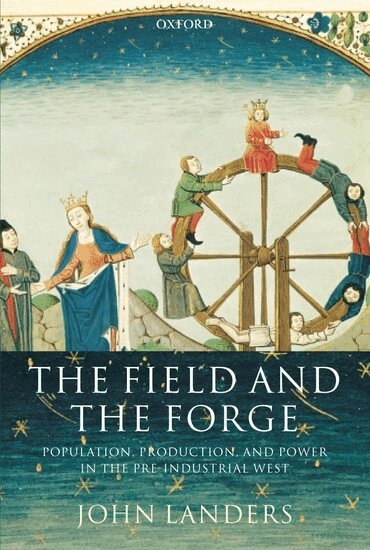
The Field and the Forge
Population, Production, and Power in the Pre-industrial West
Inbunden, Engelska, 2003
2 976 kr
Skickas inom 5-8 vardagar
The Field and the Forge offers a new approach to the pre-industrial past in Europe and the Mediterranean basin from the Roman Republic to the fall of Napoleon. Based on an original synthesis of 'structural' economic and demographic history with traditionally 'event driven' political and military history, it takes as its starting point E. A. Wrigley's concept of 'organic economies' and their reliance on the land for energy and raw materials. The opening section considers the ensuing constraints on productivity, transportation, and the spatial organization of the economy. The second section analyses the constraints imposed by muscle-powered military technology and by the organic economy on the tactical, operational, and strategic use of armed force, and the consequences of the spread of firearms in recorded history's first energy revolution. This is followed by an analysis of the military and economic constraints on the political integration of space through the formation of geographically extensive political units, and the volume concludes with a section on the demographic and economic consequences of the investment of manpower and resources in war.Existing accounts of organic economies emphasize their restricted potential to support economic and political development, but this volume also considers why so much potential remained unrealized. Endemic mass poverty curtailed demand, limiting incentives for investment and innovation, and keeping output growth below what was technologically possible. Resource shortages prevented rulers from establishing a fiscal apparatus capable of appropriating such resources as were physically available. But economic inefficiency also created a pool of under-utilized resources that could potentially be mobilized in pursuit of political power. The volume gives an innovative account of this potential - and why it was realized in the ancient world rather than the medieval west - together with a new analysis of the gunpowder revolution and the inability of rulers to meet the consequential costs within the confines of an organic economy.
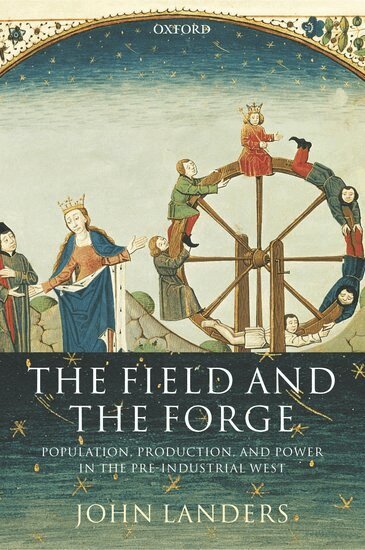
The Field and the Forge
Population, Production, and Power in the Pre-industrial West
Häftad, Engelska, 2005
1 218 kr
Skickas inom 5-8 vardagar
The Field and the Forge offers a new approach to the pre-industrial past in Europe and the Mediterranean basin from the Roman Republic to the fall of Napoleon. Based on an original synthesis of 'structural' economic and demographic history with traditionally 'event driven' political and military history, it takes as its starting point E. A. Wrigley's concept of 'organic economies' and their reliance on the land for energy and raw materials. The opening section considers the ensuing constraints on productivity, transportation, and the spatial organization of the economy. The second section analyses the constraints imposed by muscle-powered military technology and by the organic economy on the tactical, operational, and strategic use of armed force, and the consequences of the spread of firearms in recorded history's first energy revolution. This is followed by an analysis of the military and economic constraints on the political integration of space through the formation of geographically extensive political units, and the volume concludes with a section on the demographic and economic consequences of the investment of manpower and resources in war. Existing accounts of organic economies emphasize their restricted potential to support economic and political development, but this volume also considers why so much potential remained unrealized. Endemic mass poverty curtailed demand, limiting incentives for investment and innovation, and keeping output growth below what was technologically possible. Resource shortages prevented rulers from establishing a fiscal apparatus capable of appropriating such resources as were physically available. But economic inefficiency also created a pool of under-utilized resources that could potentially be mobilized in pursuit of political power. The volume gives an innovative account of this potential - and why it was realized in the ancient world rather than the medieval west - together with a new analysis of the gunpowder revolution and the inability of rulers to meet the consequential costs within the confines of an organic economy.
Del 20 - Cambridge Studies in Population, Economy and Society in Past Time
Death and the Metropolis
Studies in the Demographic History of London, 1670-1830
Häftad, Engelska, 2006
441 kr
Skickas inom 7-10 vardagar
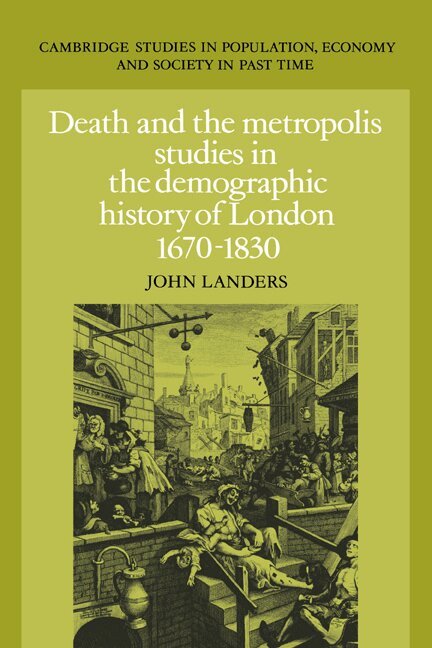
Death and the Metropolis offers a powerful analysis of demographic patterns in London over the 'long eighteenth century', concentrating on mortality but also including data on marital fertility, population structure and migration. The study is based on a variety of sources including weekly and annual Bills of Mortality, parish registers and Quaker vital registers, and employs the techniques of family reconstitution and aggregative analysis. The data are analysed within the framework of a structural model of mortality change comprising the proximate determinants of exposure to, and resistance against, infectious agents on the the part of populations. Within this framework a model is established describing the specific demographic and epidemiological characteristics of early modern metropolitan centres. The evidence indicates that mortality in London was much higher than in other settlements in England for most of the period, but declined steeply in the later eighteenth century. This apparently reflected changes in exposure to infections.
Del 31 - Society for the Study of Human Biology Symposium Series
Fertility and Resources
Häftad, Engelska, 2009
481 kr
Skickas inom 7-10 vardagar
Fertility in animals reflects access to scarce resources, such as food and territory. In humans the situation is more complex. Patterns of breast feeding, contraception and ideas about age at marriage and desired family size all affect fertility. The relation between these and access to scarce resources such as housing and employment, via income, education and other factors that affect status, is explored. In this book, the gap between socio-ecology and population demography is bridged, by showing how animals and humans adjust their fertility to environmental conditions.
Del 20 - Cambridge Studies in Population, Economy and Society in Past Time
Death and the Metropolis
Studies in the Demographic History of London, 1670-1830
Inbunden, Engelska, 1993
1 539 kr
Skickas inom 7-10 vardagar
Death and the Metropolis offers a powerful analysis of demographic patterns in London over the 'long eighteenth century', concentrating on mortality but also including data on marital fertility, population structure and migration. The study is based on a variety of sources including weekly and annual Bills of Mortality, parish registers and Quaker vital registers, and employs the techniques of family reconstitution and aggregative analysis. The data are analysed within the framework of a structural model of mortality change comprising the proximate determinants of exposure to, and resistance against, infectious agents on the the part of populations. Within this framework a model is established describing the specific demographic and epidemiological characteristics of early modern metropolitan centres. The evidence indicates that mortality in London was much higher than in other settlements in England for most of the period, but declined steeply in the later eighteenth century. This apparently reflected changes in exposure to infections.
Del 31 - Society for the Study of Human Biology Symposium Series
Fertility and Resources
Inbunden, Engelska, 1990
1 534 kr
Skickas inom 7-10 vardagar
Fertility in animals reflects access to scarce resources, such as food and territory. In humans the situation is more complex. Patterns of breast feeding, contraception and ideas about age at marriage and desired family size all affect fertility. The relation between these and access to scarce resources such as housing and employment, via income, education and other factors that affect status, is explored. In this book, the gap between socio-ecology and population demography is bridged, by showing how animals and humans adjust their fertility to environmental conditions.