John M. Broughton – författare
Visar alla böcker från författaren John M. Broughton. Handla med fri frakt och snabb leverans.
3 produkter
3 produkter
Häftad, Engelska, 1987
2 099 kr
Skickas inom 10-15 vardagar
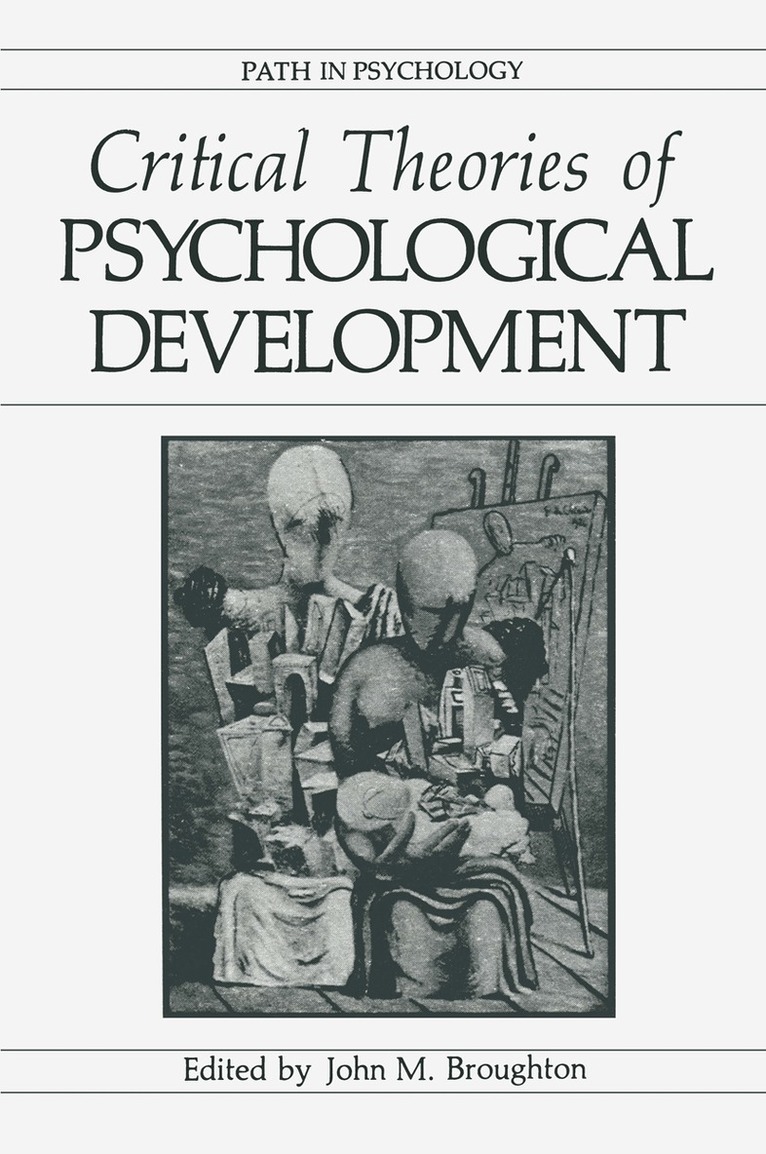
Something instructive occurred in the process of entitling the present collection. Both editor and publisher sought a simple and succinct rubric for the various pieces of work. But they rapidly and reluctantly reached the consensus that, by either intellectual or marketing criteria, the inser tion of the adjective "psychological" to qualify the noun "development" was a communicative necessity. Much to the chagrin of the develop mental psychologist, the term development still connotes-to the world at large as well as the general community of publishers, librarians, and computer archivists-the modernization of nation states. Inside and outside the university, I find that, when asked, "What are you in terested in?" I am not at liberty to reply, "The concept of development," without being absorbed immediately into a discussion of Third World studies. The approach of the present volume should be taken as an exhortation to psychologists to take the genealogy of "development'' seriously. The history of the discipline is not so different from the histo ry of the word and, as we shall discover, the concern with developmen tal progress cannot easily be separated from the urge for dominion. This volume presents a selection from the recent critical scholarship on psychological development. The emphasis is on rethinking the field of developmental psychology at the level of theory.
Inbunden, Engelska, 1982
1 021 kr
Skickas inom 10-15 vardagar
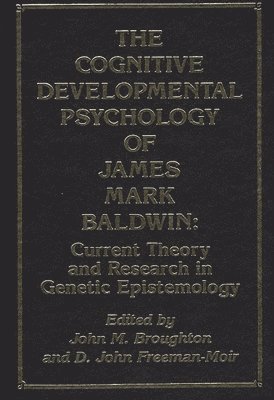
This is the first systematic analysis of Baldwin's genetic epistemology and its relation to the contemporary social sciences. It is prepared by ten psychologists, philosophers, and educators--including Piaget, Kholberg, and Campbell--from in-depth conceptual and empirical perspectives. This volume provides a comprehensive account of Baldwin's philosophical psychology, social and cognitive developmentalism, functionalism, symbolic interactionism, idealist aesthetics, and theoretical biology. Moreover, it provides the first bibliography and commentary of his work to appear in print.
E-bok
PDF, Engelska, 20132 760 kr
Läs direkt efter köp
Something instructive occurred in the process of entitling the present collection. Both editor and publisher sought a simple and succinct rubric for the various pieces of work. But they rapidly and reluctantly reached the consensus that, by either intellectual or marketing criteria, the inser tion of the adjective "psychological" to qualify the noun "development" was a communicative necessity. Much to the chagrin of the develop mental psychologist, the term development still connotes-to the world at large as well as the general community of publishers, librarians, and computer archivists-the modernization of nation states. Inside and outside the university, I find that, when asked, "What are you in terested in?" I am not at liberty to reply, "The concept of development," without being absorbed immediately into a discussion of Third World studies. The approach of the present volume should be taken as an exhortation to psychologists to take the genealogy of "development'''' seriously. The history of the discipline is not so different from the histo ry of the word and, as we shall discover, the concern with developmen tal progress cannot easily be separated from the urge for dominion. This volume presents a selection from the recent critical scholarship on psychological development. The emphasis is on rethinking the field of developmental psychology at the level of theory.