John M. Melack – författare
Visar alla böcker från författaren John M. Melack. Handla med fri frakt och snabb leverans.
5 produkter
5 produkter
Del 5 - Freshwater Ecology Series
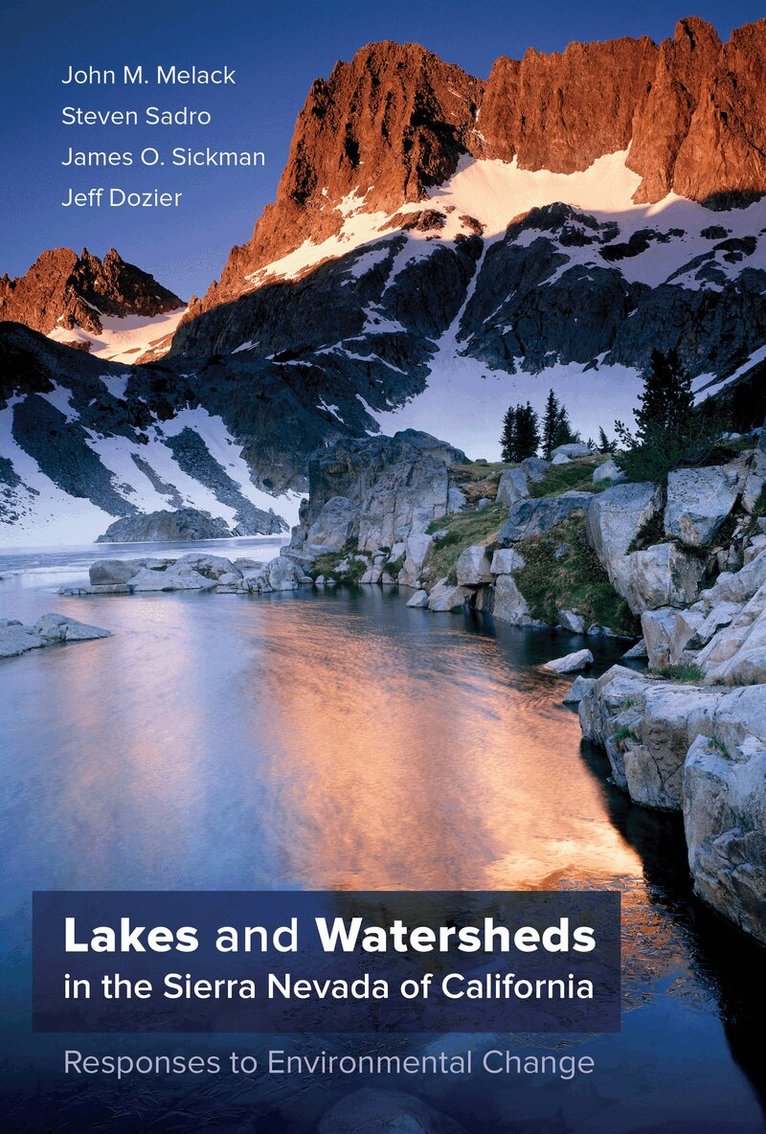
Lakes and Watersheds in the Sierra Nevada of California
Responses to Environmental Change
Inbunden, Engelska, 2020
717 kr
Skickas inom 5-8 vardagar
The Sierra Nevada, California’s iconic mountain range, harbors thousands of remote high-elevations lakes from which water flows to sustain agriculture and cities. As climate and air quality in the region change, so do the watershed processes upon which these lakes depend. In order to understand the future of California’s ecology and natural resources, we need an integrated account of the environmental processes that underlie these aquatic systems. Synthesizing over three decades of research on the lakes and watersheds of the Sierra Nevada, this book develops an integrated account of the hydrological and biogeochemical systems that sustain them. With a focus on Emerald Lake in Sequoia National Park, the book marshals long-term limnological and ecological data to provide a detailed and synthetic account, while also highlighting the vulnerability of Sierra lakes to changes in climate and atmospheric deposition. In so doing, it lays the scientific foundations for predicting and understanding how the lakes and watersheds will respond.
Inbunden, Engelska, 2002
1 633 kr
Skickas inom 10-15 vardagar
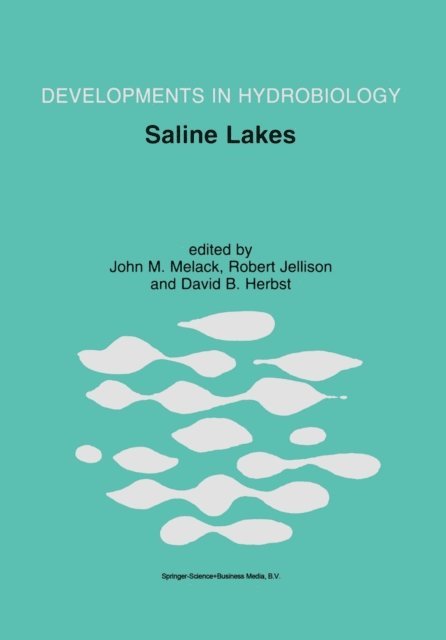
Inland saline waters are threatened worldwide by diversion and pollution of their inflows, introductions of exotic species and economic development of these ecologically valuable habitats. Since 1979 a series of international symposia on inland saline waters has served to strengthen and expand the scope of limnological research on inland saline waters. The seventh conference continued this tradition and the papers derived from the conference focused on the ecology of microbial communities, the influence of habitat geochemistry on biogeography of flora and fauna, physical and geochemical processes, and the conservation of inland saline waters. Of particular note are papers on Walker Lake, Nevada (USA), and the Salton Sea and Mono Lake, California (USA). Continued local, national and international efforts are required to inform the public and decision-makers about the environmental problems faced by saline waters. The papers in this volume will serve this end and should be of interest to aquatic ecologists, limnologists, aquaculturalists, and water resource managers.
Häftad, Engelska, 2010
1 635 kr
Skickas inom 10-15 vardagar
Inland saline waters are threatened worldwide by diversion and pollution of their inflows, introductions of exotic species and economic development of these ecologically valuable habitats. Since 1979 a series of international symposia on inland saline waters has served to strengthen and expand the scope of limnological research on inland saline waters. The seventh conference continued this tradition and the papers derived from the conference focused on the ecology of microbial communities, the influence of habitat geochemistry on biogeography of flora and fauna, physical and geochemical processes, and the conservation of inland saline waters. Of particular note are papers on Walker Lake, Nevada (USA), and the Salton Sea and Mono Lake, California (USA). Continued local, national and international efforts are required to inform the public and decision-makers about the environmental problems faced by saline waters. The papers in this volume will serve this end and should be of interest to aquatic ecologists, limnologists, aquaculturalists, and water resource managers.
E-bok
PDF, Engelska, 20121 100 kr
Läs direkt efter köp
Limnological research on saline lakes is practiced by a growing cadre of scientists active worldwide in a diversity of disciplines. Every three years since 1979, an international symposium on inland saline waters has served to strengthen and expand the scope of the studies. Promising areas for further research especially well suited to saline lakes include the comparative physiology of adaptation to osmotic stresses, the role of microbial and protozoan communities in nutrient dynamics and biotic interactions in ecosystems with few species. The Third International Symposium on Inland Saline Lakes was held at the University of Nairobi, Nairobi, Kenya, under the auspices of the Societas Internationalis Limnologiae (SIL). The symposium was sponsored by and received financial or other support from the U.S. National Science Foundation (International Program), United Nations Environment Program, University of California, Santa Barbara, and University of Nairobi. The proceedings occurred for three days (28-31 August, 1985) and were attended by 33 scientists from 14 countries (see list of Participants). On the day prior to the first formal session an afternoon trip to Lake Magadi and salt works was held. The tribulations of this excursion served to acquaint the participants with each other and with the realities of exploring the African bush. A three day post-congress expedition to the rift valley included visits to spectacular saline lakes such as Nakuru and Bogoria. Much of the meeting''s and excursion''s success is owed to the efforts of the local organizer, Dr. Stephen G.
E-bok
PDF, Engelska, 20132 049 kr
Läs direkt efter köp
Inland saline waters are threatened worldwide by diversion and pollution of their inflows, introductions of exotic species and economic development of these ecologically valuable habitats. Since 1979 a series of international symposia on inland saline waters has served to strengthen and expand the scope of limnological research on inland saline waters. The seventh conference continued this tradition and the papers derived from the conference focused on the ecology of microbial communities, the influence of habitat geochemistry on biogeography of flora and fauna, physical and geochemical processes, and the conservation of inland saline waters. Of particular note are papers on Walker Lake, Nevada (USA), and the Salton Sea and Mono Lake, California (USA). Continued local, national and international efforts are required to inform the public and decision-makers about the environmental problems faced by saline waters. The papers in this volume will serve this end and should be of interest to aquatic ecologists, limnologists, aquaculturalists, and water resource managers.