John M. Owen IV – författare
384 kr
Skickas inom 5-8 vardagar
623 kr
Läs direkt efter köp
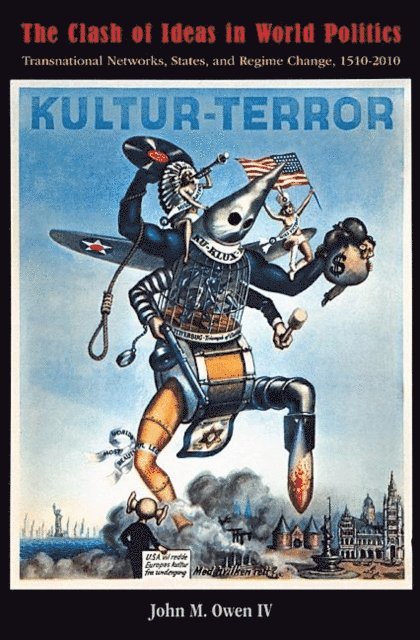
Some blame the violence and unrest in the Muslim world on Islam itself, arguing that the religion and its history is inherently bloody. Others blame the United States, arguing that American attempts to spread democracy by force have destabilized the region, and that these efforts are somehow radical or unique. Challenging these views, The Clash of Ideas in World Politics reveals how the Muslim world is in the throes of an ideological struggle that extends far beyond the Middle East, and how struggles like it have been a recurring feature of international relations since the dawn of the modern European state. John Owen examines more than two hundred cases of forcible regime promotion over the past five centuries, offering the first systematic study of this common state practice. He looks at conflicts between Catholicism and Protestantism between 1520 and the 1680s; republicanism and monarchy between 1770 and 1850; and communism, fascism, and liberal democracy from 1917 until the late 1980s. He shows how regime promotion can follow regime unrest in the eventual target state or a war involving a great power, and how this can provoke elites across states to polarize according to ideology. Owen traces how conflicts arise and ultimately fade as one ideology wins favor with more elites in more countries, and he demonstrates how the struggle between secularism and Islamism in Muslim countries today reflects broader transnational trends in world history.
294 kr
Läs direkt efter köp
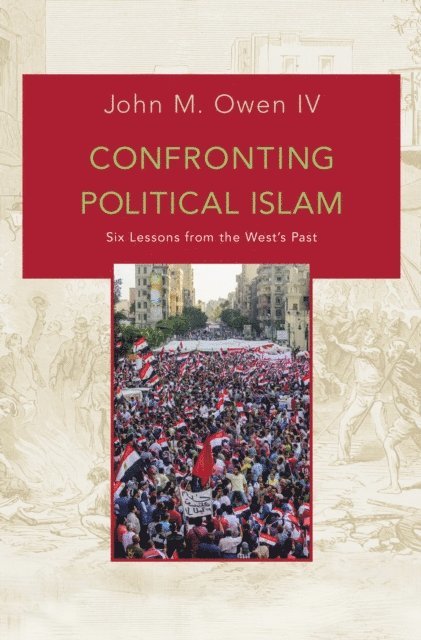
How the conflicts of Western history shed light on current upheavals in the Middle EastPolitical Islam has often been compared to ideological movements of the past such as fascism or Christian theocracy. But are such analogies valid? How should the Western world today respond to the challenges of political Islam? Taking an original approach to answer this question, Confronting Political Islam compares Islamism''s struggle with secularism to other prolonged ideological clashes in Western history. By examining the past conflicts that have torn Europe and the Americas—and how they have been supported by underground networks, fomented radicalism and revolution, and triggered foreign interventions and international conflicts—John Owen draws six major lessons to demonstrate that much of what we think about political Islam is wrong.Owen focuses on the origins and dynamics of twentieth-century struggles among Communism, Fascism, and liberal democracy; the late eighteenth- and nineteenth-century contests between monarchism and republicanism; and the sixteenth- and seventeenth-century wars of religion between Catholics, Lutherans, Calvinists, and others. Owen then applies principles learned from the successes and mistakes of governments during these conflicts to the contemporary debates embroiling the Middle East. He concludes that ideological struggles last longer than most people presume; ideologies are not monolithic; foreign interventions are the norm; a state may be both rational and ideological; an ideology wins when states that exemplify it outperform other states across a range of measures; and the ideology that wins may be a surprise.Looking at the history of the Western world itself and the fraught questions over how societies should be ordered, Confronting Political Islam upends some of the conventional wisdom about the current upheavals in the Muslim world.