John McLeish – författare
Visar alla böcker från författaren John McLeish. Handla med fri frakt och snabb leverans.
17 produkter
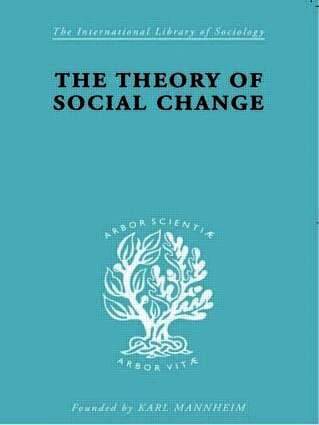
Theory of Social Change
Av John McLeish
Inbunden, 1998
3055 kr
Lägg i varukorg
This is Volume XIX of twenty-two in the Social Theory and Methodology series. First published in 1969, this study looks at four views of the theory of social change and is intended for students in social studies, education and social psychology at university level.
Theory of Social Change
Av John McLeish
Häftad, 2010
747 kr
Lägg i varukorg
This is Volume XIX of twenty-two in the Social Theory and Methodology series. First published in 1969, this study looks at four views of the theory of social change and is intended for students in social studies, education and social psychology at university level.
The Story of Numbers: How Mathematics Has Shaped Civilization
Av John McLeish
Häftad, 1994
275 kr
Lägg i varukorg
Theory of Social Change
Av John McLeish
E-bok, 2013
883 kr
Lägg i varukorg
This is Volume XIX of twenty-two in the Social Theory and Methodology series. First published in 1969, this study looks at four views of the theory of social change and is intended for students in social studies, education and social psychology at university level.
Theory of Social Change
Av John McLeish
E-bok, 2013
883 kr
Lägg i varukorg
This is Volume XIX of twenty-two in the Social Theory and Methodology series. First published in 1969, this study looks at four views of the theory of social change and is intended for students in social studies, education and social psychology at university level.
Soviet Psychology
History, Theory, Content
Av John McLeish
Inbunden, 2016
2433 kr
Lägg i varukorg
Originally published in 1975, this title sets out to show us the differences between Soviet and other ways of thinking about nature, man, and society. The basic factor distinguishing Soviet psychology is that it views phenomena from the perspective of a highly articulated body of theoretical …
Soviet Psychology
History, Theory, Content
Av John McLeish
Häftad, 2017
599 kr
Lägg i varukorg
Originally published in 1975, this title sets out to show us the differences between Soviet and other ways of thinking about nature, man, and society. The basic factor distinguishing Soviet psychology is that it views phenomena from the perspective of a highly articulated body of theoretical …
Evangelical Religion and Popular Education
A Modern Interpretation
Av John McLeish
Inbunden, 2016
2126 kr
Lägg i varukorg
Under the influence of the evangelical movement in the 18th and early 19th centuries education, in one form or another, was brought to a vast number of people in England and Wales. Originally published in 1969, it is this phenomenon that forms the subject of Dr McLeish’s book. The two central …
Evangelical Religion and Popular Education
A Modern Interpretation
Av John McLeish
Häftad, 2017
617 kr
Lägg i varukorg
Under the influence of the evangelical movement in the 18th and early 19th centuries education, in one form or another, was brought to a vast number of people in England and Wales. Originally published in 1969, it is this phenomenon that forms the subject of Dr McLeish’s book. The two central …
Psychology of the Learning Group
Av John McLeish, Wayne Matheson m. fl.
Inbunden, 2015
2504 kr
Lägg i varukorg
Originally published in 1973, this work takes a hard look at the claims made for the small group as a learning medium (lecture, structured discussion, ‘sensitivity’, training groups etc.). Various theories of group dynamics, leadership function and learning process are looked at critically on the …
Psychology of the Learning Group
Av John McLeish, Wayne Matheson m. fl.
Häftad, 2017
747 kr
Lägg i varukorg
Originally published in 1973, this work takes a hard look at the claims made for the small group as a learning medium (lecture, structured discussion, ‘sensitivity’, training groups etc.). Various theories of group dynamics, leadership function and learning process are looked at critically on the …
Evangelical Religion and Popular Education
A Modern Interpretation
Av John McLeish
E-bok, 2019
749 kr
Lägg i varukorg
Under the influence of the evangelical movement in the 18th and early 19th centuries education, in one form or another, was brought to a vast number of people in England and Wales. Originally published in 1969, it is this phenomenon that forms the subject of Dr McLeish’s book. The two central …
Evangelical Religion and Popular Education
A Modern Interpretation
Av John McLeish
E-bok, 2019
749 kr
Lägg i varukorg
Under the influence of the evangelical movement in the 18th and early 19th centuries education, in one form or another, was brought to a vast number of people in England and Wales. Originally published in 1969, it is this phenomenon that forms the subject of Dr McLeish’s book. The two central …
Soviet Psychology
History, Theory, Content
Av John McLeish
E-bok, 2015
749 kr
Lägg i varukorg
Originally published in 1975, this title sets out to show us the differences between Soviet and other ways of thinking about nature, man, and society. The basic factor distinguishing Soviet psychology is that it views phenomena from the perspective of a highly articulated body of theoretical …
Soviet Psychology
History, Theory, Content
Av John McLeish
E-bok, 2015
707 kr
Lägg i varukorg
Originally published in 1975, this title sets out to show us the differences between Soviet and other ways of thinking about nature, man, and society. The basic factor distinguishing Soviet psychology is that it views phenomena from the perspective of a highly articulated body of theoretical …
Psychology of the Learning Group
Av James Park, Wayne Matheson m. fl.
E-bok, 2015
883 kr
Lägg i varukorg
Originally published in 1973, this work takes a hard look at the claims made for the small group as a learning medium (lecture, structured discussion, ‘sensitivity’, training groups etc.). Various theories of group dynamics, leadership function and learning process are looked at critically on the …
Psychology of the Learning Group
Av James Park, Wayne Matheson m. fl.
E-bok, 2015
864 kr
Lägg i varukorg
Originally published in 1973, this work takes a hard look at the claims made for the small group as a learning medium (lecture, structured discussion, ‘sensitivity’, training groups etc.). Various theories of group dynamics, leadership function and learning process are looked at critically on the …