John Murungi - Böcker
Visar alla böcker från författaren John Murungi. Handla med fri frakt och snabb leverans.
16 produkter
16 produkter
1 930 kr
Skickas inom 10-15 vardagar
This book is a philosophical inquiry into indigenous African legal ethics, asking what is African about African legal ethics?Taking us beyond a geographical understanding of Africa, the author argues for an African legal ethics that is distinct from non-African African legal ethics which are rooted in Euro-Western constructions. De-silencing African voices on African legal ethics this book decolonizes the prevailing wisdom on legal ethics and broadens our understanding of how law in Africa bears on ethics in Africa or, conversely, on how ethics bears on law in Africa.This book will be of interest to scholars of African philosophy, philosophy of law, and legal ethics.
620 kr
Skickas inom 10-15 vardagar
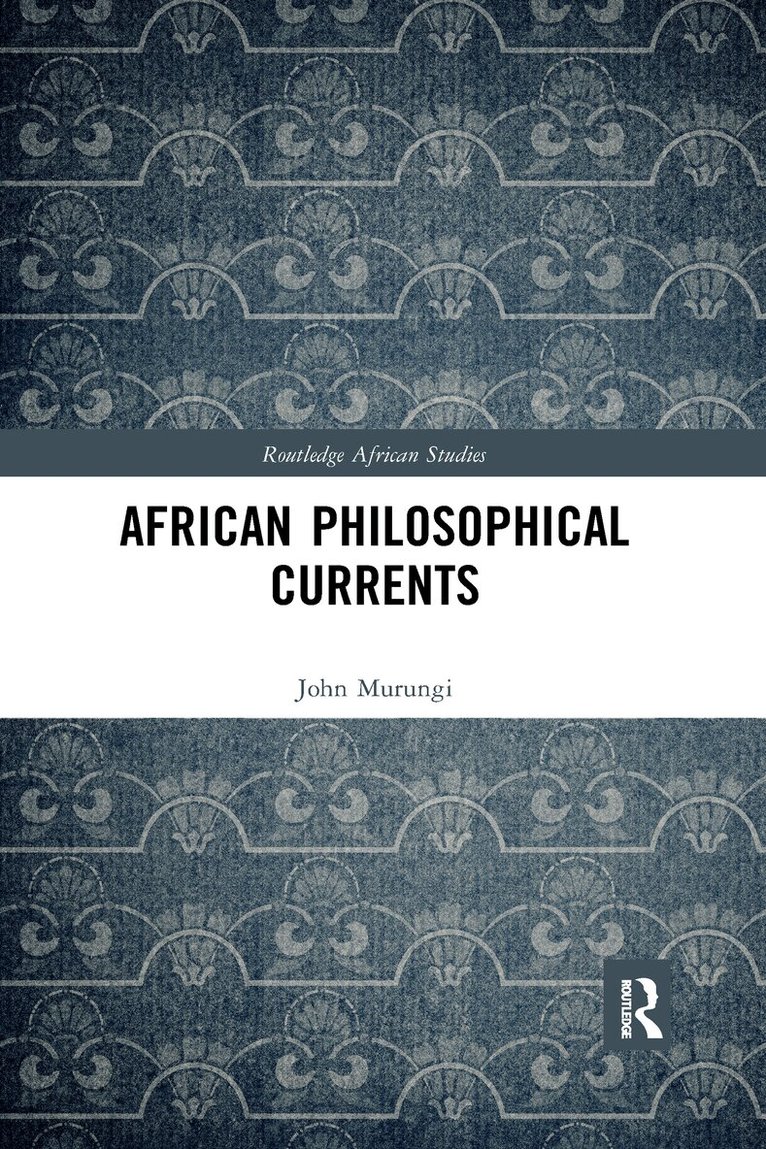
The history of the human world has reached a stage where no philosophical community can any longer philosophize in isolation from other philosophical communities. The African philosophical community is not an exception and neither is any other philosophical community. There is a widespread notion in the West that philosophy originated in Greece and found its way throughout Europe, from where it migrated to Africa. This book argues that Philosophy did not migrate to African from anywhere but that it is radically native to all communities.The chapters cover the erasure of African philosophy, African philosophical departures, the threat that Christianity has posed to African philosophy, African legal philosophy, African musical aesthetics and connections with classical philosophy. Arguing that the landscape of philosophy has a place not only for Africans but also for all human beings and that African philosophers are among the architects of this landscape, this book is an important read for scholars and students of African philosophy.
Transformations of Urban and Suburban Landscapes
Perspectives from Philosophy, Geography, and Architecture
Häftad, Engelska, 2002
568 kr
Skickas inom 10-15 vardagar
The study of landscape and place has become an increasingly fertile realm of inquiry in the humanities and social sciences. In this new book of essays, selected from presentations at the first annual meeting of the Society for Philosophy and Geography, scholars investigate the experiences and meanings that inscribe urban and suburban landscapes. Gary Backhaus and John Murungi bring philosophy and geography into a dialogue with a host of other disciplines to explore a fundamental dialectic: while our collective and personal activity modifies the landscape, in turn, the landscape modifies human identities, and social and environmental relations. Whether proposing a peripatetic politics, conducting a sociological analysis of building security systems, or critically examining the formation of New York City's municipal parks, each essay sheds distinctive light on this fascinating and engaging aspect of contemporary environmental studies.
665 kr
Skickas inom 5-8 vardagar
This collection explores the various forms of narrative, semiotic, and technological mediation that shape the experience of place. From the East End of London to Navajo lands to Ground Zero, Lived Topographies examines the great effect of language, mass media, surveillance, and other incursions of the contemporary world on topographical experience and description. Gary Backhaus and John Murungi have assembled a wide array of scholars to provide an interdisciplinary approach to this subject, giving this rich, focused collection a unique perspective on the phenomenology of place.
1 331 kr
Skickas inom 5-8 vardagar
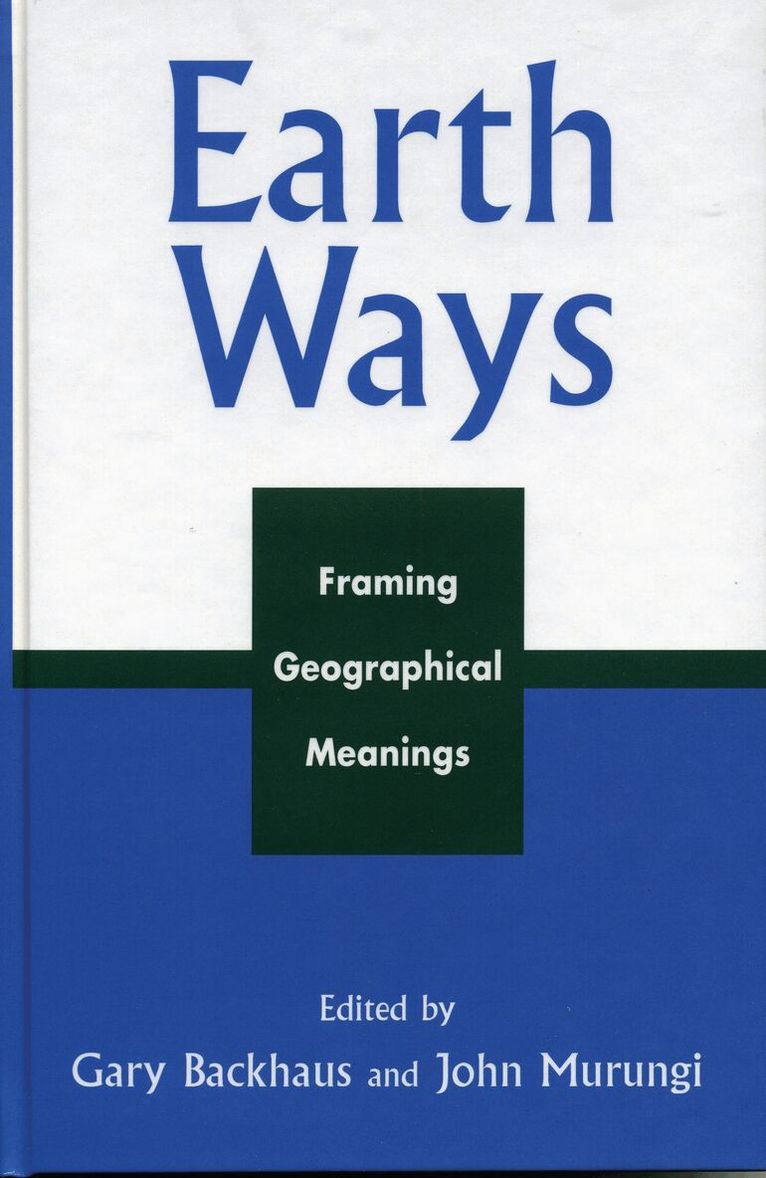
What is the connection between anthropology, philosophy, and geography? How does one locate the connection? Can a juncture between these disciplines also accommodate history, sociology and other applied and theoretical forms of knowledge? In Earth Ways: Framing Geographical Meanings, editors Gary Backhaus and John Murungi challenge their contributors to find the location that would enable them to bridge their "home disciplines" to philosophical and geographical thought. This represents no easy task. Essayists are charged with building a set of conceptual bridges and what emerges is a unique co-joined topography; sets of ideas united by a painstaking and rigorous interdisciplinary framework. Earth Ways is a salient rendering of interdisciplinary thought in contemporary humanities and social sciences scholarship.
1 076 kr
Skickas inom 10-15 vardagar
A book on legal philosophy, necessarily, focuses attention on law. In addition to this focus, An Introduction to an African Legal Philosophy focuses attention on philosophy. The link between law and philosophy is brought into relief, which is done through an African context. An attempt is made to spell out what is African about legal philosophy without being cut off of African legal philosophy from non-African legal philosophy. The book draws attention to the view that a basic component of African legal philosophy consists of an investigation of what it is to be an African, and because an African is a human being among other human beings, the investigation is about what it is to be a human being. Ubuntuism is an African-derived word that captures this mode of being human. Moreover, because human beings are cultural beings, African cultural context guides the investigation. Inescapably, it is claimed that, every legal philosophy is embedded in a culture. African legal philosophy is not an exception. It is deeply rooted in African culture –a culture that is today shaped, in part, by a European colonialist culture. One feature that will strike one as one reads the book is that the book approaches African legal philosophy as a means of decolonization of African culture. African legal philosophy can accomplish this intelligently and effectively if it is itself decolonized. In doing this it contrasts sharply with mainstream Western legal philosophy.
2 098 kr
Skickas inom 10-15 vardagar
The history of the human world has reached a stage where no philosophical community can any longer philosophize in isolation from other philosophical communities. The African philosophical community is not an exception and neither is any other philosophical community. There is a widespread notion in the West that philosophy originated in Greece and found its way throughout Europe, from where it migrated to Africa. This book argues that Philosophy did not migrate to African from anywhere but that it is radically native to all communities.The chapters cover the erasure of African philosophy, African philosophical departures, the threat that Christianity has posed to African philosophy, African legal philosophy, African musical aesthetics and connections with classical philosophy. Arguing that the landscape of philosophy has a place not only for Africans but also for all human beings and that African philosophers are among the architects of this landscape, this book is an important read for scholars and students of African philosophy.
567 kr
Skickas inom 10-15 vardagar
This book is a philosophical inquiry into indigenous African legal ethics, asking what is African about African legal ethics?Taking us beyond a geographical understanding of Africa, the author argues for an African legal ethics that is distinct from non-African African legal ethics which are rooted in Euro-Western constructions. De-silencing African voices on African legal ethics this book decolonizes the prevailing wisdom on legal ethics and broadens our understanding of how law in Africa bears on ethics in Africa or, conversely, on how ethics bears on law in Africa.This book will be of interest to scholars of African philosophy, philosophy of law, and legal ethics.
3 149 kr
Skickas inom 10-15 vardagar
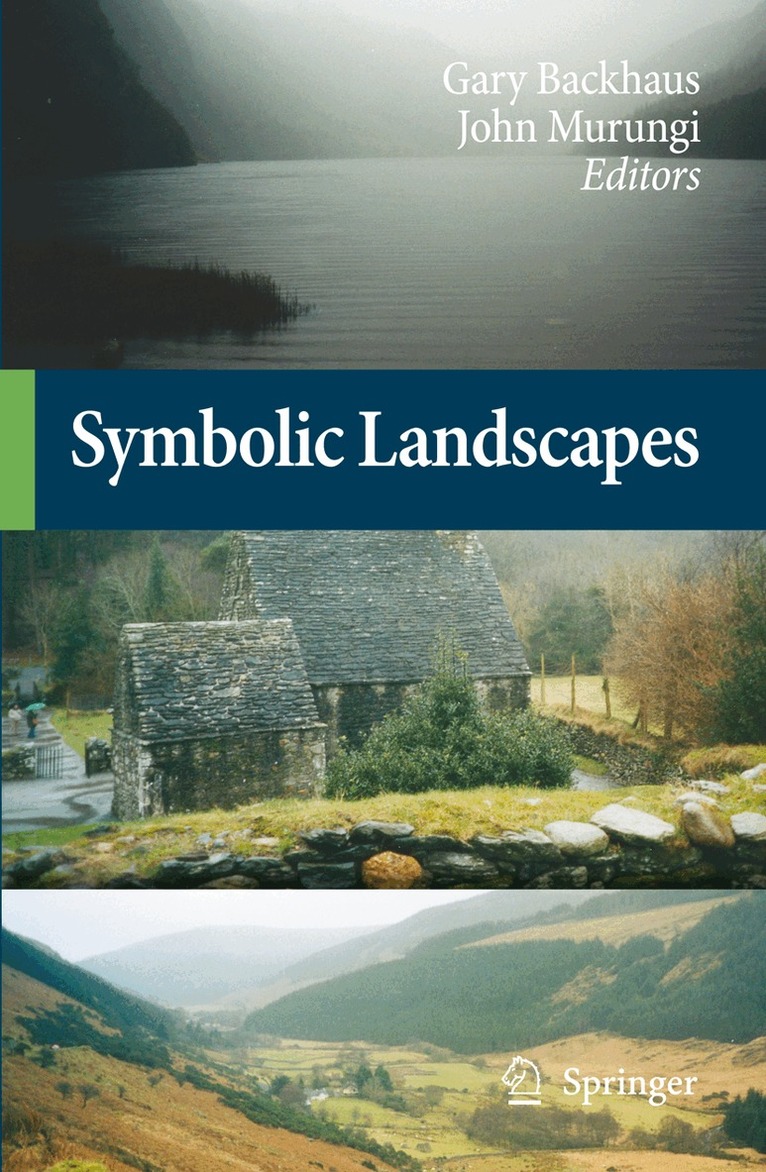
Symbolic Landscapes presents a definitive collection of landscape/place studies that explores symbolic, cultural levels of geographical meanings. Essays written by philosophers, geographers, architects, social scientists, art historians, and literati, bring specific modes of expertise and perspectives to this transdisciplinary and interdisciplinary study of the symbolic level human existential spatiality. Placing emphasis on the pre-cognitive genesis of symbolic meaning, as well as embodied, experiential (lived) geography, the volume offers a fresh, quasi-phenomenological approach.The editors articulate the epistemological doctrine that perception and imagination form a continuum in which both are always implicated as complements. This approach makes a case for the interrelation of the geography of perception and the geography of imagination, which means that human/cultural geography offers only an abstraction if indeed an aesthetic geography is constituted merely as a sub-field. Human/cultural geography can only approach spatial reality through recognizing the intimate interrelative dialectic between the imaginative and perceptual meanings of our landscapes/place-worlds. This volume reinvigorates the importance of the topic of symbolism in human/cultural geography, landscape studies, philosophy of place, architecture and planning, and will stand among the classics in the field.
675 kr
Skickas inom 10-15 vardagar
A book on legal philosophy, necessarily, focuses attention on law. In addition to this focus, An Introduction to an African Legal Philosophy focuses attention on philosophy. The link between law and philosophy is brought into relief, which is done through an African context. An attempt is made to spell out what is African about legal philosophy without being cut off of African legal philosophy from non-African legal philosophy. The book draws attention to the view that a basic component of African legal philosophy consists of an investigation of what it is to be an African, and because an African is a human being among other human beings, the investigation is about what it is to be a human being. Ubuntuism is an African-derived word that captures this mode of being human. Moreover, because human beings are cultural beings, African cultural context guides the investigation. Inescapably, it is claimed that, every legal philosophy is embedded in a culture. African legal philosophy is not an exception. It is deeply rooted in African culture –a culture that is today shaped, in part, by a European colonialist culture. One feature that will strike one as one reads the book is that the book approaches African legal philosophy as a means of decolonization of African culture. African legal philosophy can accomplish this intelligently and effectively if it is itself decolonized. In doing this it contrasts sharply with mainstream Western legal philosophy.
1 009 kr
Skickas inom 10-15 vardagar
African Philosophical Adventures presents African philosophy as a convergence wherein what is African, what is philosophy, and what is an adventure enter an inter-relational and reciprocal process, each giving birth to the others. Philosophy, whether African or non-African, is an open-ended process. There is no finality in what it says about itself or about the subject matter that it investigates. John Murungi uses this sense of philosophy to guide the chapters in this book. The word “adventure” bears this sense of philosophy, and the same time informs what is to be understood as African philosophy. The singularity of African philosophy, as well as its link to other branches of philosophy, is subject to adventure. Readers of this book who are themselves adventurers in the world of philosophy will benefit greatly. For those who are not already so, it will be an invitation to undertake such an adventure.
1 281 kr
Skickas inom 10-15 vardagar
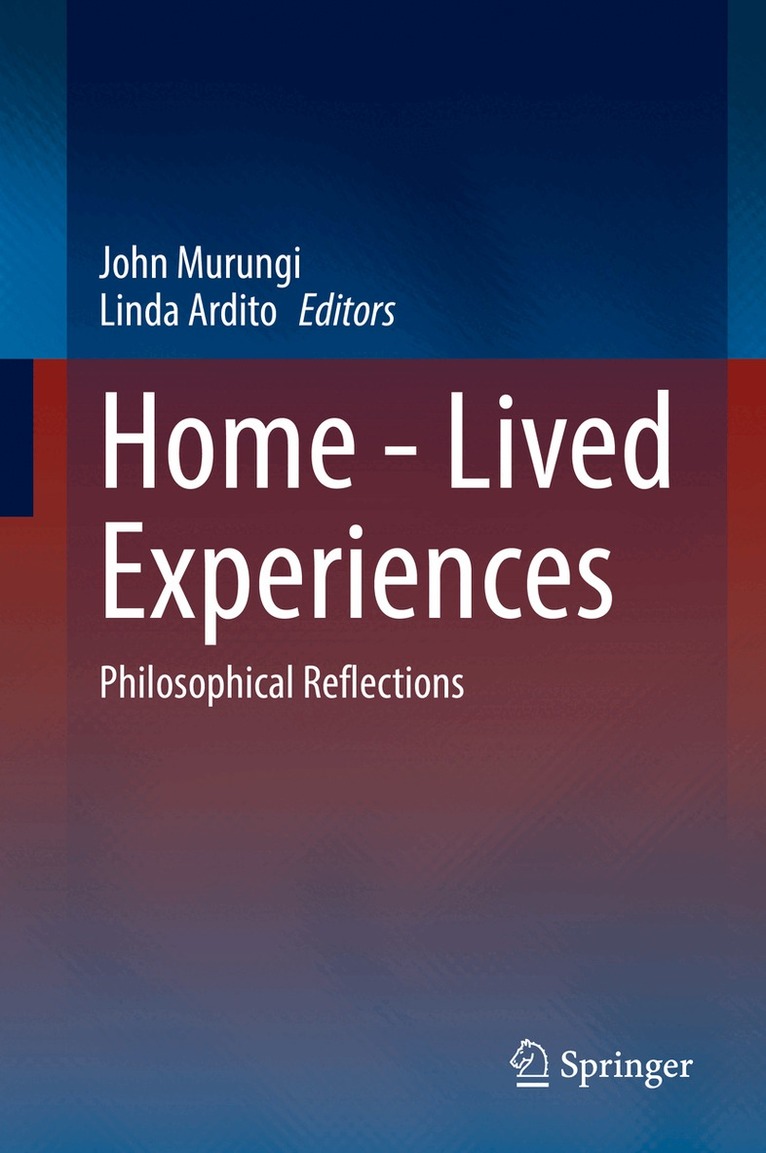
Being at home or not is typically a matter of being at a place or not, where such a place is carved out of space and designated as such.
1 281 kr
Skickas inom 10-15 vardagar
Being at home or not is typically a matter of being at a place or not, where such a place is carved out of space and designated as such.
963 kr
Skickas inom 10-15 vardagar
The illumination of African philosophy offered in this volume leads to the illumination of philosophy in general. Illuminating arises as an essential task of philosophy, whether African or not. What is illuminated is not already there, but is constituted at the moment of illumination. This book invites the reader to participate in the illuminating work of philosophy and necessarily, thereby, to contribute to his or her own self-constituting self-illumination. Although the focus is on African philosophy, the book also bridges the gap between African philosophy and other branches. Today more than ever, a bridging philosophy is called for, and this book helps to meet that need.This book poses philosophical questions such as who is an African and what Africa is, and seeks philosophical answers. In doing so, it contributes to the ongoing discourse on African philosophy. It addresses such issues as the African grounding of philosophy, the difference between African and Black philosophy, the African body, African art as expressed in and by Chiwara, the plight of African trees as the plight of Africans, and the symbolic meaning of Robben Island.
963 kr
Skickas inom 10-15 vardagar
It addresses such issues as the African grounding of philosophy, the difference between African and Black philosophy, the African body, African art as expressed in and by Chiwara, the plight of African trees as the plight of Africans, and the symbolic meaning of Robben Island.
3 162 kr
Skickas inom 10-15 vardagar
Symbolic Landscapes presents a definitive collection of landscape/place studies that explores symbolic, cultural levels of geographical meanings. Essays written by philosophers, geographers, architects, social scientists, art historians, and literati, bring specific modes of expertise and perspectives to this transdisciplinary and interdisciplinary study of the symbolic level human existential spatiality. Placing emphasis on the pre-cognitive genesis of symbolic meaning, as well as embodied, experiential (lived) geography, the volume offers a fresh, quasi-phenomenological approach.The editors articulate the epistemological doctrine that perception and imagination form a continuum in which both are always implicated as complements. This approach makes a case for the interrelation of the geography of perception and the geography of imagination, which means that human/cultural geography offers only an abstraction if indeed an aesthetic geography is constituted merely as a sub-field. Human/cultural geography can only approach spatial reality through recognizing the intimate interrelative dialectic between the imaginative and perceptual meanings of our landscapes/place-worlds. This volume reinvigorates the importance of the topic of symbolism in human/cultural geography, landscape studies, philosophy of place, architecture and planning, and will stand among the classics in the field.