John P. Hoffmann - Böcker
Visar alla böcker från författaren John P. Hoffmann. Handla med fri frakt och snabb leverans.
6 produkter
6 produkter
1 053 kr
Skickas inom 10-15 vardagar
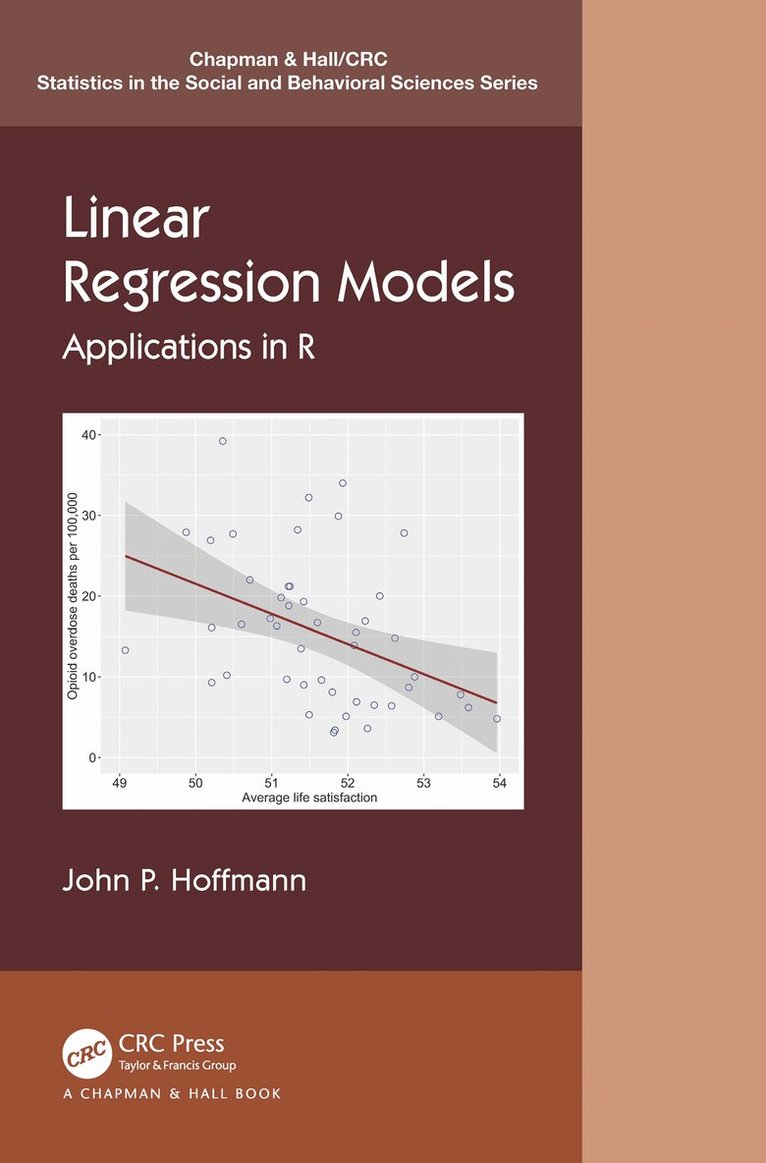
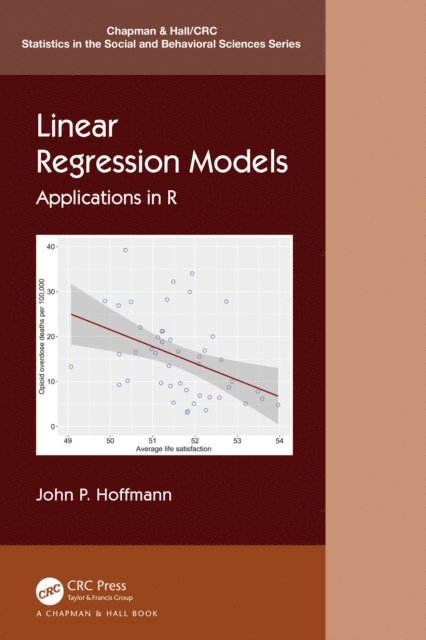
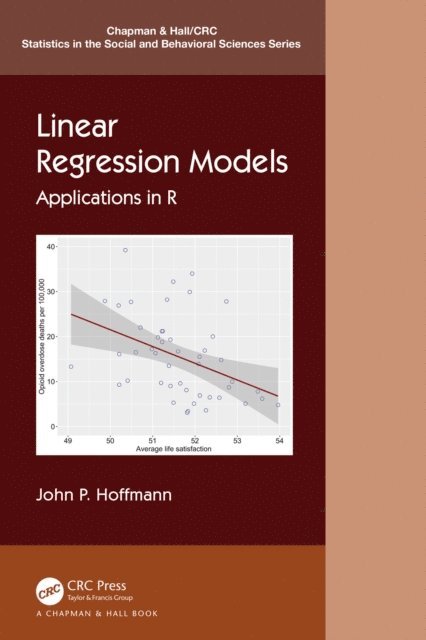
Research in social and behavioral sciences has benefited from linear regression models (LRMs) for decades to identify and understand the associations among a set of explanatory variables and an outcome variable. Linear Regression Models: Applications in R provides you with a comprehensive treatment of these models and indispensable guidance about how to estimate them using the R software environment.After furnishing some background material, the author explains how to estimate simple and multiple LRMs in R, including how to interpret their coefficients and understand their assumptions. Several chapters thoroughly describe these assumptions and explain how to determine whether they are satisfied and how to modify the regression model if they are not. The book also includes chapters on specifying the correct model, adjusting for measurement error, understanding the effects of influential observations, and using the model with multilevel data. The concluding chapter presents an alternative model—logistic regression—designed for binary or two-category outcome variables. The book includes appendices that discuss data management and missing data and provides simulations in R to test model assumptions.Features Furnishes a thorough introduction and detailed information about the linear regression model, including how to understand and interpret its results, test assumptions, and adapt the model when assumptions are not satisfied. Uses numerous graphs in R to illustrate the model’s results, assumptions, and other features. Does not assume a background in calculus or linear algebra, rather, an introductory statistics course and familiarity with elementary algebra are sufficient. Provides many examples using real-world datasets relevant to various academic disciplines. Fully integrates the R software environment in its numerous examples.The book is aimed primarily at advanced undergraduate and graduate students in social, behavioral, health sciences, and related disciplines, taking a first course in linear regression. It could also be used for self-study and would make an excellent reference for any researcher in these fields. The R code and detailed examples provided throughout the book equip the reader with an excellent set of tools for conducting research on numerous social and behavioral phenomena.John P. Hoffmann is a professor of sociology at Brigham Young University where he teaches research methods and applied statistics courses and conducts research on substance use and criminal behavior.
2 656 kr
Skickas inom 10-15 vardagar
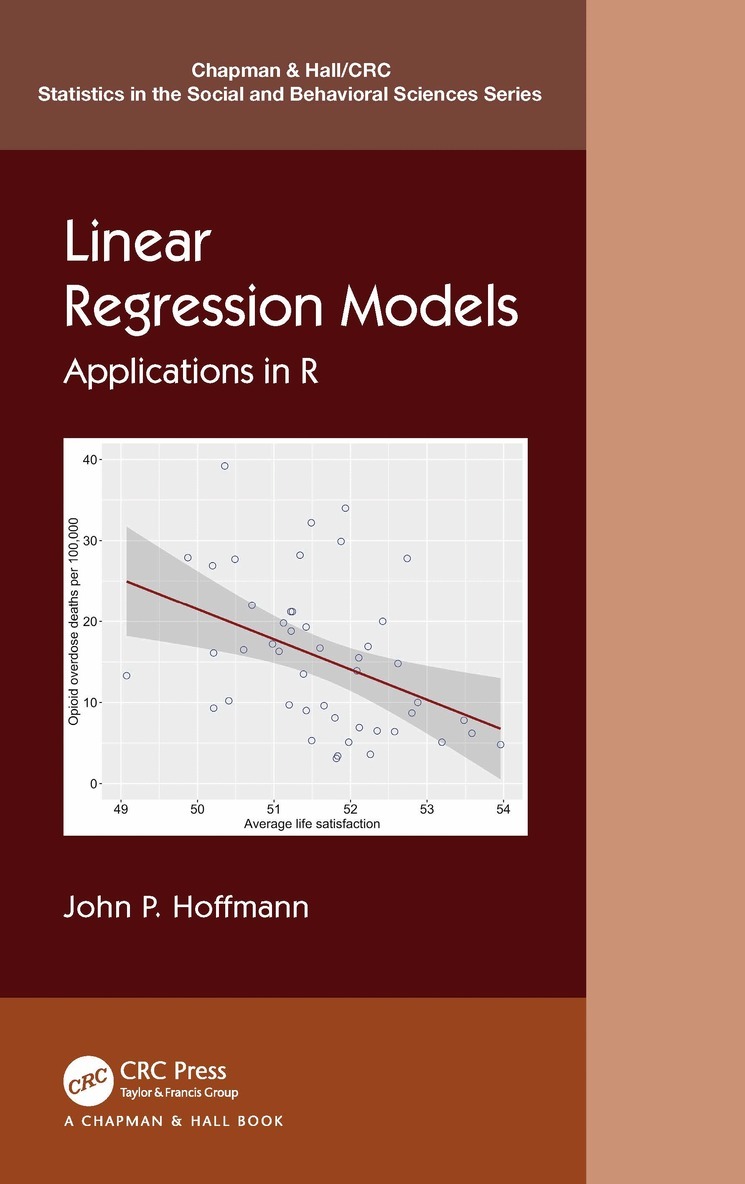
Research in social and behavioral sciences has benefited from linear regression models (LRMs) for decades to identify and understand the associations among a set of explanatory variables and an outcome variable. Linear Regression Models: Applications in R provides you with a comprehensive treatment of these models and indispensable guidance about how to estimate them using the R software environment.After furnishing some background material, the author explains how to estimate simple and multiple LRMs in R, including how to interpret their coefficients and understand their assumptions. Several chapters thoroughly describe these assumptions and explain how to determine whether they are satisfied and how to modify the regression model if they are not. The book also includes chapters on specifying the correct model, adjusting for measurement error, understanding the effects of influential observations, and using the model with multilevel data. The concluding chapter presents an alternative model—logistic regression—designed for binary or two-category outcome variables. The book includes appendices that discuss data management and missing data and provides simulations in R to test model assumptions.Features Furnishes a thorough introduction and detailed information about the linear regression model, including how to understand and interpret its results, test assumptions, and adapt the model when assumptions are not satisfied. Uses numerous graphs in R to illustrate the model’s results, assumptions, and other features. Does not assume a background in calculus or linear algebra, rather, an introductory statistics course and familiarity with elementary algebra are sufficient. Provides many examples using real-world datasets relevant to various academic disciplines. Fully integrates the R software environment in its numerous examples.The book is aimed primarily at advanced undergraduate and graduate students in social, behavioral, health sciences, and related disciplines, taking a first course in linear regression. It could also be used for self-study and would make an excellent reference for any researcher in these fields. The R code and detailed examples provided throughout the book equip the reader with an excellent set of tools for conducting research on numerous social and behavioral phenomena.John P. Hoffmann is a professor of sociology at Brigham Young University where he teaches research methods and applied statistics courses and conducts research on substance use and criminal behavior.
Regression Models for Categorical, Count, and Related Variables
An Applied Approach
Häftad, Engelska, 2016
521 kr
Skickas inom 7-10 vardagar
Social science and behavioral science students and researchers are often confronted with data that are categorical, count a phenomenon, or have been collected over time. Sociologists examining the likelihood of interracial marriage, political scientists studying voting behavior, criminologists counting the number of offenses people commit, health scientists studying the number of suicides across neighborhoods, and psychologists modeling mental health treatment success are all interested in outcomes that are not continuous. Instead, they must measure and analyze these events and phenomena in a discrete manner. This book provides an introduction and overview of several statistical models designed for these types of outcomes - all presented with the assumption that the reader has only a good working knowledge of elementary algebra and has taken introductory statistics and linear regression analysis. Numerous examples from the social sciences demonstrate the practical applications of these models.The chapters address logistic and probit models, including those designed for ordinal and nominal variables, regular and zero-inflated Poisson and negative binomial models, event history models, models for longitudinal data, multilevel models, and data reduction techniques such as principal components and factor analysis. Each chapter discusses how to utilize the models and test their assumptions with the statistical software Stata, and also includes exercise sets so readers can practice using these techniques. Appendices show how to estimate the models in SAS, SPSS, and R; provide a review of regression assumptions using simulations; and discuss missing data. A companion website includes downloadable versions of all the data sets used in the book.
283 kr
Skickas inom 7-10 vardagar
The world is saturated with data. We are regularly presented with data in words, tables, and graphics. Students from many academic fields are now expected to be educated about data in one form or another. Yet the typical sequence of courses-introductory statistics and research methods-does not provide sufficient information about how to focus in on a research question, how to access data and work with datasets, or how to present data to various audiences. Principles of Data Management and Presentation addresses this gap.Assuming only that students have some familiarity with basic statistics and research methods, it provides a comprehensive set of principles for understanding and using data as part of a research project, including: * how to narrow a research topic to a specific research question * how to access and organize data that are useful for answering a research question * how to use software such as Stata, SPSS, and SAS to manage data * how to present data so that they convey a clear and effective message A companion website includes material to enhance the learning experience-specifically statistical software code and the datasets used in the examples, in text format as well as Stata, SPSS, and SAS formats. Visit www.ucpress.edu/go/datamanagement, Downloads tab.
758 kr
Skickas inom 7-10 vardagar
The world is saturated with data. We are regularly presented with data in words, tables, and graphics. Students from many academic fields are now expected to be educated about data in one form or another. Yet the typical sequence of courses-introductory statistics and research methods-does not provide sufficient information about how to focus in on a research question, how to access data and work with datasets, or how to present data to various audiences. Principles of Data Management and Presentation addresses this gap.Assuming only that students have some familiarity with basic statistics and research methods, it provides a comprehensive set of principles for understanding and using data as part of a research project, including: * how to narrow a research topic to a specific research question * how to access and organize data that are useful for answering a research question * how to use software such as Stata, SPSS, and SAS to manage data * how to present data so that they convey a clear and effective message A companion website includes material to enhance the learning experience-specifically statistical software code and the datasets used in the examples, in text format as well as Stata, SPSS, and SAS formats. Visit www.ucpress.edu/go/datamanagement, Downloads tab.
1 343 kr
Skickas inom 10-15 vardagar
The Church of Jesus Christ of Latter-day Saints, more commonly known as the Mormon Church, is quickly becoming a global religion with more than 12 million members worldwide. In Japan, the number of official members has more than doubled since 1980. Yet this impressive growth has not been accompanied by research on Japanese Mormons. What attracts Japanese people, most of whom have little experience with Christianity, to an American faith? How are their lives as Japanese people affected by the Mormon Church? Based on research in a small congregation in northern Japan and in-depth interviews with foreign missionaries, Japanese Saints is the first book to provide an in-depth, qualitative examination of what it is like to be a Japanese Mormon. Hoffmann pays particular attention to how members joined the LDS Church, how it has affected relationships with family and friends, and what membership in the Church entails.