John R. Hodges – författare
Visar alla böcker från författaren John R. Hodges. Handla med fri frakt och snabb leverans.
4 produkter
4 produkter
E-bok
PDF, Engelska, 2017679 kr
Läs direkt efter köp
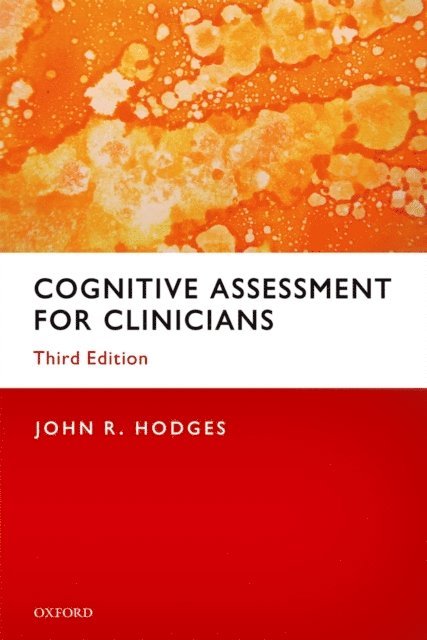
The third edition of the best-selling Cognitive Assessment for Clinicians provides readers with an up-to-date, practical guide to cognitive function and its assessment to ensure readers have a conceptual knowledge of normal psychological function and how to interpret their findings. Organized into 8 chapters, this resource offers a framework in which various aspects of cognition are considered. This includes the representation of cognition in the brain (such as attention and memory), focal representation (such as language, praxis and spatial abilities), detailed descriptions of the major syndromes encountered in clinical practice, and discussions on taking a patient''s history and performing cognitive testing. To ensure readers are aware of the latest developments in patient assessment and neuropsychological practice all content has been carefully revised by John R. Hodges to include essential updates on areas such as the pathology and genetics of frontotemporal dementia, and social cognition and major syndromes encountered in clinical practice such as delirium. This useful resource offers a theoretical basis for cognitive assessment at the bedside or in the clinic, and a practical guide to taking an appropriate history and examining patients presenting with cognitive disorders. This edition also includes the latest version of Addenbrooke''s Cognitive Examination III (ACE-III), and 16 case histories on a variety of cognitive disorders illustrating the method of assessment and how to use the ACE-III in clinical practice. In addition, the appendix outlines the range of formal tests commonly used in neuropsychological practice.
E-bok
Engelska, 2017679 kr
Läs direkt efter köp
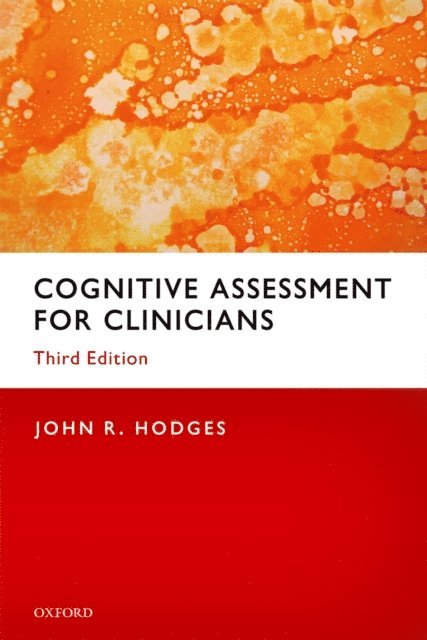
The third edition of the best-selling Cognitive Assessment for Clinicians provides readers with an up-to-date, practical guide to cognitive function and its assessment to ensure readers have a conceptual knowledge of normal psychological function and how to interpret their findings. Organized into 8 chapters, this resource offers a framework in which various aspects of cognition are considered. This includes the representation of cognition in the brain (such as attention and memory), focal representation (such as language, praxis and spatial abilities), detailed descriptions of the major syndromes encountered in clinical practice, and discussions on taking a patient''s history and performing cognitive testing. To ensure readers are aware of the latest developments in patient assessment and neuropsychological practice all content has been carefully revised by John R. Hodges to include essential updates on areas such as the pathology and genetics of frontotemporal dementia, and social cognition and major syndromes encountered in clinical practice such as delirium. This useful resource offers a theoretical basis for cognitive assessment at the bedside or in the clinic, and a practical guide to taking an appropriate history and examining patients presenting with cognitive disorders. This edition also includes the latest version of Addenbrooke''s Cognitive Examination III (ACE-III), and 16 case histories on a variety of cognitive disorders illustrating the method of assessment and how to use the ACE-III in clinical practice. In addition, the appendix outlines the range of formal tests commonly used in neuropsychological practice.
Häftad, Engelska, 2017
1 164 kr
Skickas inom 5-8 vardagar
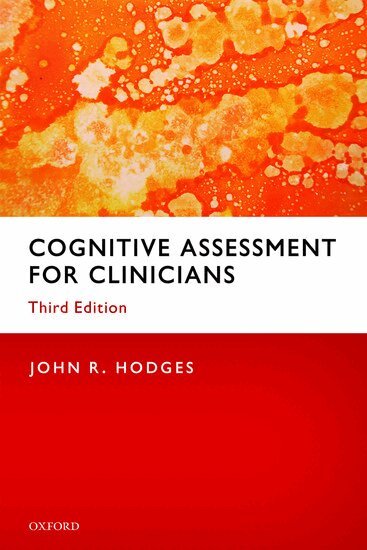
The third edition of the best-selling Cognitive Assessment for Clinicians provides readers with an up-to-date, practical guide to cognitive function and its assessment to ensure readers have a conceptual knowledge of normal psychological function and how to interpret their findings. Organized into 8 chapters, this resource offers a framework in which various aspects of cognition are considered. This includes the representation of cognition in the brain (such as attention and memory), focal representation (such as language, praxis and spatial abilities), detailed descriptions of the major syndromes encountered in clinical practice, and discussions on taking a patient's history and performing cognitive testing. To ensure readers are aware of the latest developments in patient assessment and neuropsychological practice all content has been carefully revised by John R. Hodges to include essential updates on areas such as the pathology and genetics of frontotemporal dementia, and social cognition and major syndromes encountered in clinical practice such as delirium. This useful resource offers a theoretical basis for cognitive assessment at the bedside or in the clinic, and a practical guide to taking an appropriate history and examining patients presenting with cognitive disorders. This edition also includes the latest version of Addenbrooke's Cognitive Examination III (ACE-III), and 16 case histories on a variety of cognitive disorders illustrating the method of assessment and how to use the ACE-III in clinical practice. In addition, the appendix outlines the range of formal tests commonly used in neuropsychological practice.
Häftad, Engelska, 2000
1 543 kr
Skickas inom 7-10 vardagar
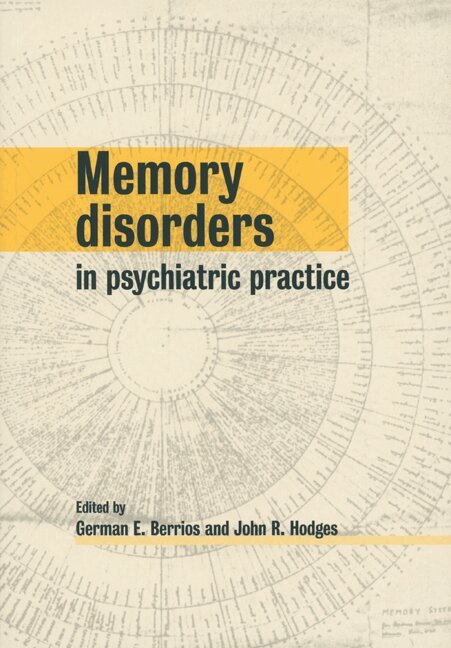
Memory complaints are a frequent feature of psychiatric disorder, even in the absence of organic disease. In this practical reference for the clinician, first published in 2000, German Berrios and John Hodges lead an international team of eminent psychiatrists, behavioural neurologists and clinical psychologists to focus on the psychiatric and organic aspects of memory disorders from the perspective of the multidisciplinary memory clinic. These disorders include organic syndromes such as the dementias, the amnesic syndrome and transient amnestic states, and also psychiatric aspects of memory disorders in the functional psychoses. Among the specific topics reviewed are the paramnesias, conditions such as déj... vu, flashbulb and flashback memories, and the problems of recovered, false and feigned memories. Throwing light on established conditions, and also introducing two new syndromes, this book makes a major contribution to the understanding and clinical management of memory disorders in psychiatry, neuropsychology and other disciplines.