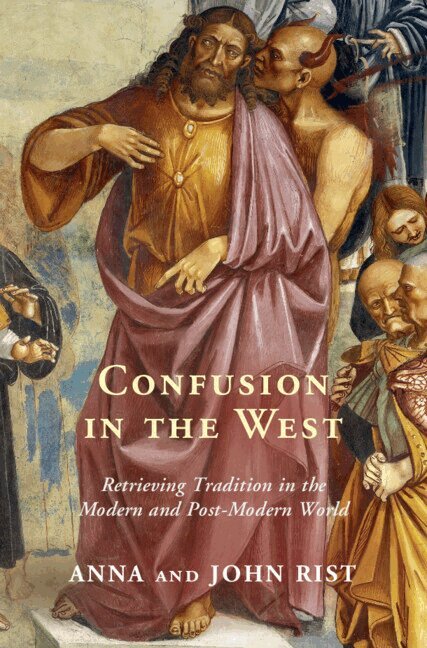
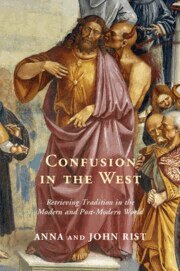
In their trenchant panoramic overview - ranging from antiquity to the present-day - John and Anna Rist write with authority and ennui about nothing less than the loss of the foundational culture of the West. The authors characterize this culture as the 'original tradition', viewing its erosion as one which has led to anxiety about the entire value of Western thought. The causes of the disintegration are discussed with an intensity rare in academe. Critics of modernity ordinarily concentrate on the Enlightenment and the book certainly offers deep analysis of Enlightenment thought. But it goes further. Thus the cruelty of modern totalitarianism is now depicted as in the spirit of the French Revolution and its implacable hostility to a vanished primordial heritage, while scientism, bureaucracy and consumerism appear as the only rivals to a threatening nihilism. The book argues that Western thought has created a set of conflicting moral and spiritual customs: to the detriment of coherence, in individual minds as in society and culture.
In their trenchant panoramic overview – ranging from antiquity to the present-day – John and Anna Rist write with authority and ennui about nothing less than the loss of the foundational culture of the West. The authors characterize this culture as the ''original tradition'', viewing its erosion as one which has led to anxiety about the entire value of Western thought. The causes of the disintegration are discussed with an intensity rare in academe. Critics of modernity ordinarily concentrate on the Enlightenment and the book certainly offers deep analysis of Enlightenment thought. But it goes further. Thus the cruelty of modern totalitarianism is now depicted as in the spirit of the French Revolution and its implacable hostility to a vanished primordial heritage, while scientism, bureaucracy and consumerism appear as the only rivals to a threatening nihilism. The book argues that Western thought has created a set of conflicting moral and spiritual customs: to the detriment of coherence, in individual minds as in society and culture.
In their trenchant panoramic overview – ranging from antiquity to the present-day – John and Anna Rist write with authority and ennui about nothing less than the loss of the foundational culture of the West. The authors characterize this culture as the ''original tradition'', viewing its erosion as one which has led to anxiety about the entire value of Western thought. The causes of the disintegration are discussed with an intensity rare in academe. Critics of modernity ordinarily concentrate on the Enlightenment and the book certainly offers deep analysis of Enlightenment thought. But it goes further. Thus the cruelty of modern totalitarianism is now depicted as in the spirit of the French Revolution and its implacable hostility to a vanished primordial heritage, while scientism, bureaucracy and consumerism appear as the only rivals to a threatening nihilism. The book argues that Western thought has created a set of conflicting moral and spiritual customs: to the detriment of coherence, in individual minds as in society and culture.
In their trenchant panoramic overview – ranging from antiquity to the present-day – John and Anna Rist write with authority and ennui about nothing less than the loss of the foundational culture of the West. The authors characterize this culture as the 'original tradition', viewing its erosion as one which has led to anxiety about the entire value of Western thought. The causes of the disintegration are discussed with an intensity rare in academe. Critics of modernity ordinarily concentrate on the Enlightenment and the book certainly offers deep analysis of Enlightenment thought. But it goes further. Thus the cruelty of modern totalitarianism is now depicted as in the spirit of the French Revolution and its implacable hostility to a vanished primordial heritage, while scientism, bureaucracy and consumerism appear as the only rivals to a threatening nihilism. The book argues that Western thought has created a set of conflicting moral and spiritual customs: to the detriment of coherence, in individual minds as in society and culture.