John Seiffertt – författare
Visar alla böcker från författaren John Seiffertt. Handla med fri frakt och snabb leverans.
6 produkter
6 produkter
Inbunden, Engelska, 2017
844 kr
Skickas inom 10-15 vardagar
The book provides a bottom-up approach to understanding how a computer works and how to use computing to solve real-world problems. It covers the basics of digital logic through the lens of computer organization and programming. The reader should be able to design his or her own computer from the ground up at the end of the book. Logic simulation with Verilog is used throughout, assembly languages are introduced and discussed, and the fundamentals of computer architecture and embedded systems are touched upon, all in a cohesive design-driven framework suitable for class or self-study.
E-bok
Engelska, 2017708 kr
Läs direkt efter köp
The book provides a bottom-up approach to understanding how a computer works and how to use computing to solve real-world problems. It covers the basics of digital logic through the lens of computer organization and programming. The reader should be able to design his or her own computer from the ground up at the end of the book. Logic simulation with Verilog is used throughout, assembly languages are introduced and discussed, and the fundamentals of computer architecture and embedded systems are touched upon, all in a cohesive design-driven framework suitable for class or self-study.
Häftad, Engelska, 2018
565 kr
Skickas inom 10-15 vardagar
The book provides a bottom-up approach to understanding how a computer works and how to use computing to solve real-world problems. It covers the basics of digital logic through the lens of computer organization and programming. The reader should be able to design his or her own computer from the ground up at the end of the book. Logic simulation with Verilog is used throughout, assembly languages are introduced and discussed, and the fundamentals of computer architecture and embedded systems are touched upon, all in a cohesive design-driven framework suitable for class or self-study.
Del 6 - Adaptation, Learning, and Optimization
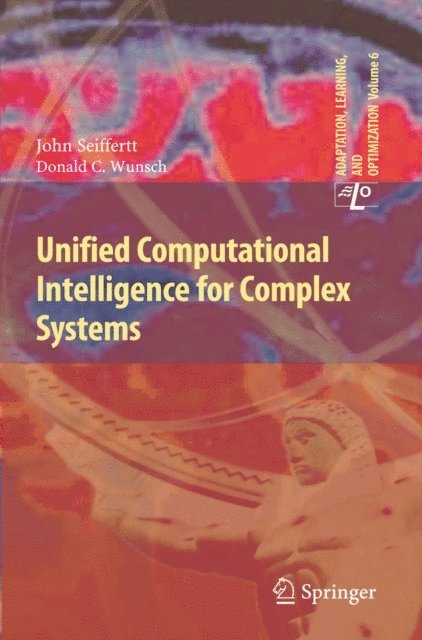
Unified Computational Intelligence for Complex Systems
Inbunden, Engelska, 2010
1 092 kr
Skickas inom 10-15 vardagar
Computational intelligence encompasses a wide variety of techniques that allow computation to learn, to adapt, and to seek. That is, they may be designed to learn information without explicit programming regarding the nature of the content to be retained, they may be imbued with the functionality to adapt to maintain their course within a complex and unpredictably changing environment, and they may help us seek out truths about our own dynamics and lives through their inclusion in complex system modeling. These capabilities place our ability to compute in a category apart from our ability to erect suspension bridges, although both are products of technological advancement and reflect an increased understanding of our world. In this book, we show how to unify aspects of learning and adaptation within the computational intelligence framework. While a number of algorithms exist that fall under the umbrella of computational intelligence, with new ones added every year, all of them focus on the capabilities of learning, adapting, and helping us seek. So, the term unified computational intelligence relates not to the individual algorithms but to the underlying goals driving them. This book focuses on the computational intelligence areas of neural networks and dynamic programming, showing how to unify aspects of these areas to create new, more powerful, computational intelligence architectures to apply to new problem domains.
E-bok
PDF, Engelska, 20101 367 kr
Läs direkt efter köp
Computational intelligence encompasses a wide variety of techniques that allow computation to learn, to adapt, and to seek. That is, they may be designed to learn information without explicit programming regarding the nature of the content to be retained, they may be imbued with the functionality to adapt to maintain their course within a complex and unpredictably changing environment, and they may help us seek out truths about our own dynamics and lives through their inclusion in complex system modeling. These capabilities place our ability to compute in a category apart from our ability to erect suspension bridges, although both are products of technological advancement and reflect an increased understanding of our world. In this book, we show how to unify aspects of learning and adaptation within the computational intelligence framework. While a number of algorithms exist that fall under the umbrella of computational intelligence, with new ones added every year, all of them focus on the capabilities of learning, adapting, and helping us seek. So, the term unified computational intelligence relates not to the individual algorithms but to the underlying goals driving them. This book focuses on the computational intelligence areas of neural networks and dynamic programming, showing how to unify aspects of these areas to create new, more powerful, computational intelligence architectures to apply to new problem domains.
Del 6 - Adaptation, Learning, and Optimization
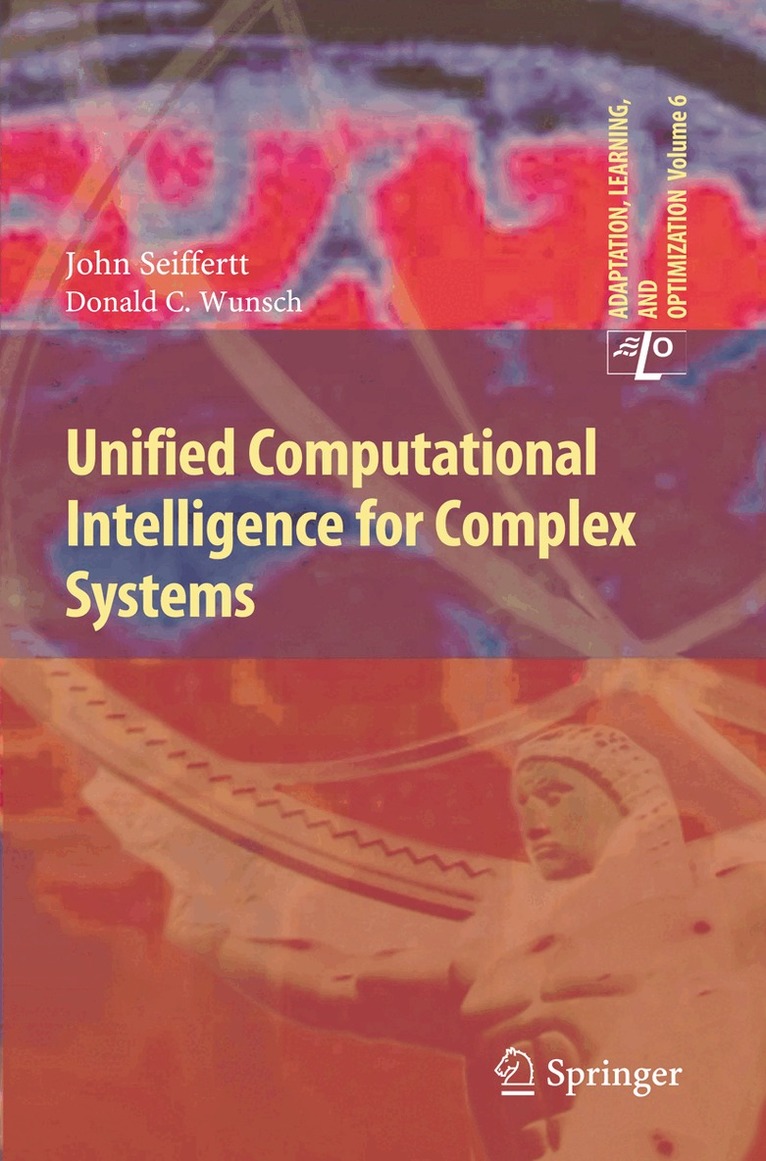
Unified Computational Intelligence for Complex Systems
Häftad, Engelska, 2012
1 092 kr
Skickas inom 10-15 vardagar
Computational intelligence encompasses a wide variety of techniques that allow computation to learn, to adapt, and to seek. That is, they may be designed to learn information without explicit programming regarding the nature of the content to be retained, they may be imbued with the functionality to adapt to maintain their course within a complex and unpredictably changing environment, and they may help us seek out truths about our own dynamics and lives through their inclusion in complex system modeling. These capabilities place our ability to compute in a category apart from our ability to erect suspension bridges, although both are products of technological advancement and reflect an increased understanding of our world. In this book, we show how to unify aspects of learning and adaptation within the computational intelligence framework. While a number of algorithms exist that fall under the umbrella of computational intelligence, with new ones added every year, all of them focus on the capabilities of learning, adapting, and helping us seek. So, the term unified computational intelligence relates not to the individual algorithms but to the underlying goals driving them. This book focuses on the computational intelligence areas of neural networks and dynamic programming, showing how to unify aspects of these areas to create new, more powerful, computational intelligence architectures to apply to new problem domains.